
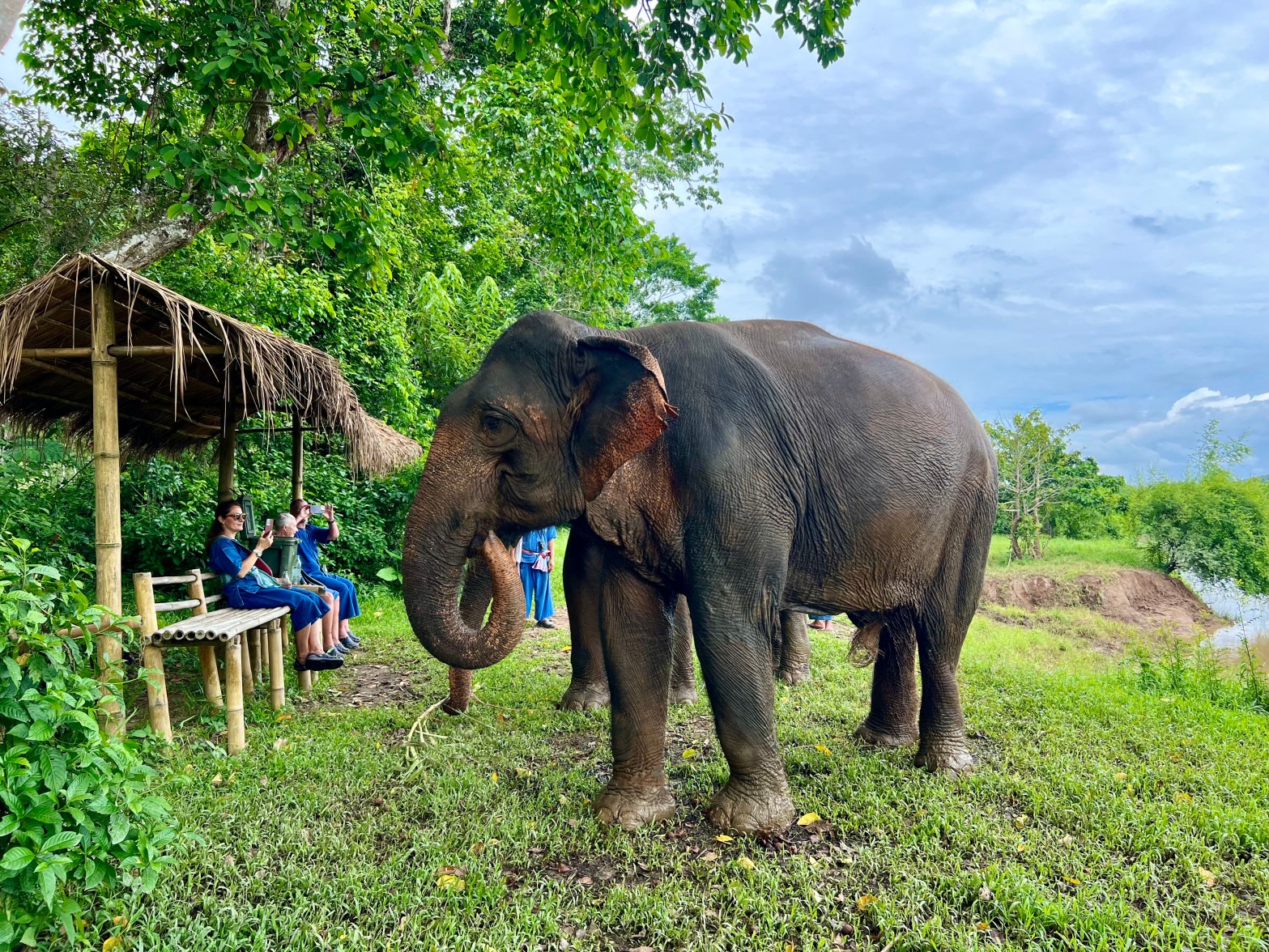
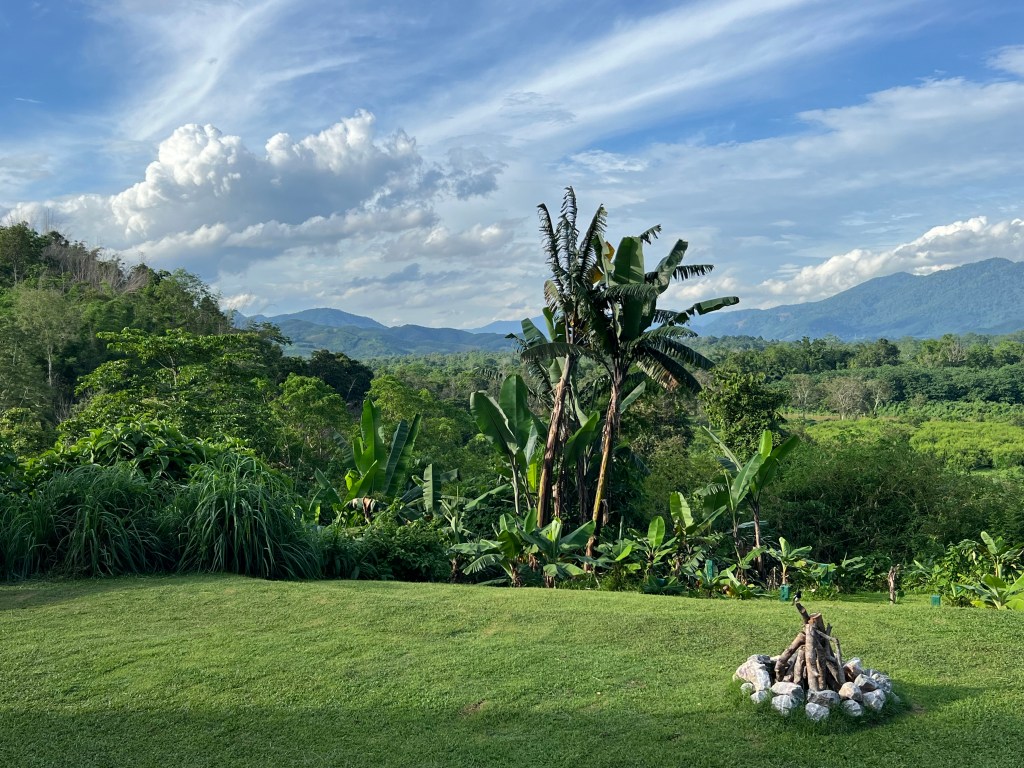
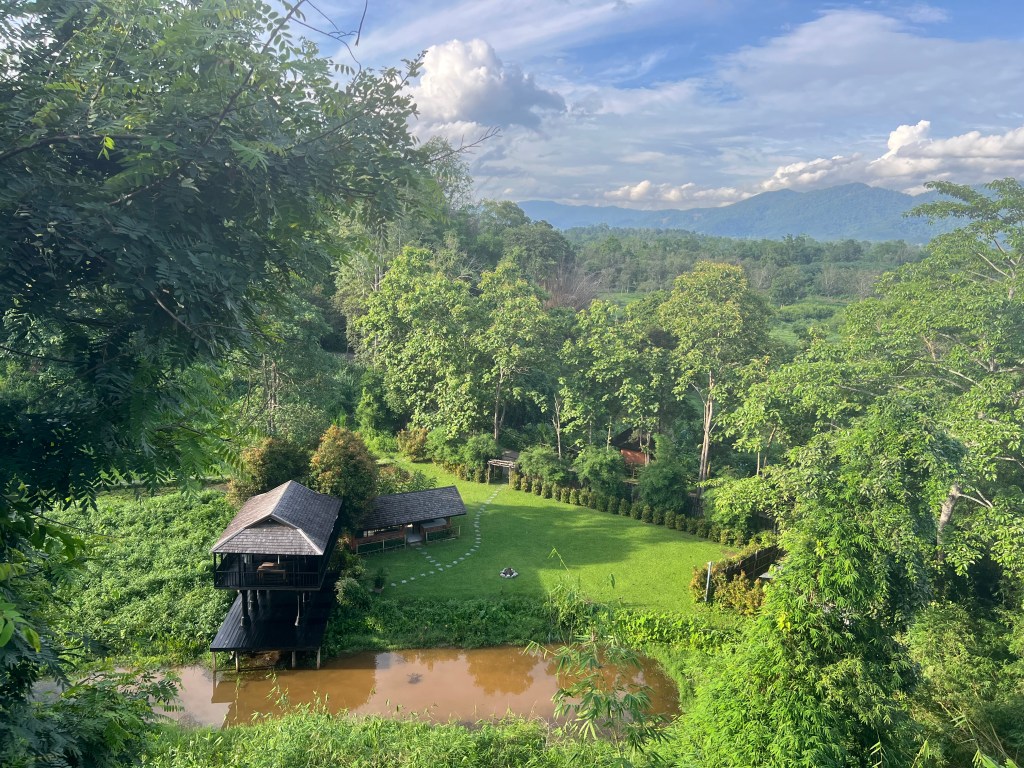
On the northern tip of Thailand, bordering Myanmar and Laos, Chiang Rai province offers a tapestry of lush, bright greens and beautiful, unspoiled landscapes.
We visited Chiang Rai during the month of July, the rainy season, which appears to scare tourists away (even though it only rains sporadically, mostly at night). The sights we visited were mostly deserted and we loved the freshness of the air and the quietness of the atmosphere.

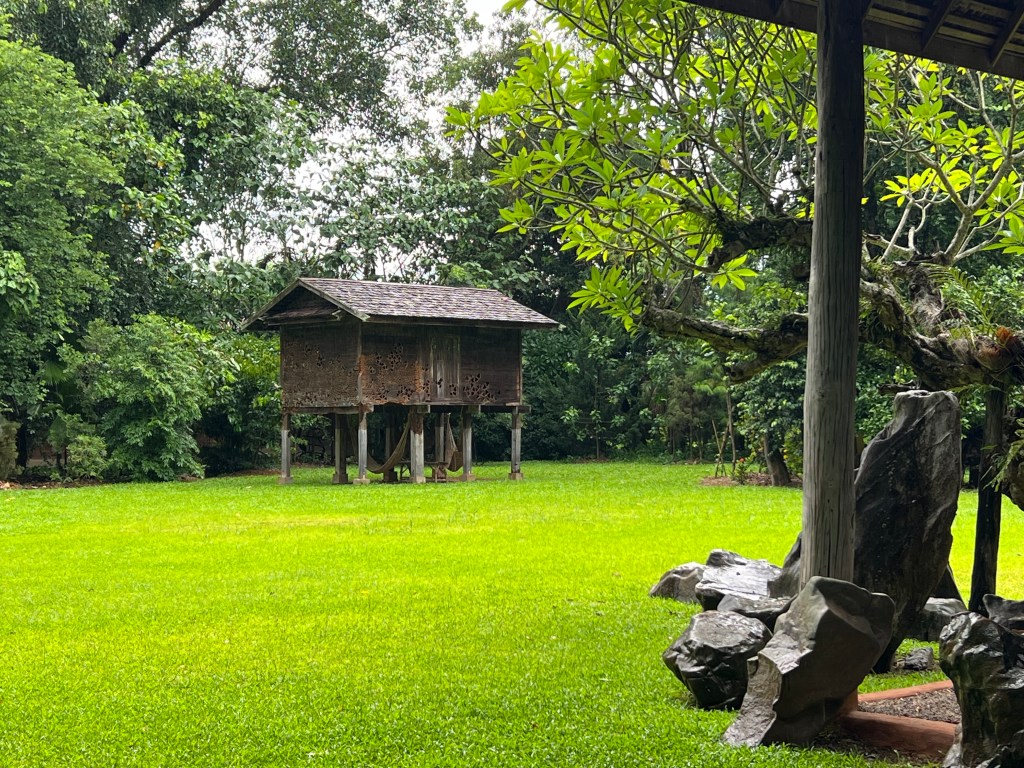
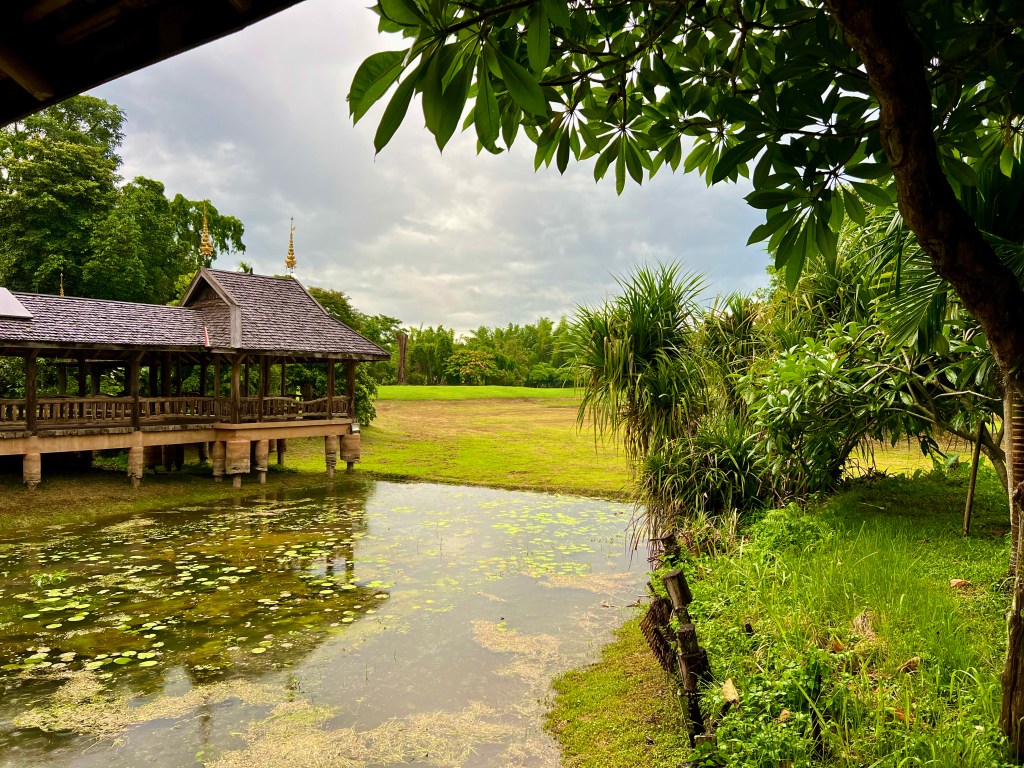
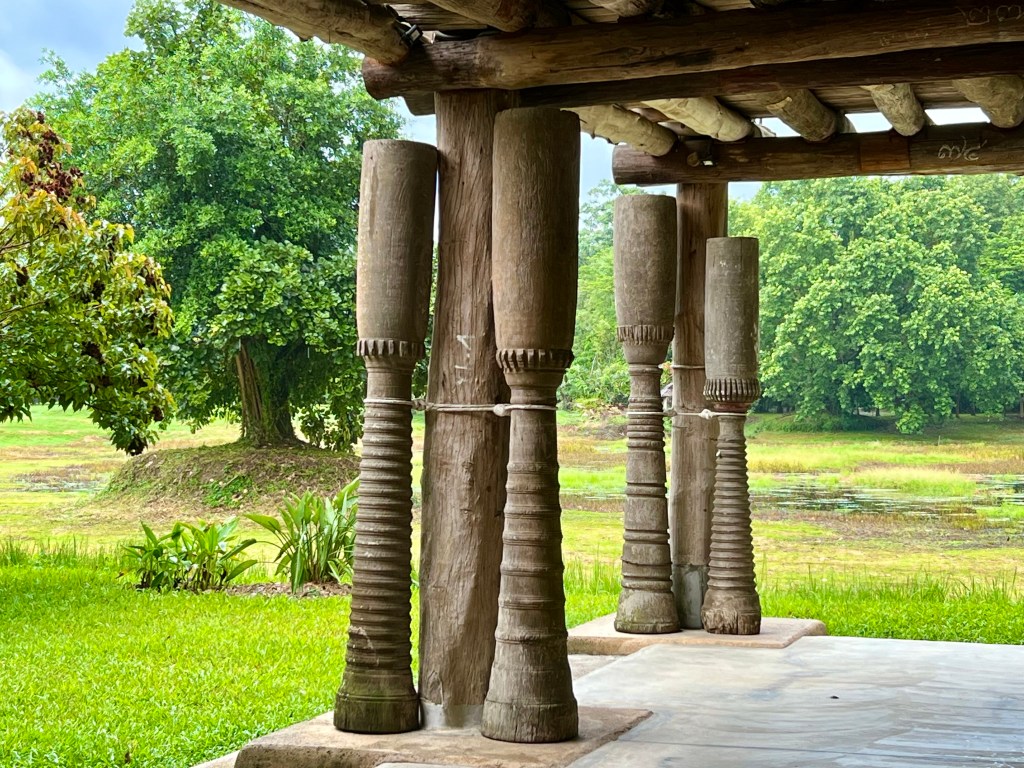

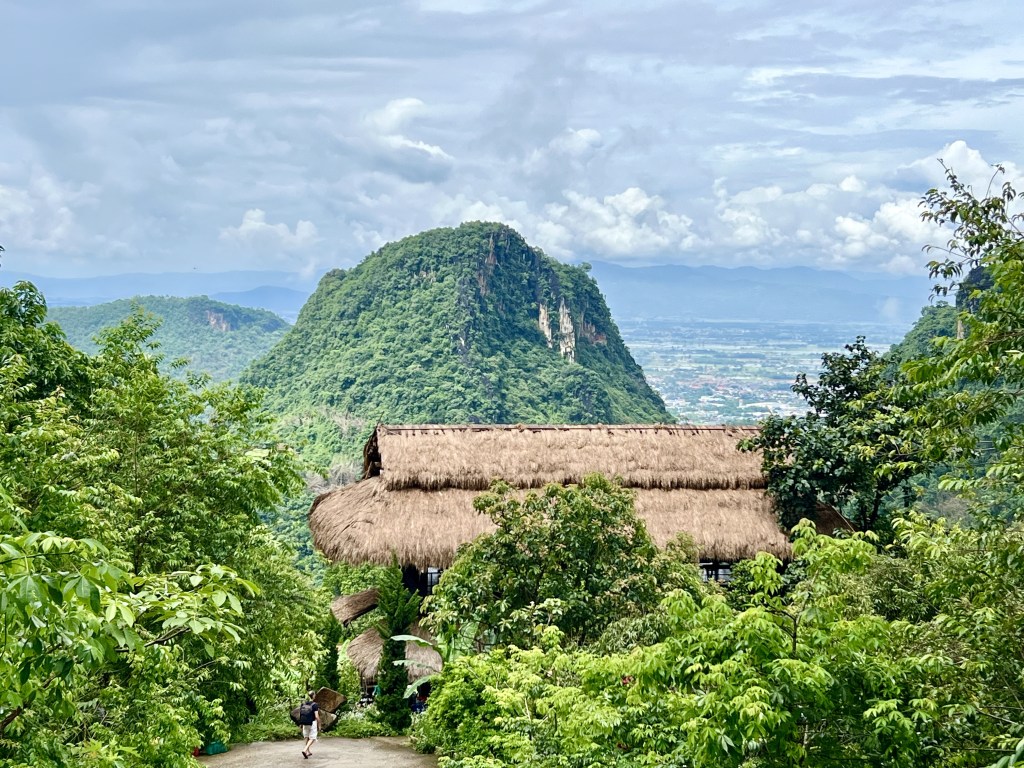
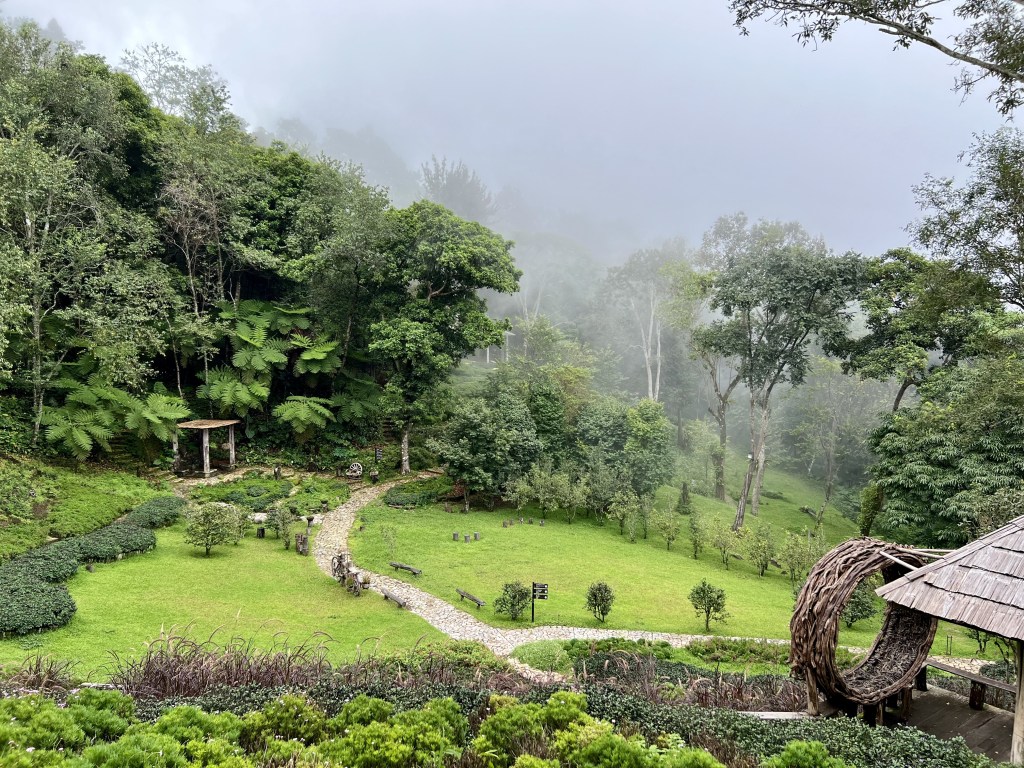


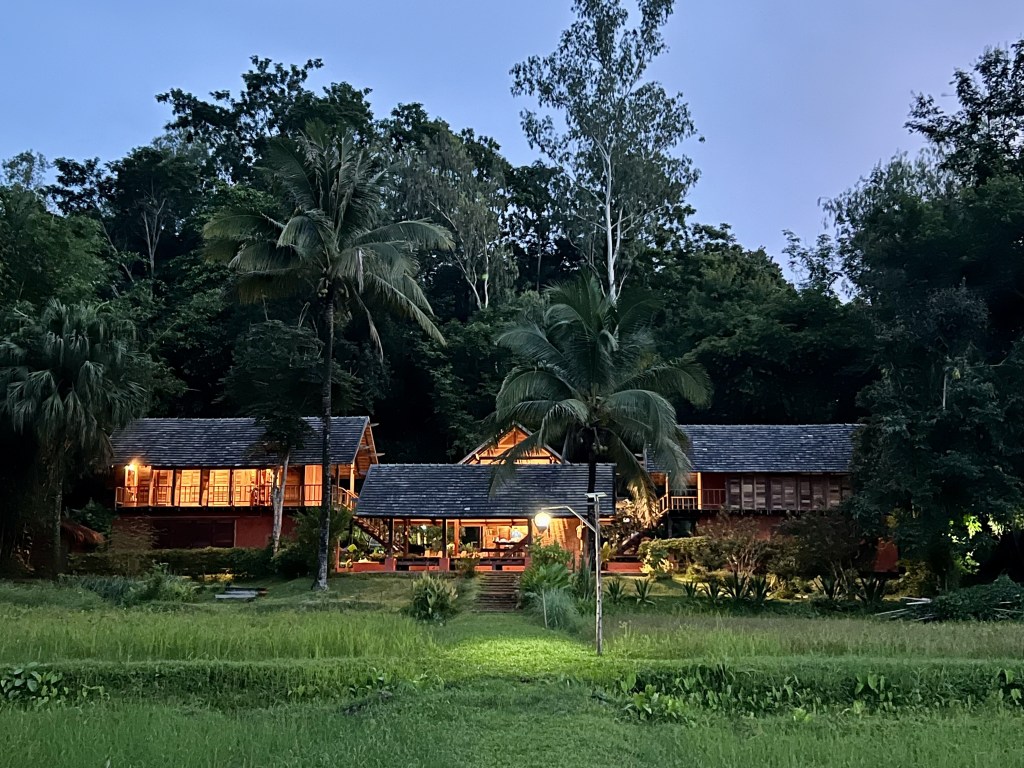
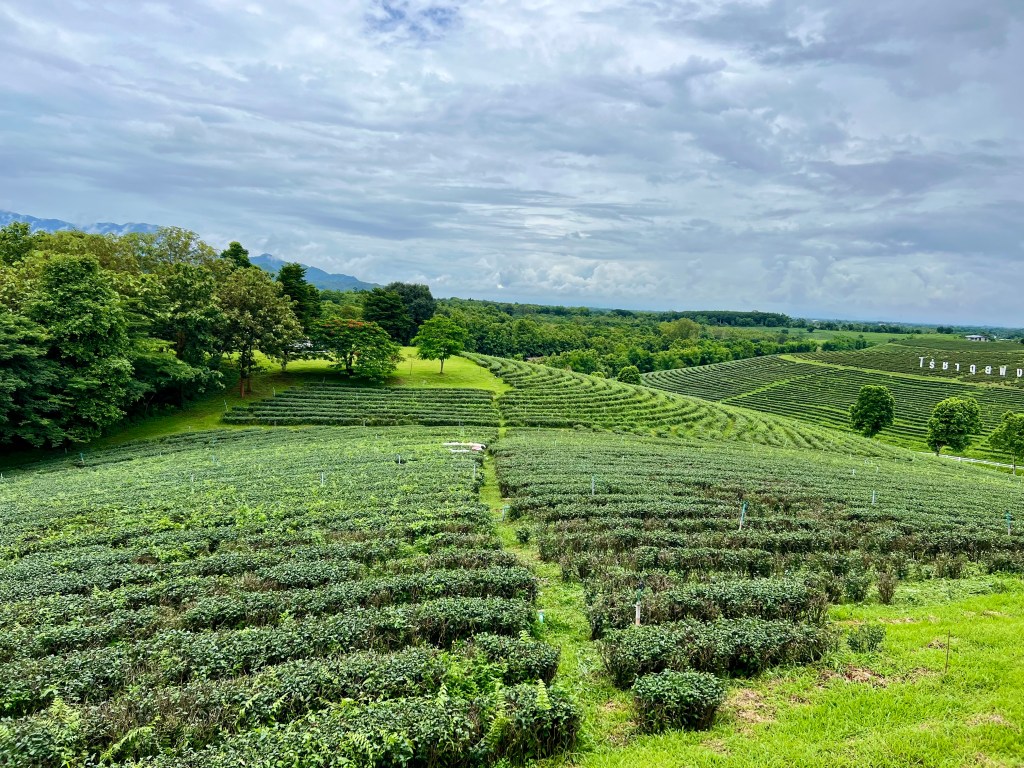
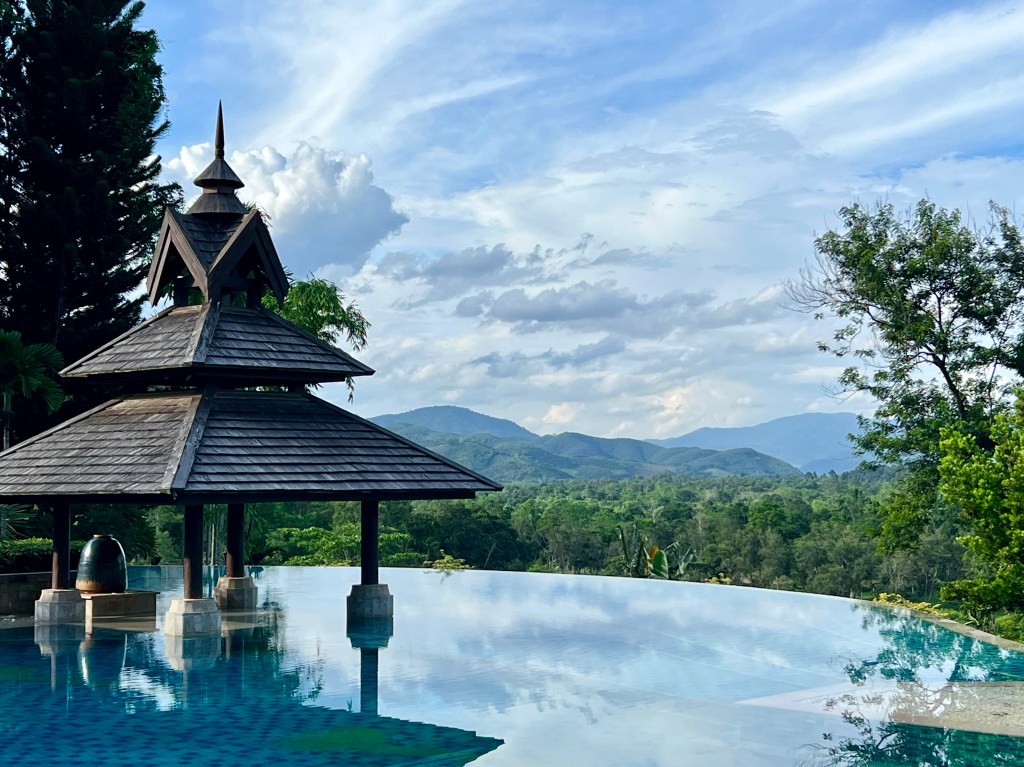
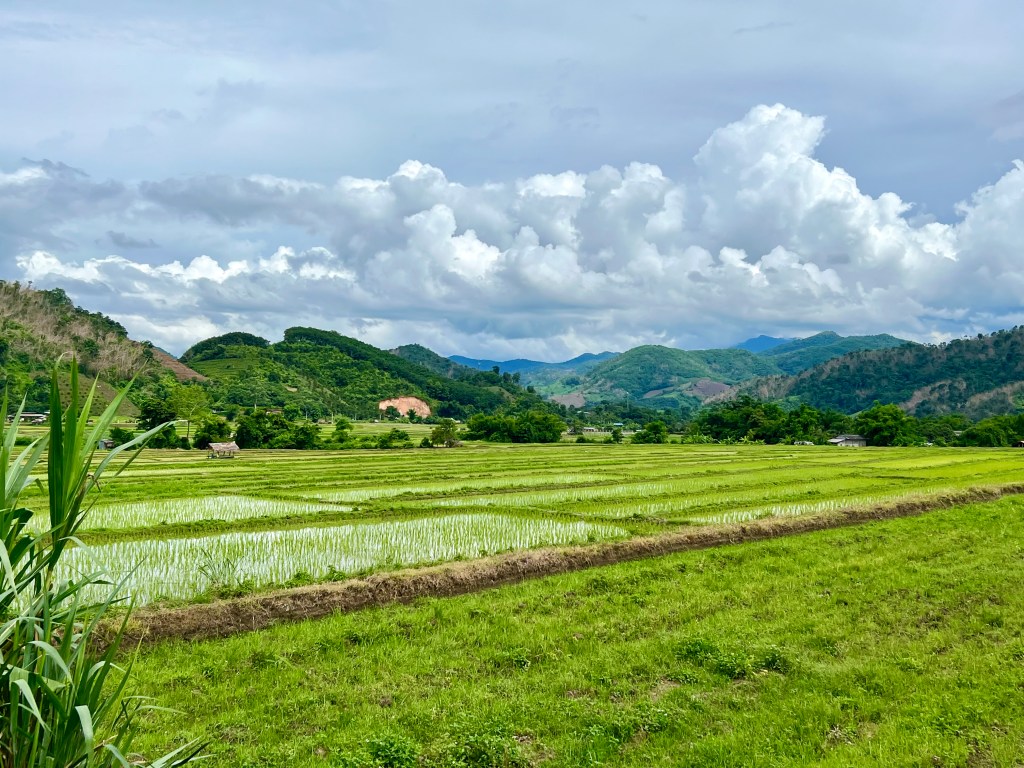
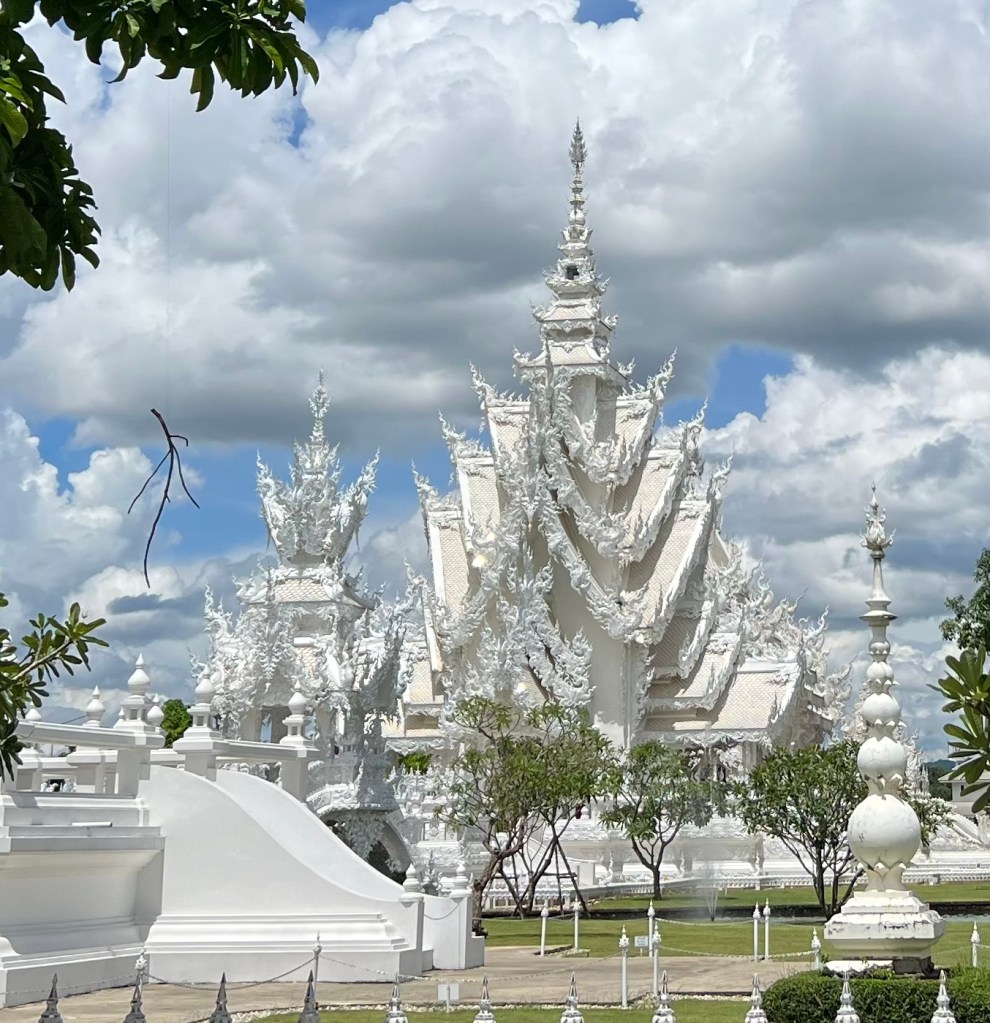
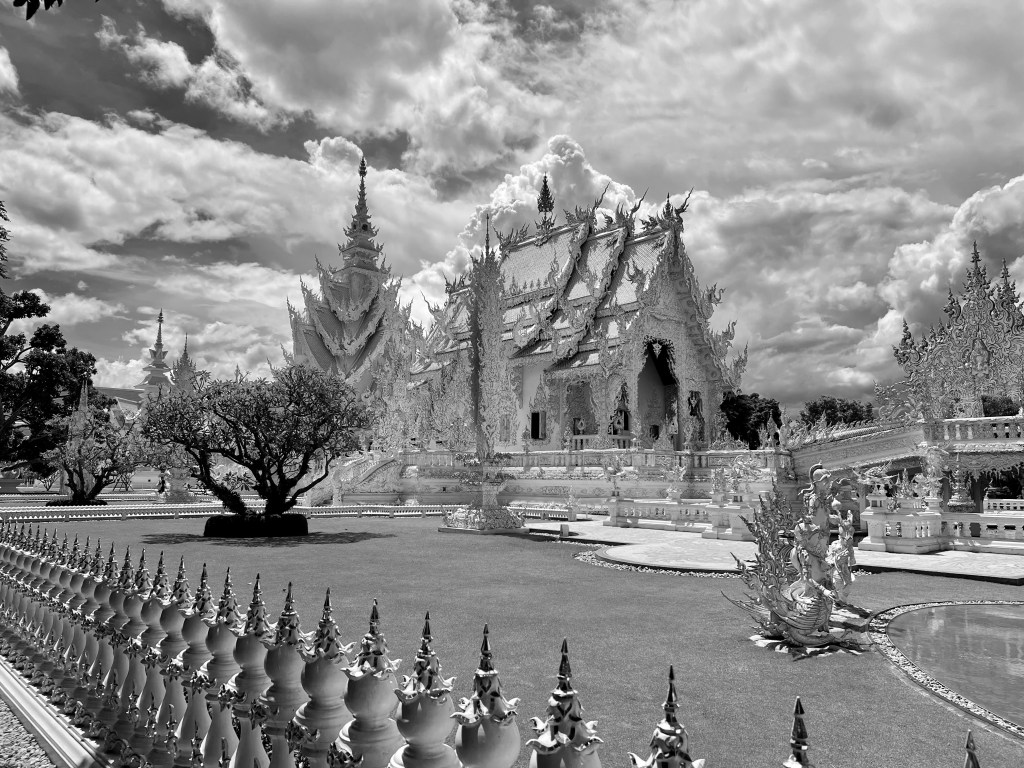
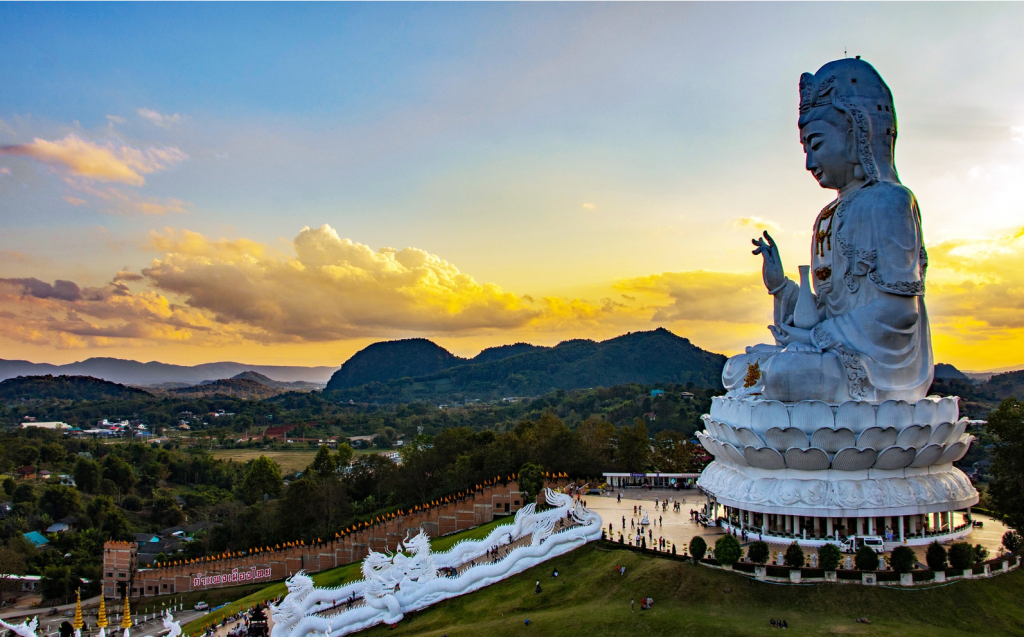
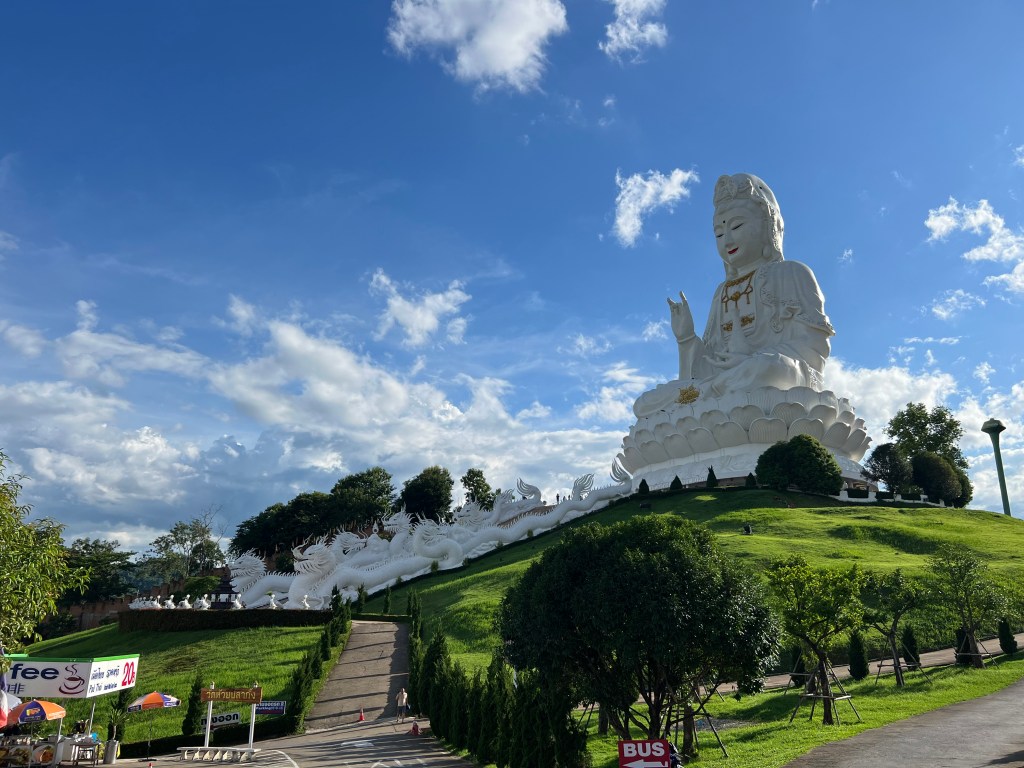
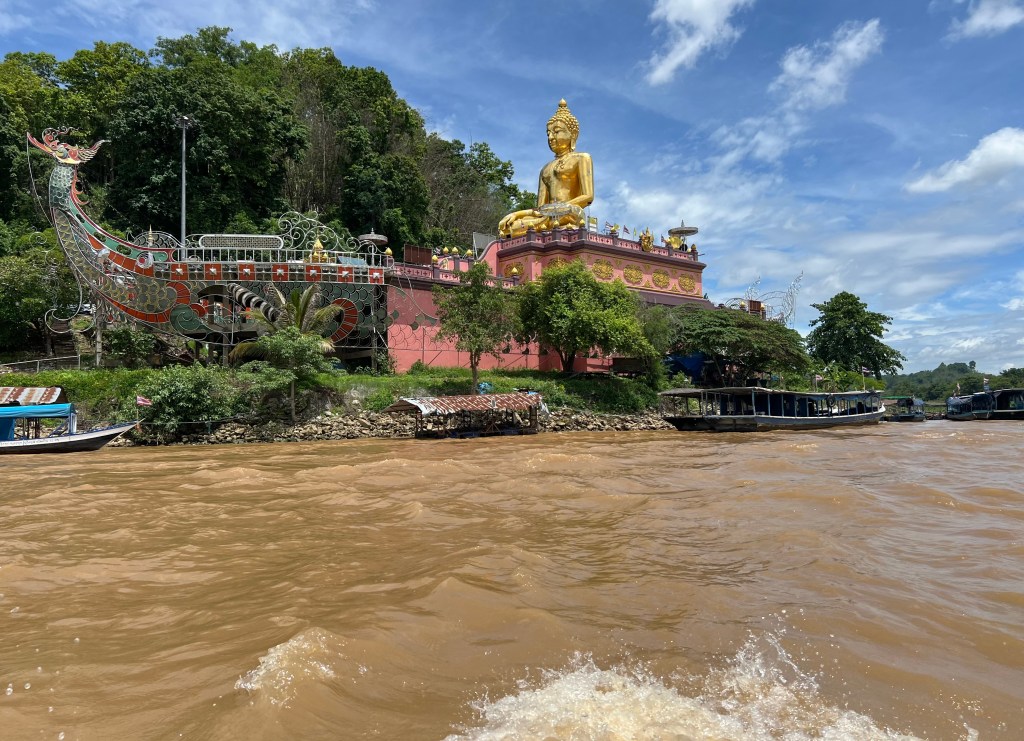
Chiang Rai isn’t only about a delightful countryside. It’s also the home to magnificent Buddhist temples, the size and architecture of which often belies belief.

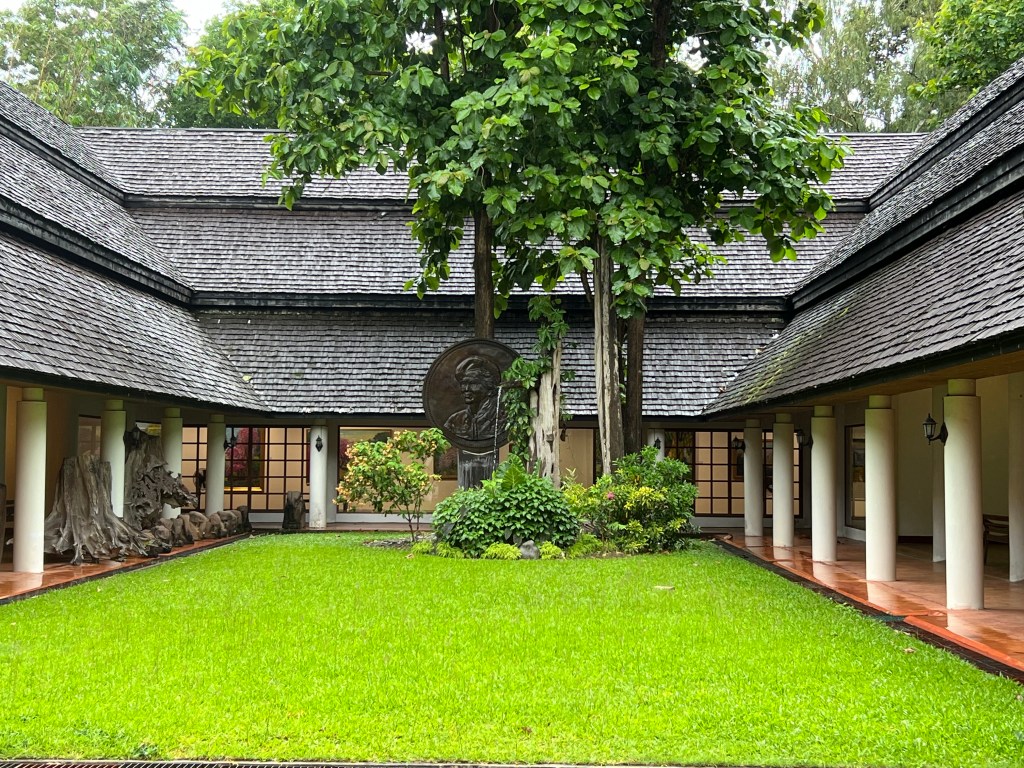
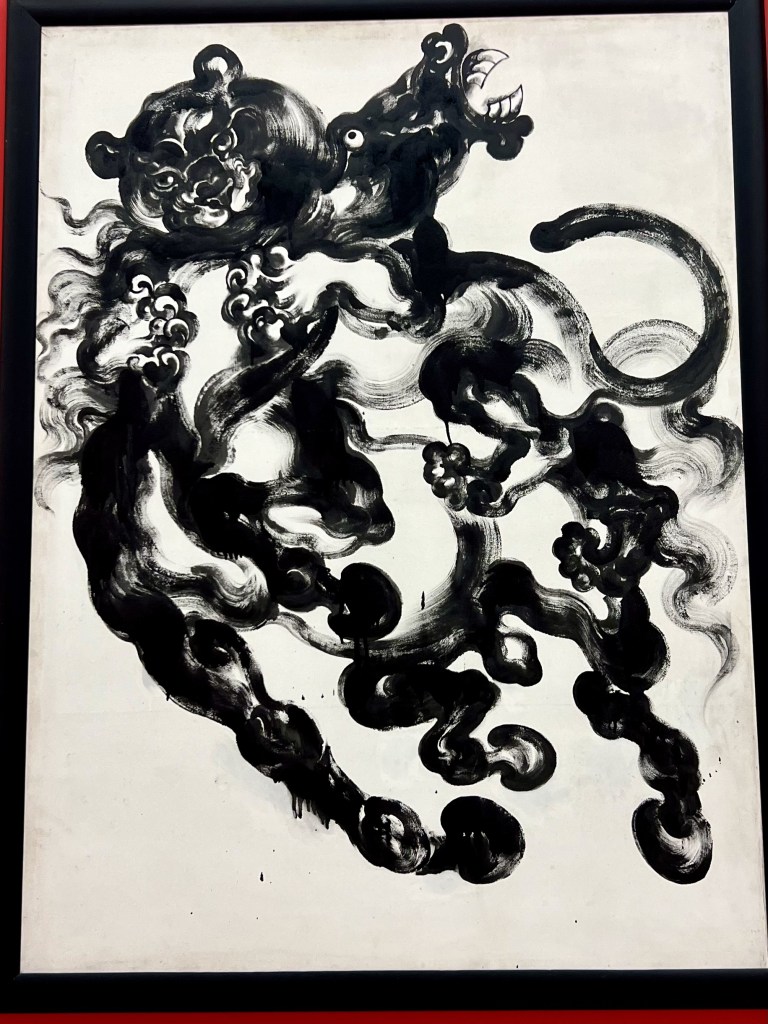
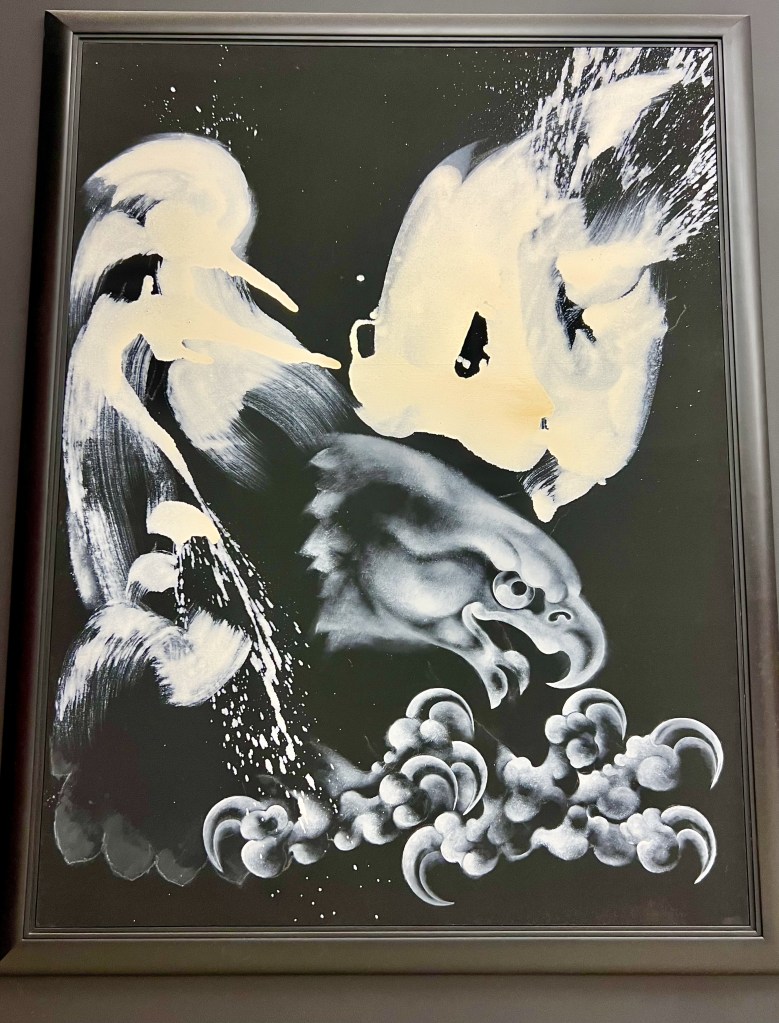
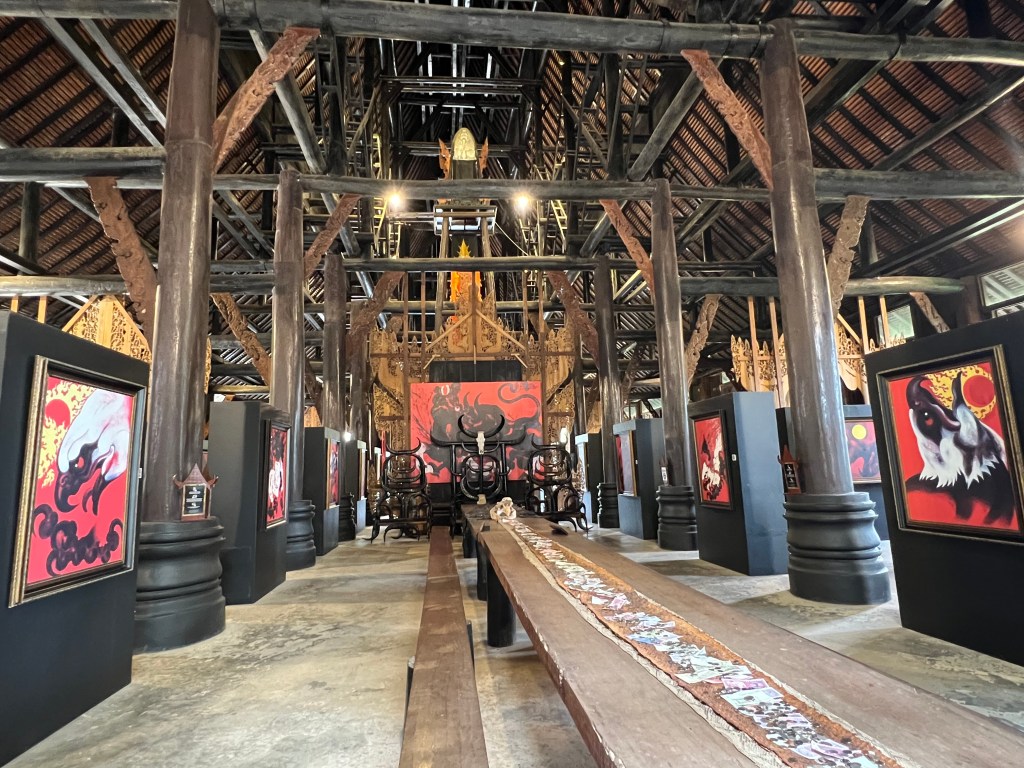
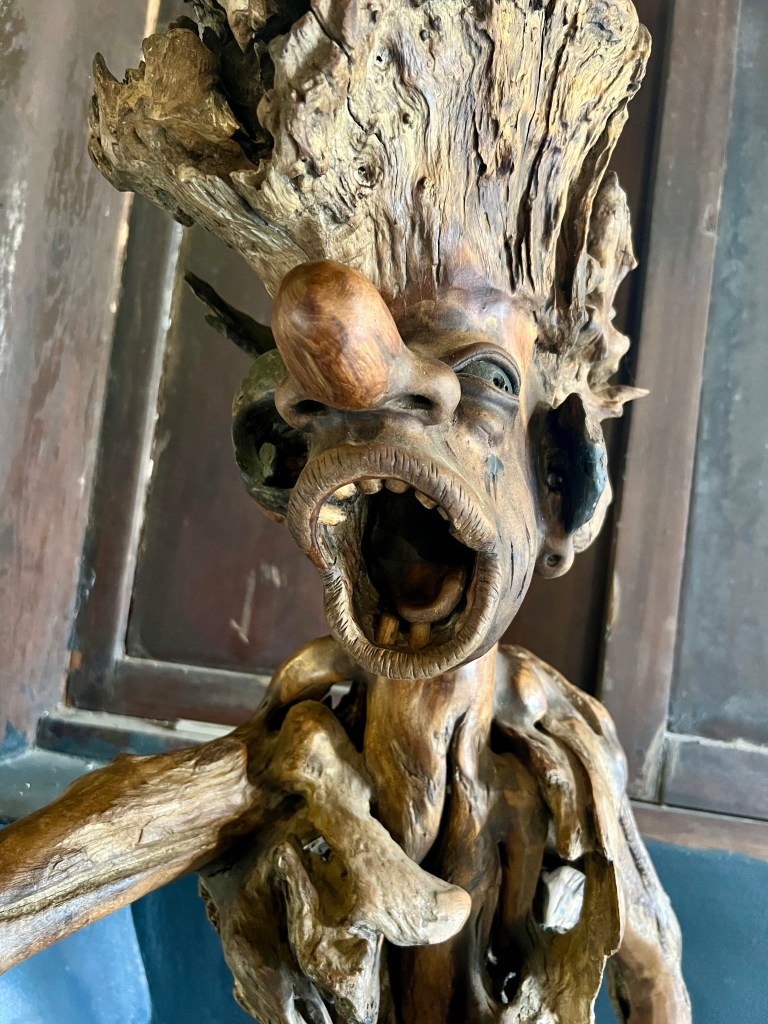
One of Thailand’s most remarkable artists, with an international reputation, is Thawan Duchanee. His artistic work, spanning painting, architecture and sculpture, offers a good insight into Thailand’s unique culture: inspired on traditional themes and motives (usually from Buddhism), Thawan has reinvented them with exuberance, brilliant forms and often sarcasm. Duchanee’s brushwork is remarkable for its calligraphic quality. His use of bold, sweeping strokes demonstrates a mastery of control and precision, reminiscent of traditional East Asian calligraphy. There is a sense of movement and extraordinary dynamic imbued in his brushwork.
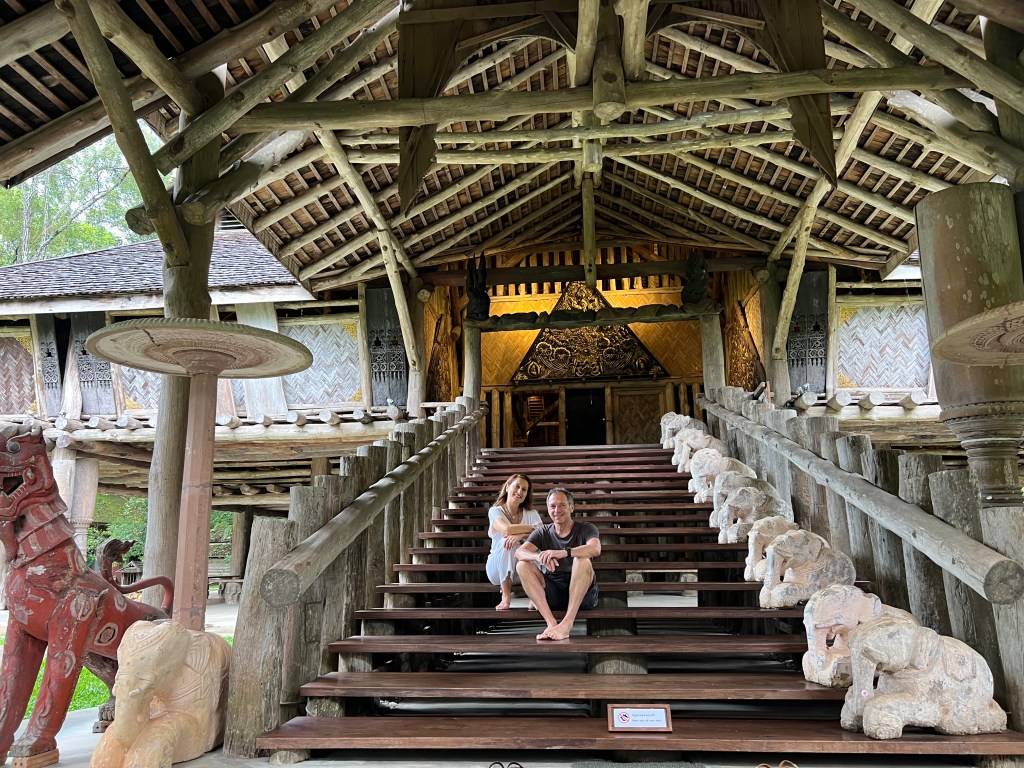
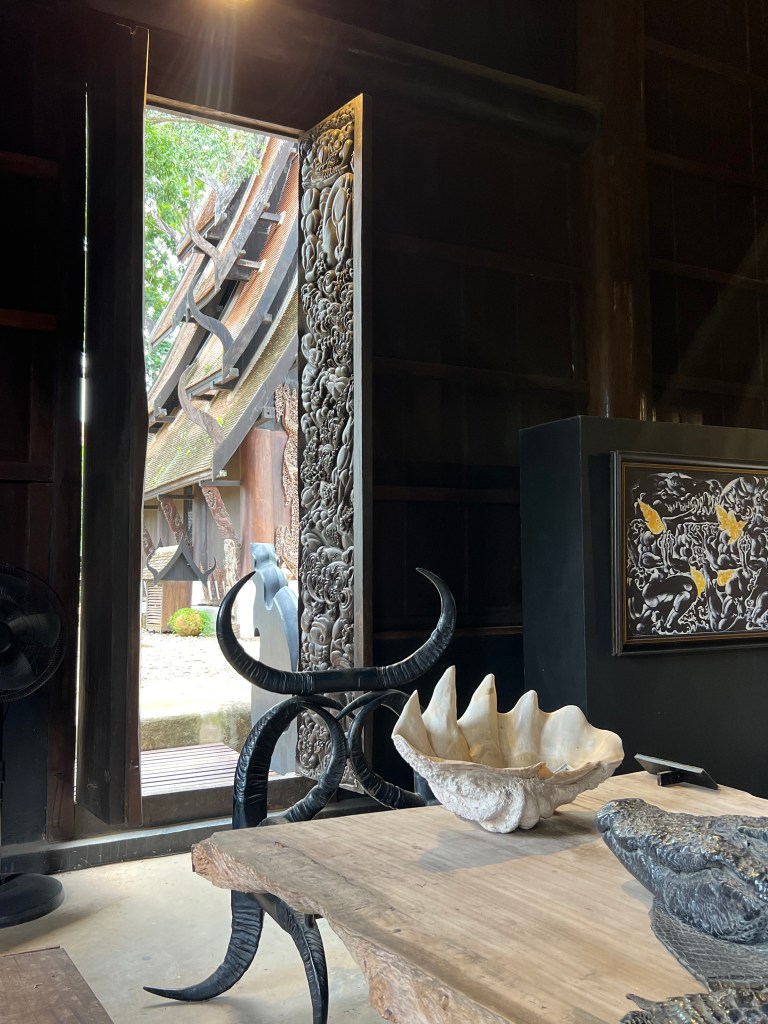
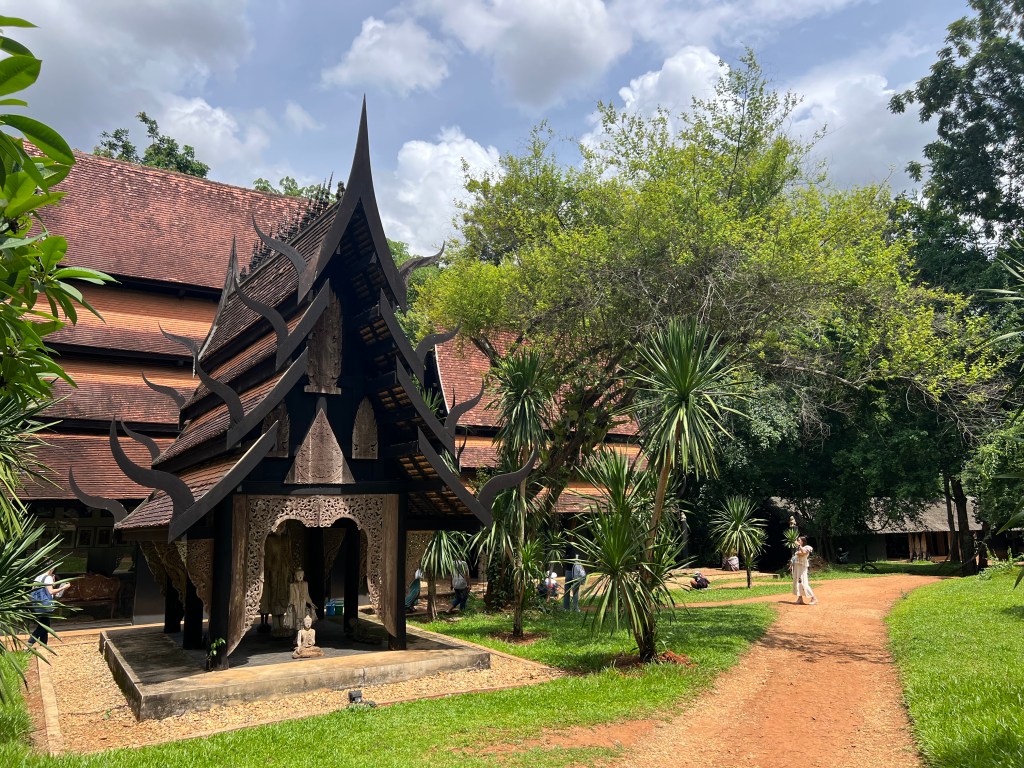
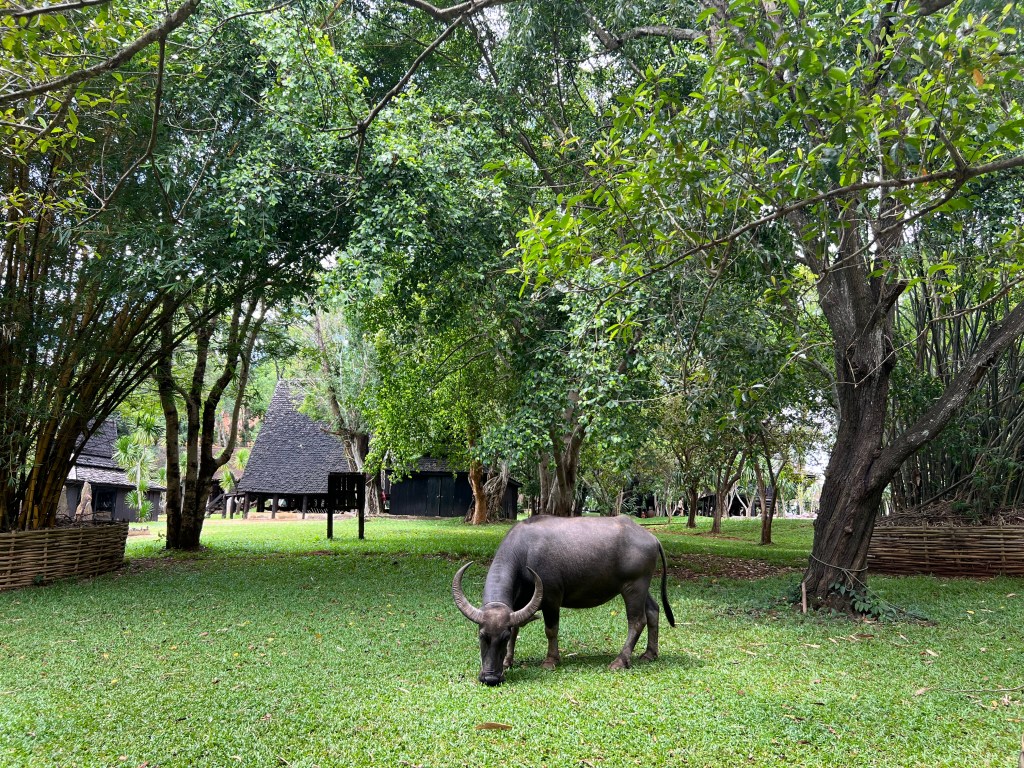
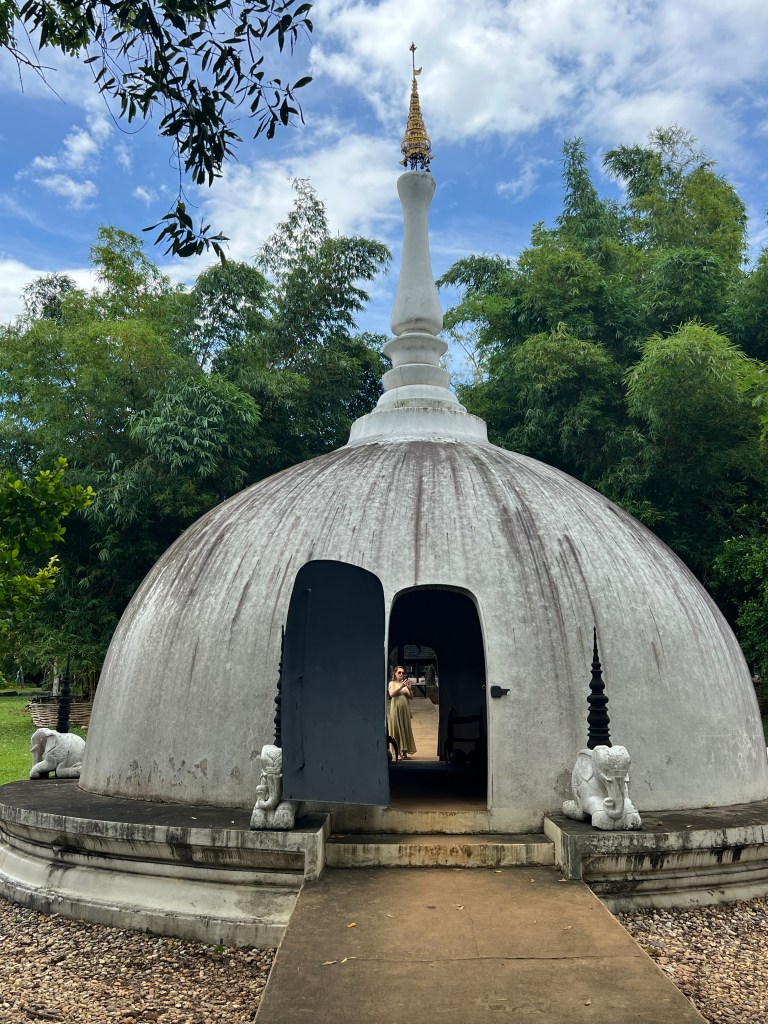
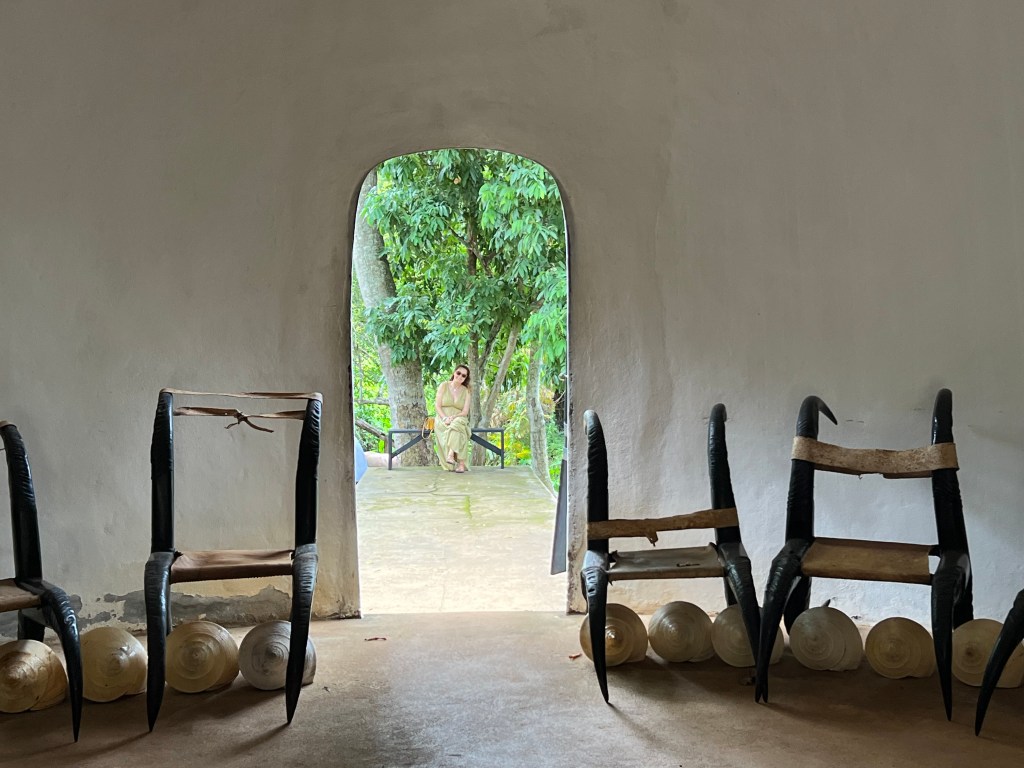
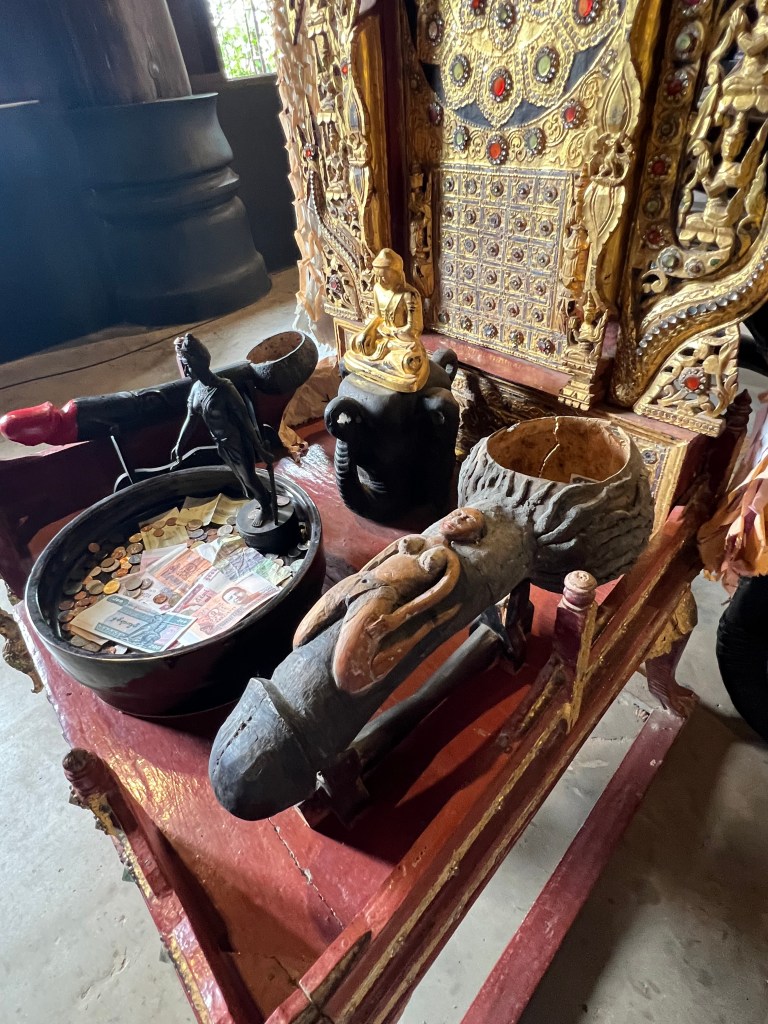
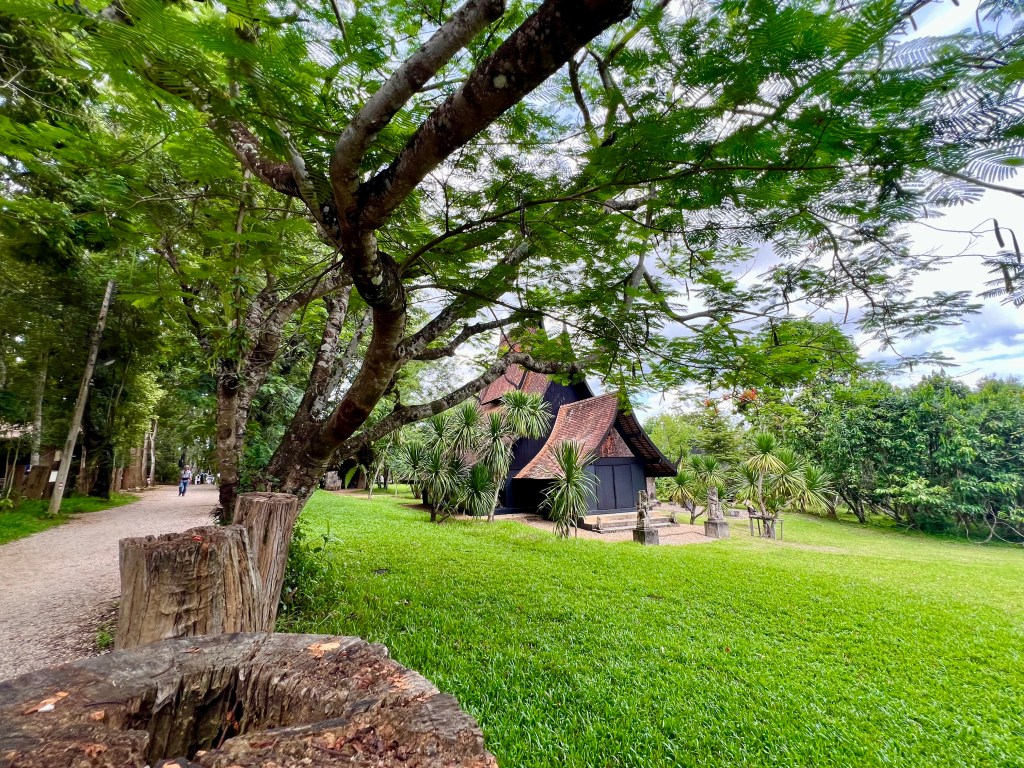
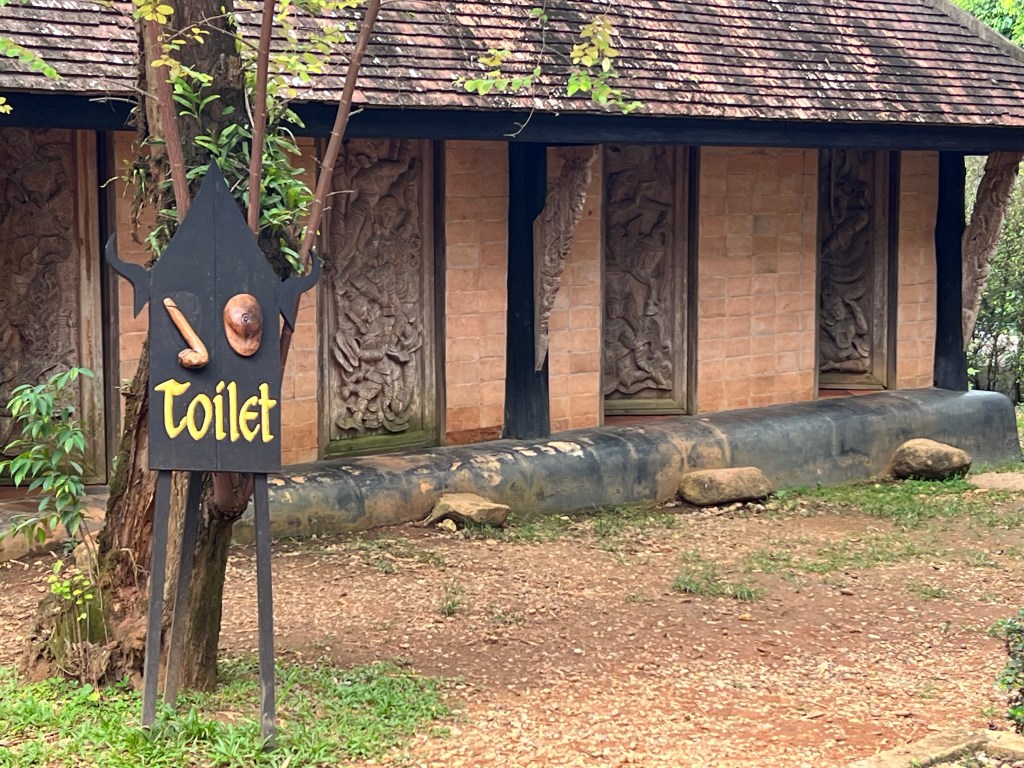
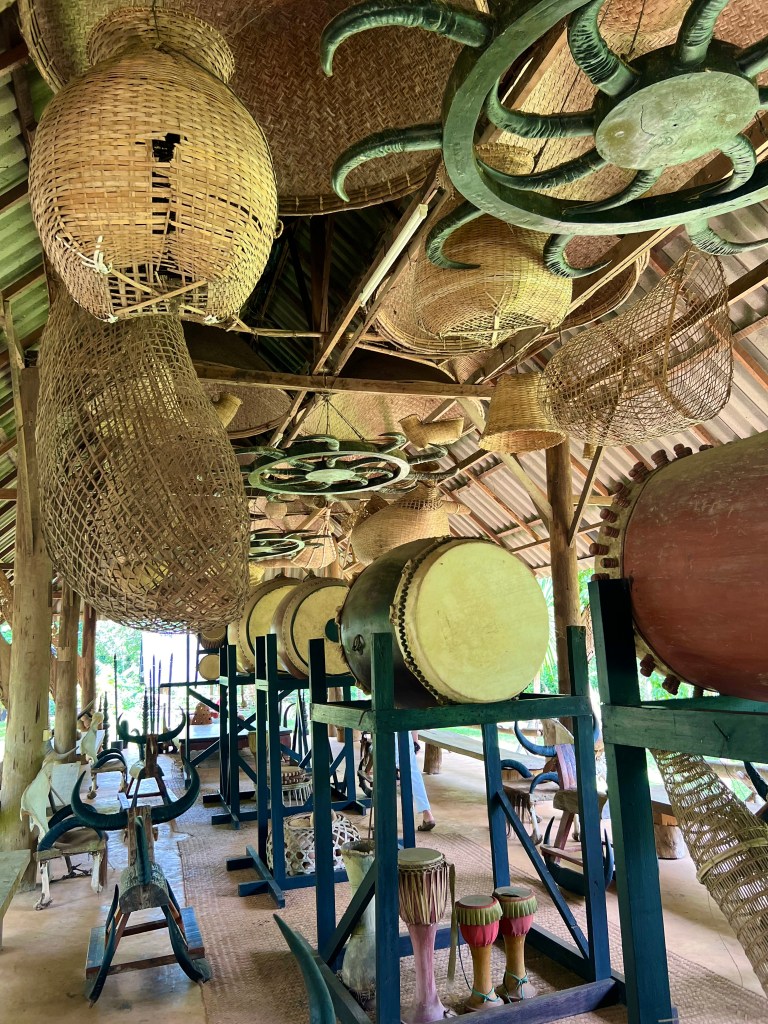
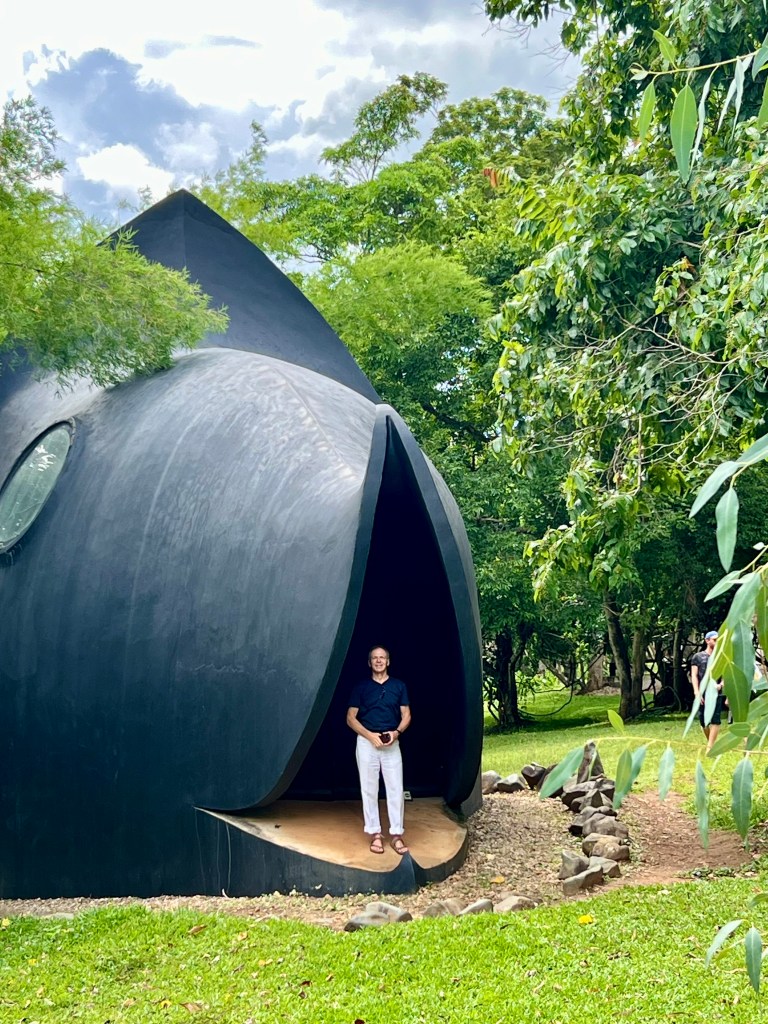
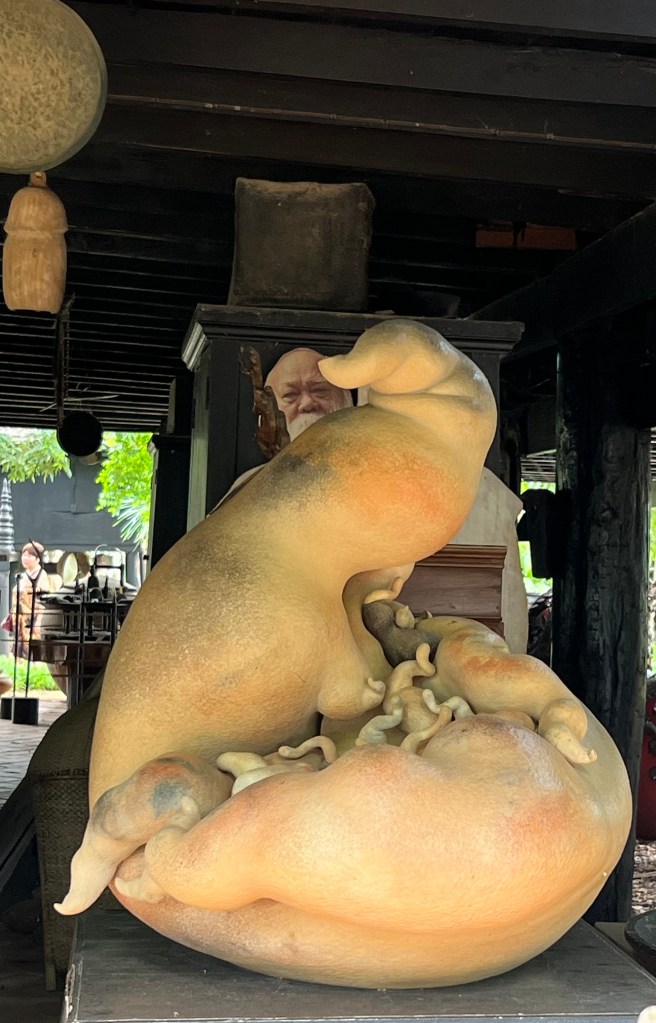
We spent a delightful afternoon at Thawan’s open-air museum called Baan Dam (the black house), consisting of over 40 houses, which he designed and which showcase a vast array of his magnificent paintings and sculptures. If you are going to visit only one museum while in Chiang Rai, this is the one, a true masterpiece of creativity and beauty. You will not be disappointed.


Elephants hold a significant cultural and historical place in Thailand, symbolizing strength, loyalty, and longevity. You frequently find them adorning temples and entrances to homes.
Their numbers, however, have shrunk dramatically in the last century, from about 100’000 in the early 1900’s to only 3’000 to 4’000 at present. Elephants are now strongly protected in Thailand, including a 1989 law banning their use in the logging industry.
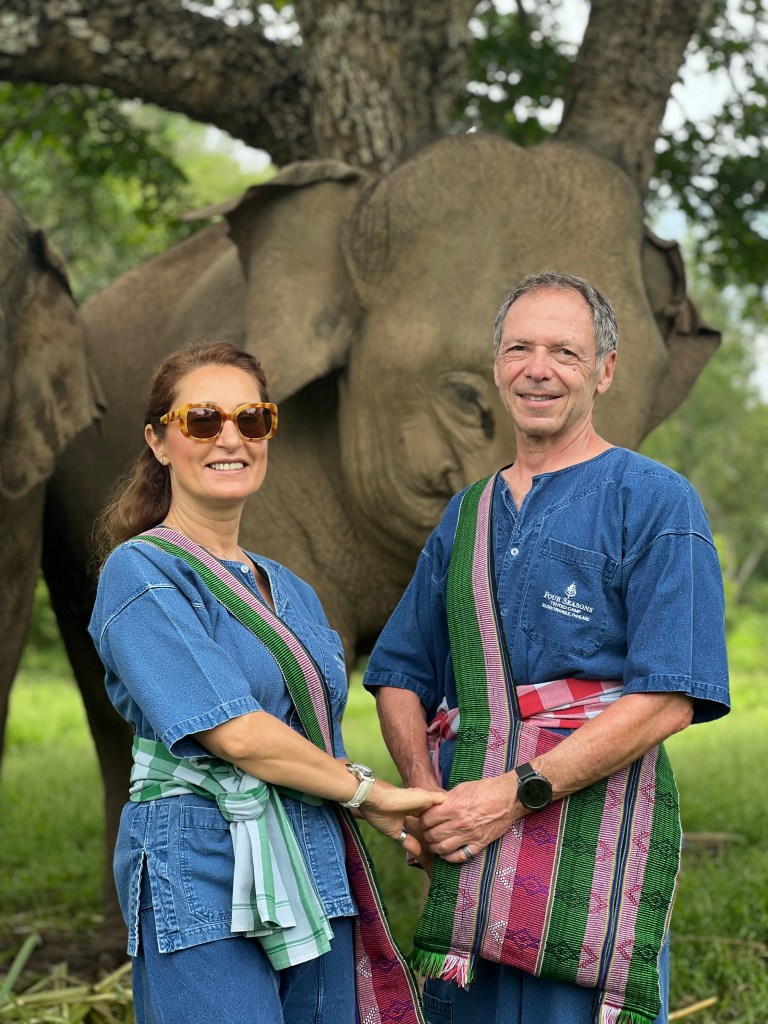
We had the privilege of spending two days surrounded by these gentle and intelligent creatures at the Four Seasons tented camp on the border with Myanmar. Elephants have phenomenal memories and they recognise humans by their smell, which means that you might generate aversion in an elephant if your smell reminds them of someone who has mistreated them in the past (luckily it didn’t happen to us).
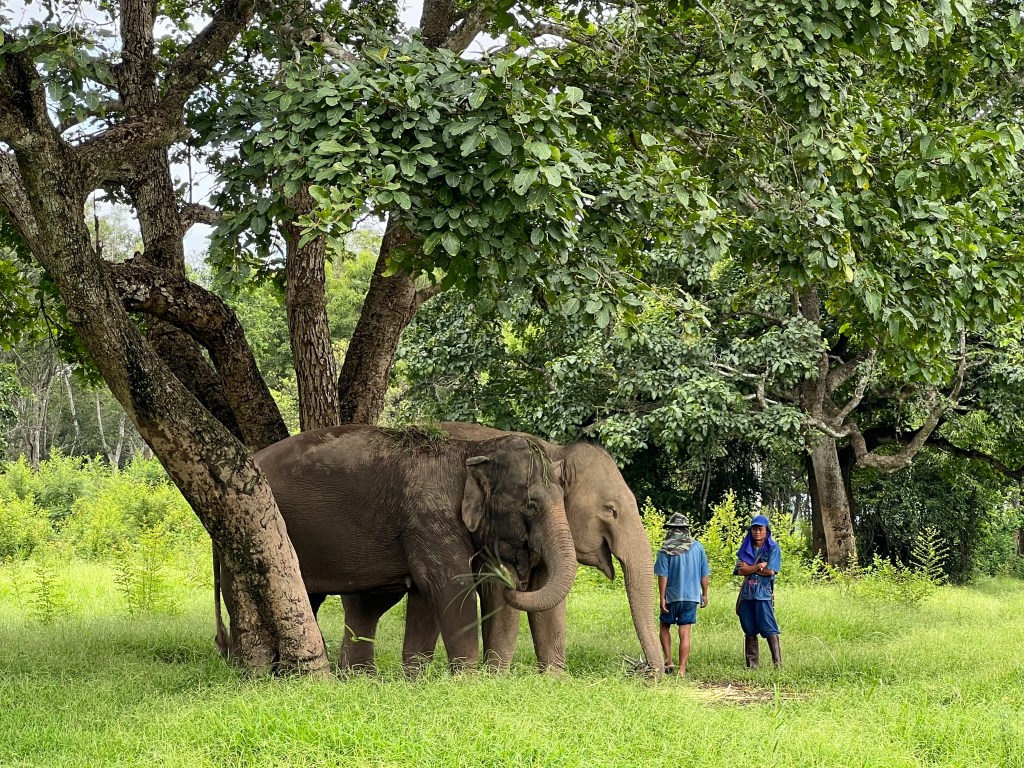

Elephants require a lot of food (they eat on average 300 kg. per day) and to be happy and thrive, they need large territories that they can roam around in. They live in a matriarchal society – it’s the females who raise the young and stay in groups, the males (usually one per herd) lead solitary lives and only join the herd occasionally, to mate.
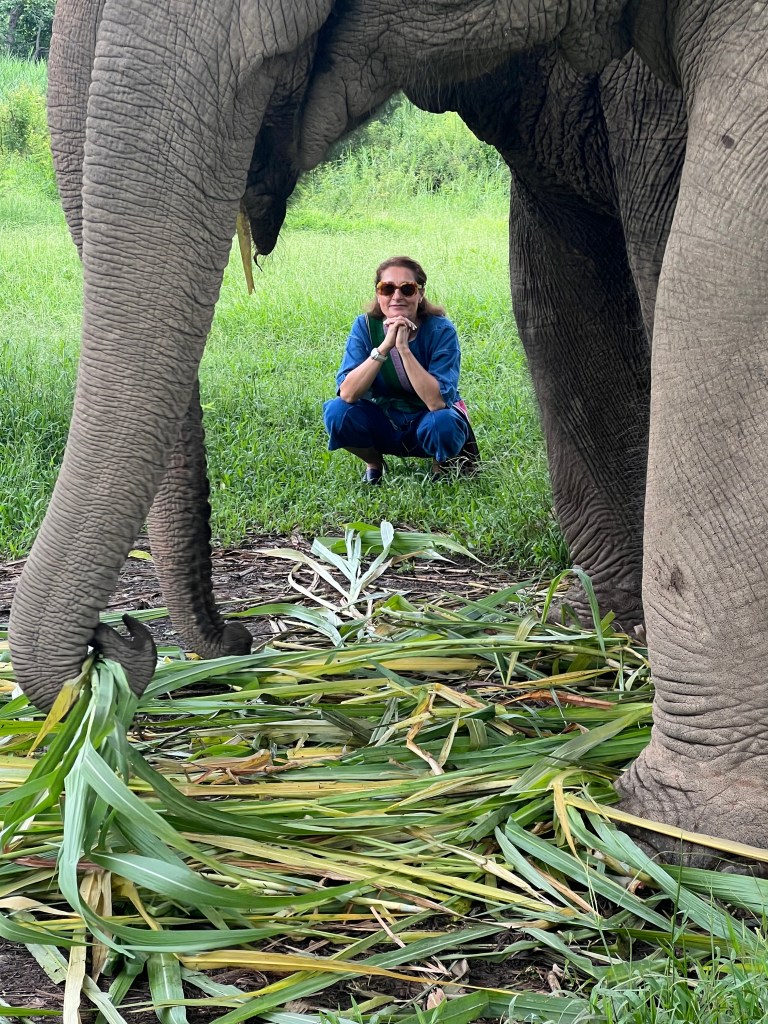
Like humans, elephants have their best friends, with whom they like to spend their days with, so you often see adults in groups of two. The young, who can misbehave the same as human children do, aren’t always raised by their mothers, often it’s nannies who take care of them.
Elephants love to bathe and can swim long distances. It’s not uncommon that elephants at the Four Seasons will swim across the river to Myanmar. We heard the story of one elephant who disappeared, only to return after 13 days, apparently very happy with her “holiday”. But things don’t always go well with the elephants who cross the Thailand/Myanmar border. Myanmar peasants who find their crops destroyed by Thai elephants demand steep payments to return them, and the elephants have to be returned across the border in a specially designed truck, after extensive negotiations with Myanmar authorities.
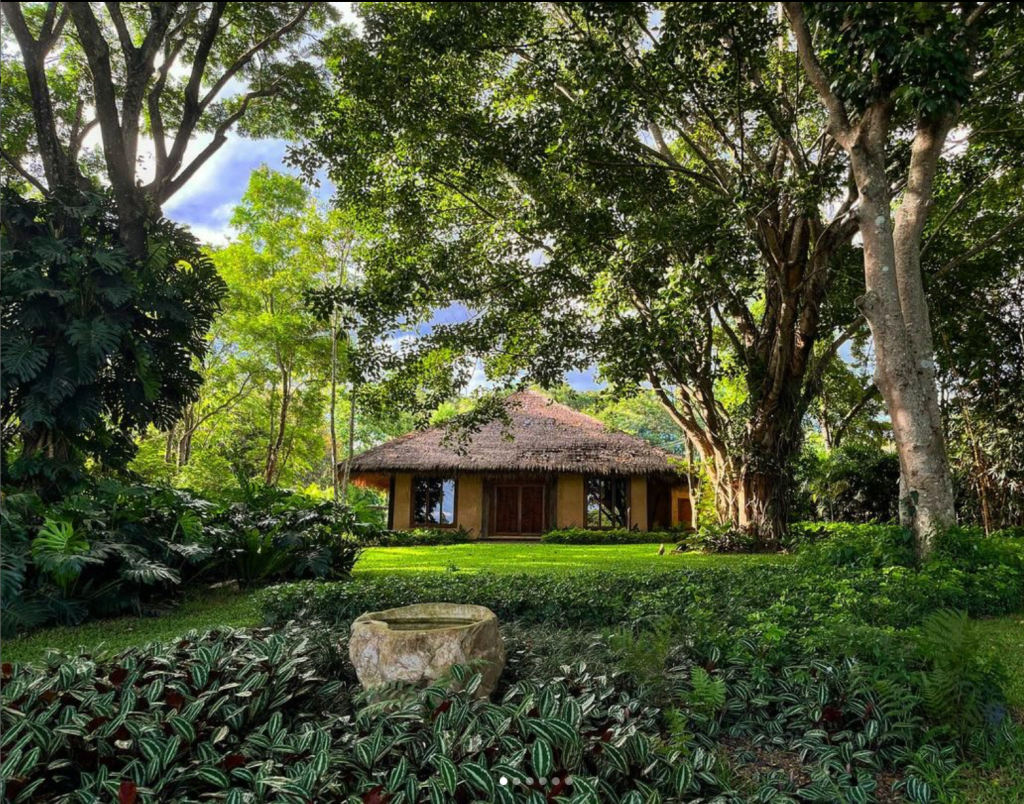
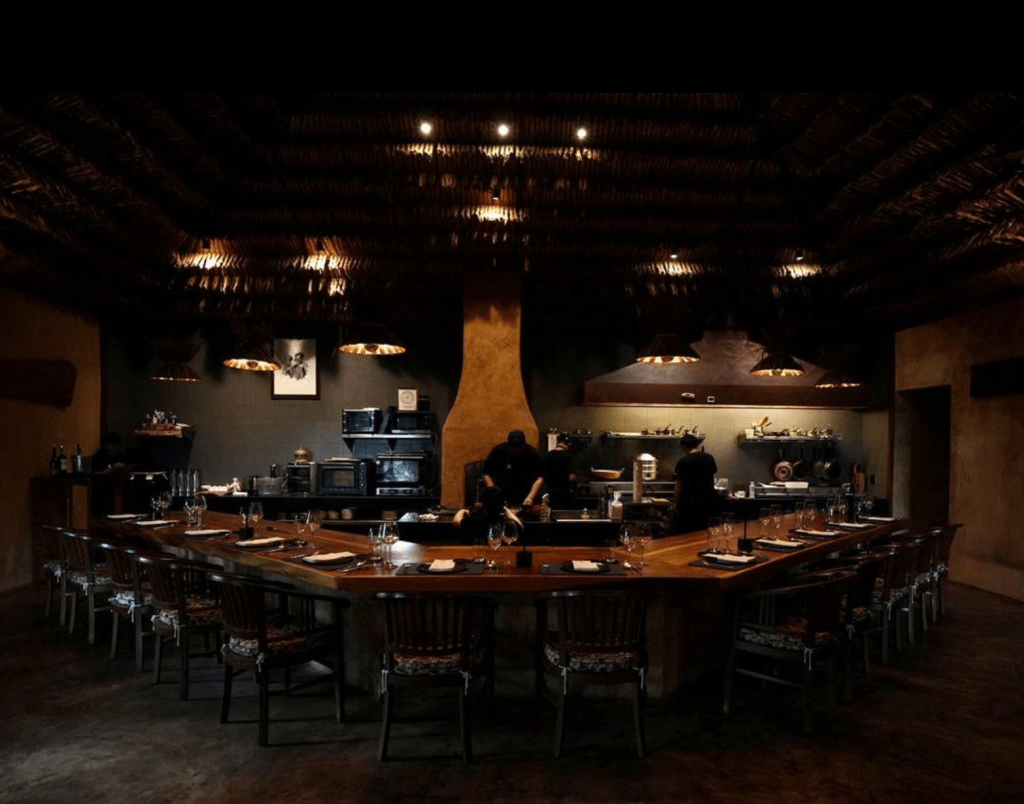
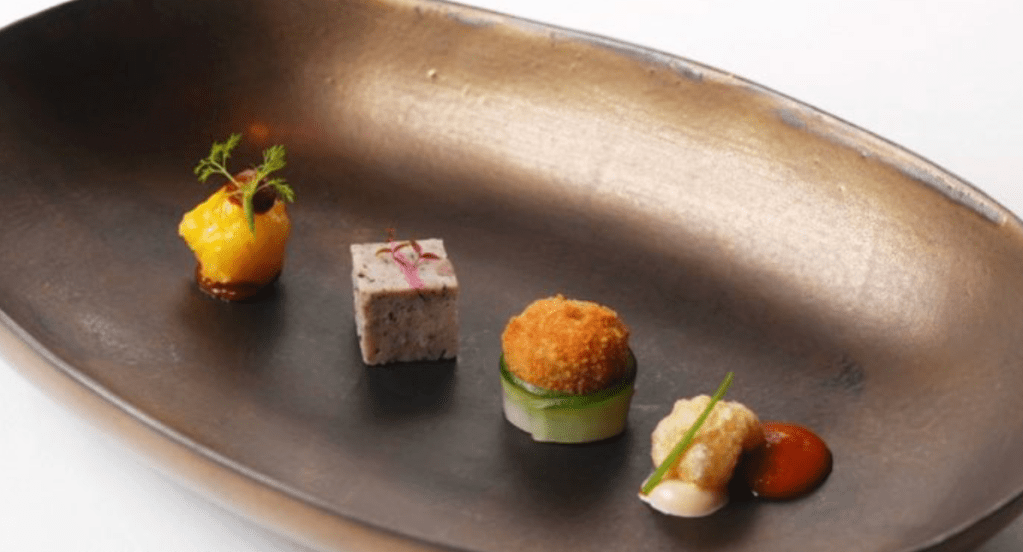
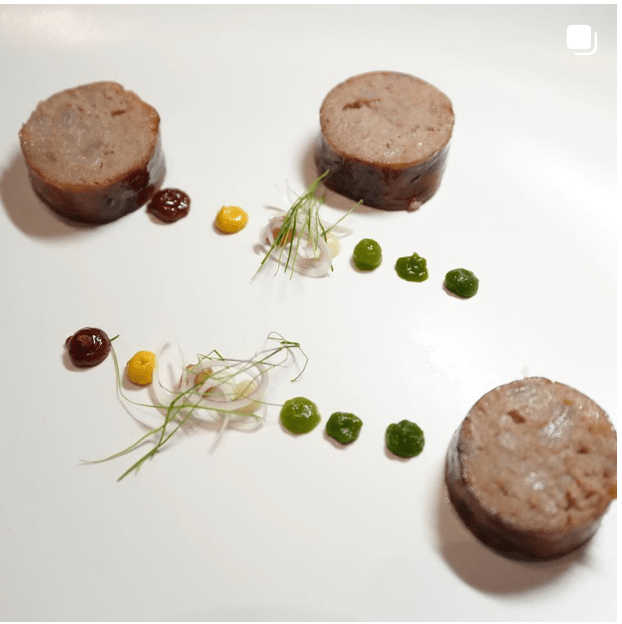
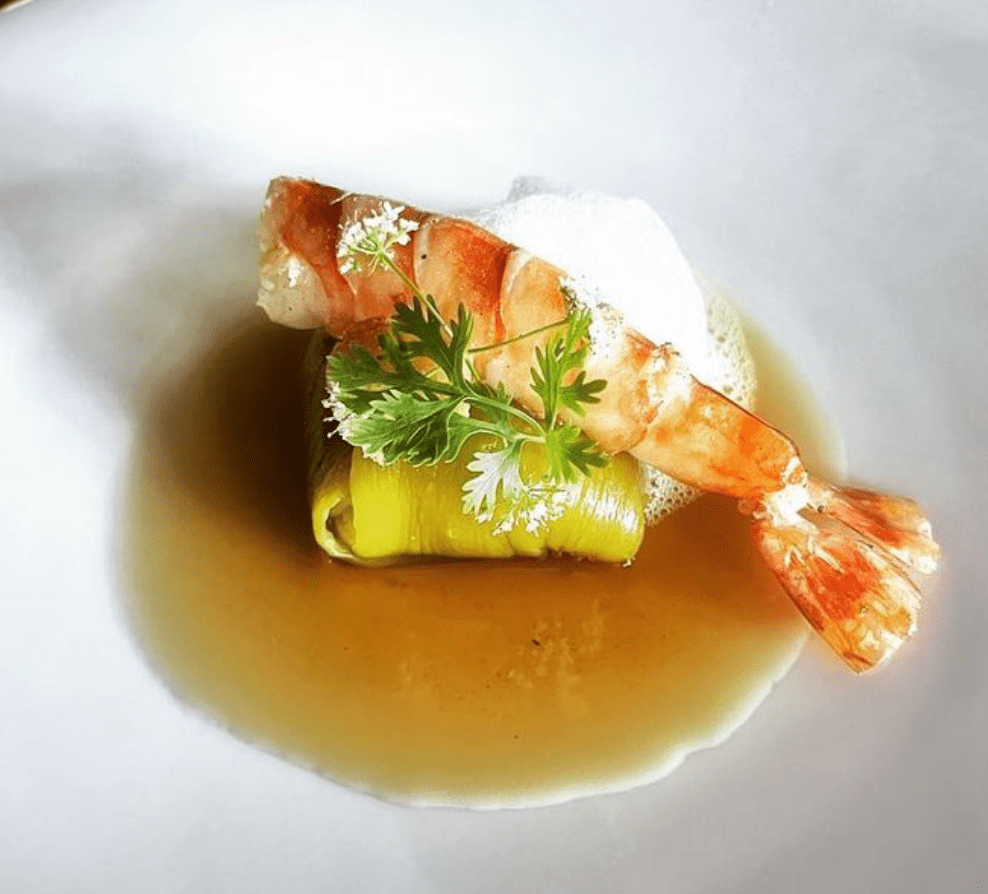
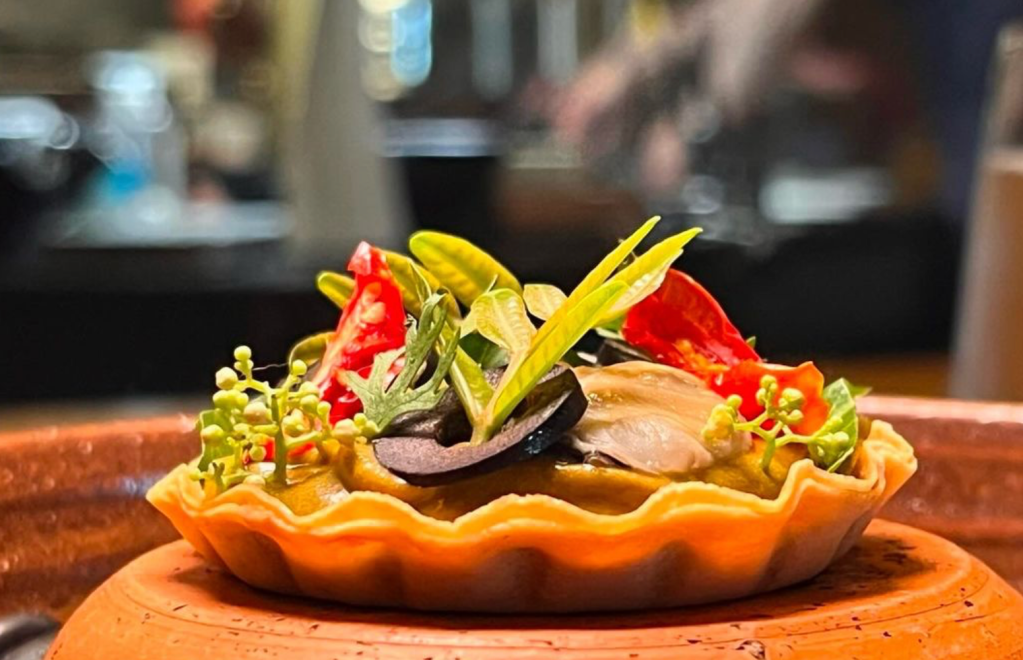
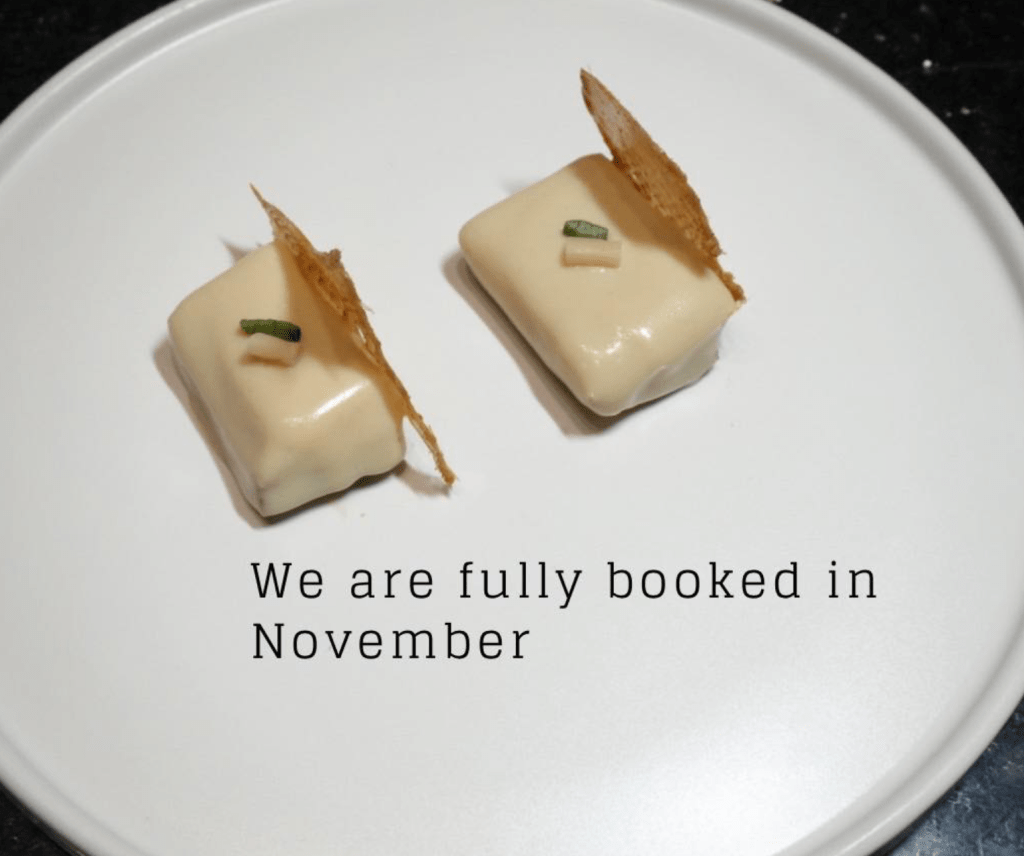
You would think that Chiang Rai, this out-of-the-way area in the remote north of Thailand, would not be interesting from a culinary perspective. In fact, we had many excellent meals during our visit. But one, at Locus Native Food Lab, was truly exceptional. The three-hour, eight-course dinner in this restaurant that is located in the middle of nowhere, doesn’t only feature exceptional food – its very gifted owner and Chef Kongwuth Chaiwongkachon also gave us a detailed explanation of the historical origin of each dish we had. We left thinking how lucky we were to have been in this area during the low season – during high season (October to April), Locus is usually fully booked for months in advance!



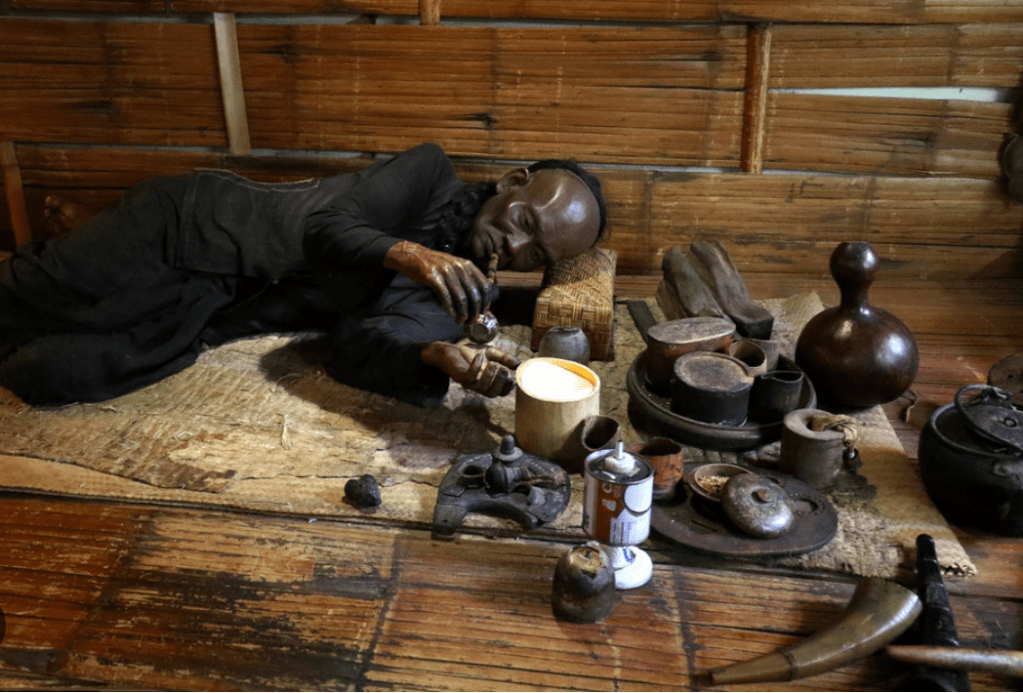
Chiang Rai province and its neighbouring areas in Myanmar and Laos (appropriately called “the golden triangle”), were for many years one of the main worldwide centers of opium production. Thanks to the determined effort of King Rama IX (1927 – 2016), Thailand’s illegal production of opium has been virtually eliminated, replaced by plantations of coffee, cocoa, tea, cabbage, etc.
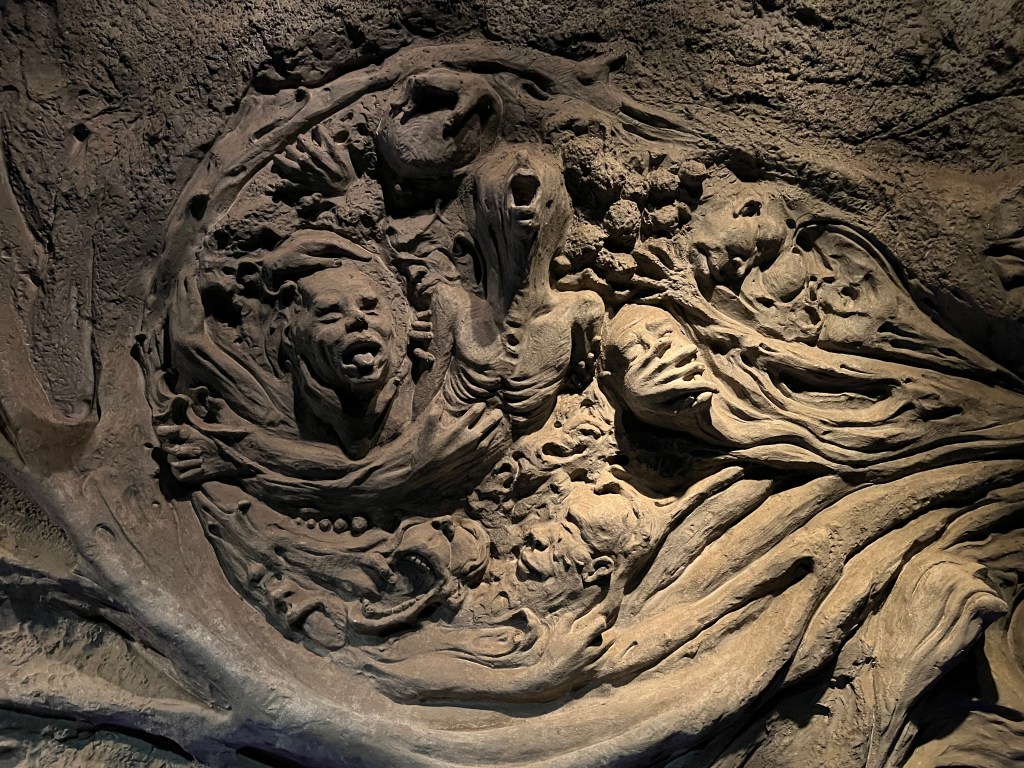
The Hall of Opium, close to Chiang Saen, showcases the story of opium, including the incredible international geopolitical consequences it had in the XIXth century, including the invasion and occupation of China. The museum’s audiovisual displays are impressively well done, giving you a feeling of what effects the drug has had not only on individuals, but on society as a whole. It’s one of the best museums we have ever been to, don’t miss it and make sure you reserve enough time to see it (3 hours is ideal)!

Chiang Rai province is hugely fertile (it was mentioned to us that whatever you plant here will grow, which is probably true), so it should come as no surprise that over the centuries, humans often fought over this land.
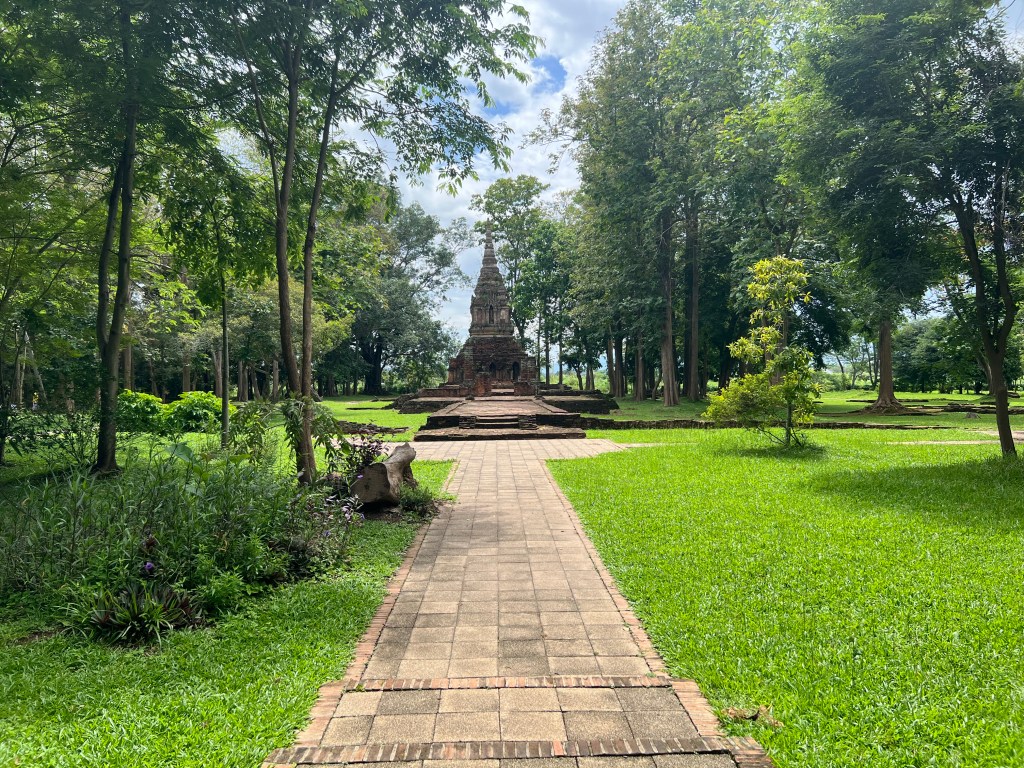
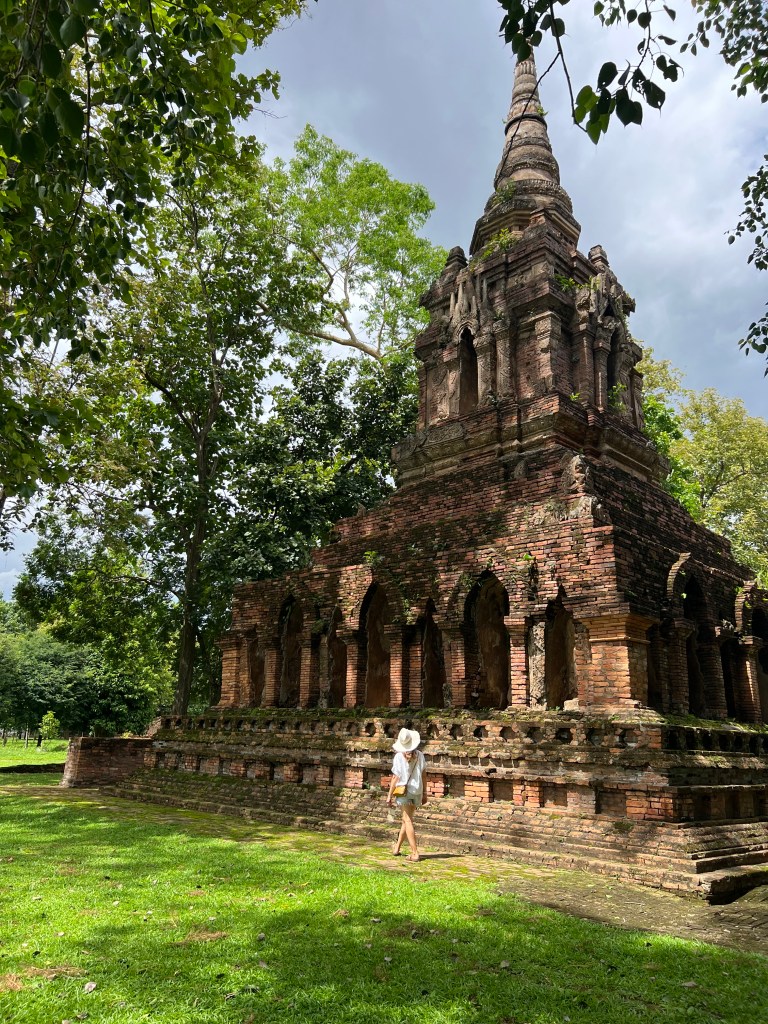
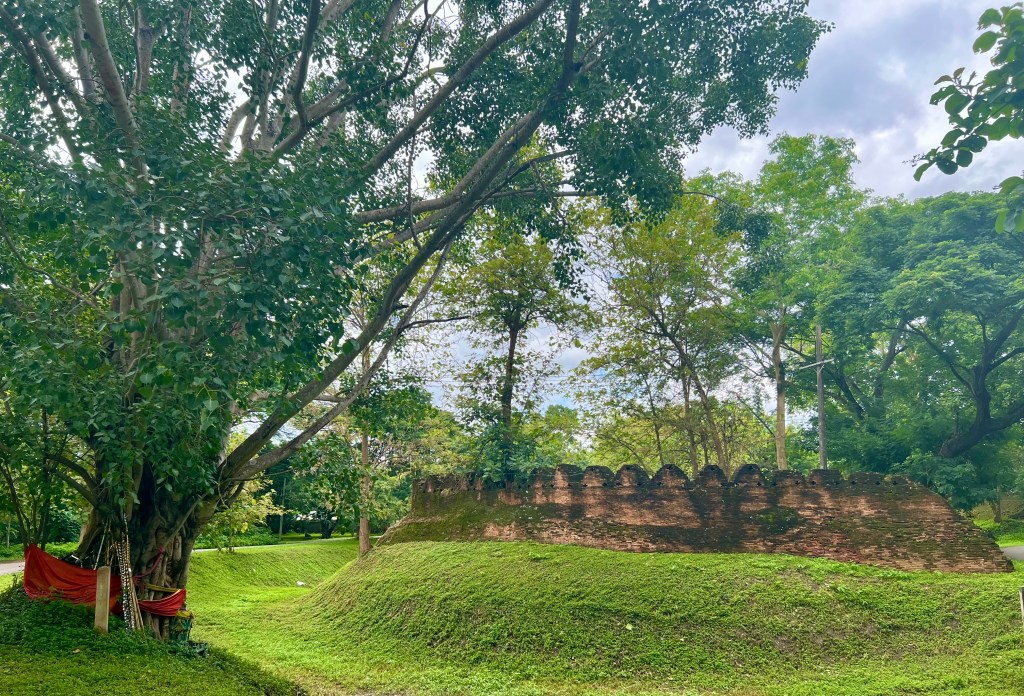
The town of Chiang Saen offers a good testimony to this. Founded in 1327, it became one of northern Thailand’s biggest and most prosperous cities. Dozens of magnificent Buddhist temples were built throughout the city, which protected itself on all fronts with a huge wall and an impressive moat. Finally, after a long siege, the town was conquered and devastated by the king of Lanna in 1804. From then on, and for many decades, the city was uninhabited. Today only about 5’000 people live in Chiang Saen, which counted more than 23’000 inhabitants in 1804. However, the temples and other constructions are still visible everywhere. We spent a wonderful afternoon touring these ruins and imagining what life in this impressive city must have once been.


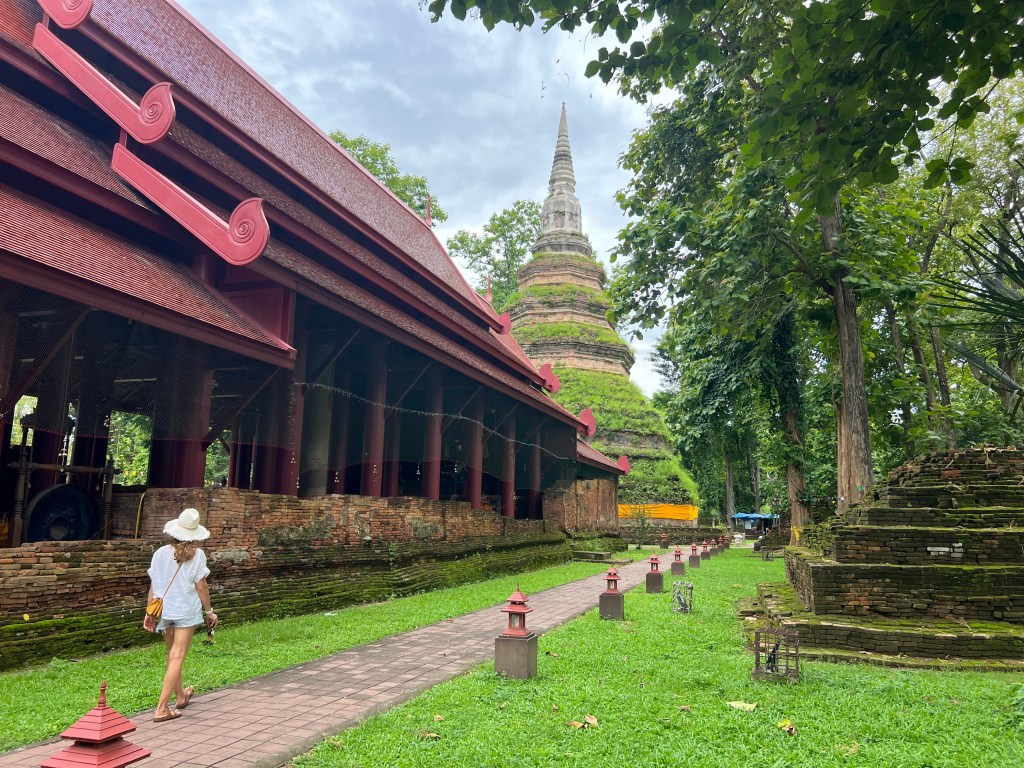

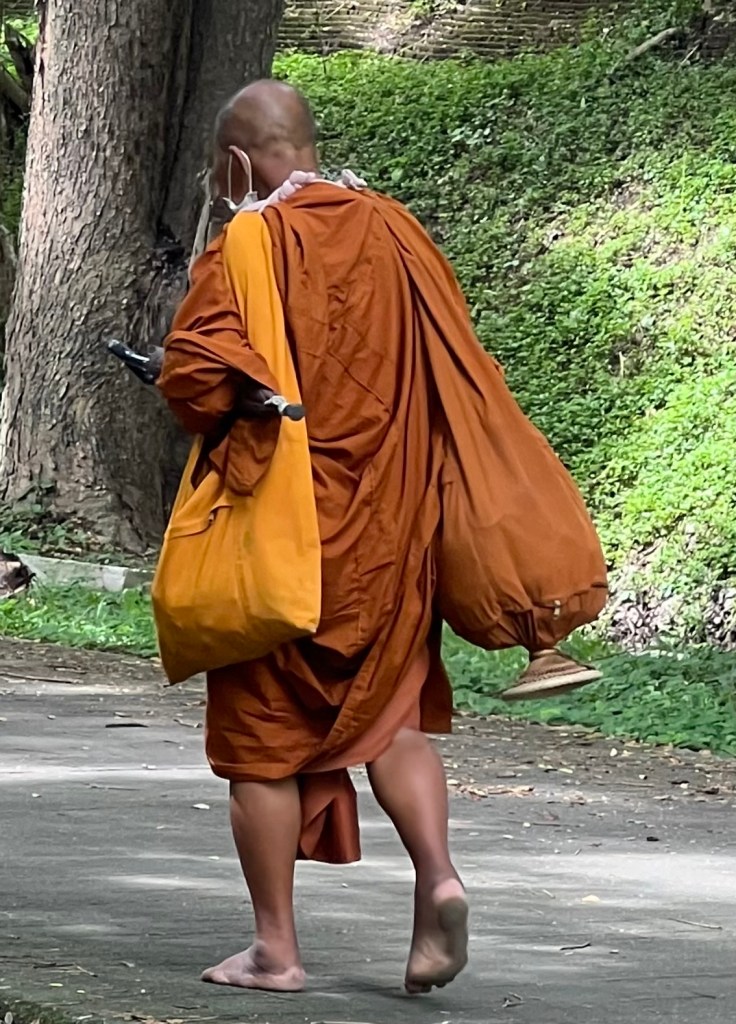
While in Chiang Saen, one of the most interesting encounters we had was with a wandering Buddhist monk.
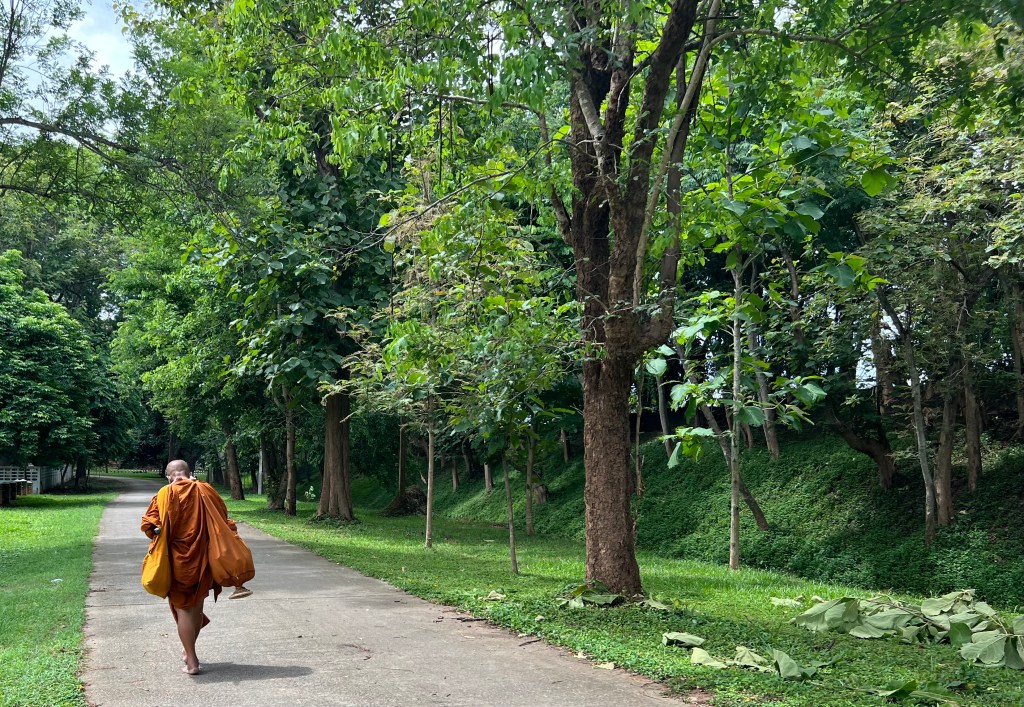
Wandering monks move from place to place, barefoot, carrying with them all of their possessions. They often stay in remote areas, although during the rainy season (between June and September), they may temporarily live in temples, which is the case of the one we met.
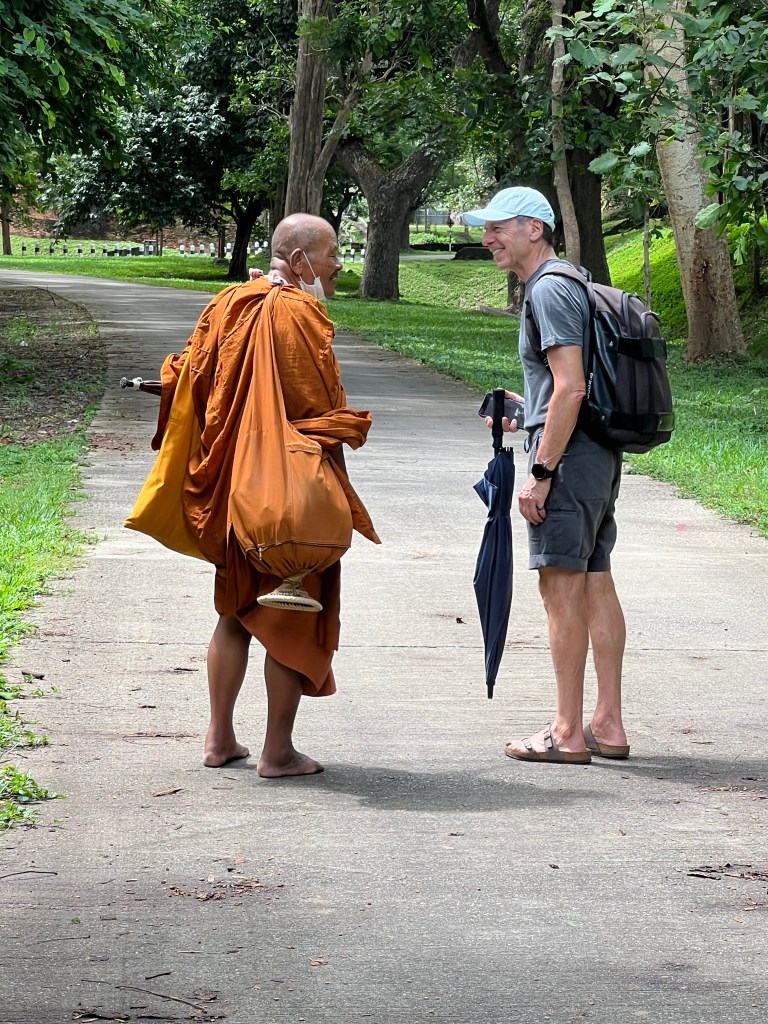
Wandering monks typically carry an umbrella, to shield them from the sun and the rain, and as a weapon to fend off mosquitos and stray dogs, as well as an alms bowl, which is used to collect food from the villagers they encounter (monks in Thailand have no money, they live off alms and are revered by the population as great, enlightened beings).
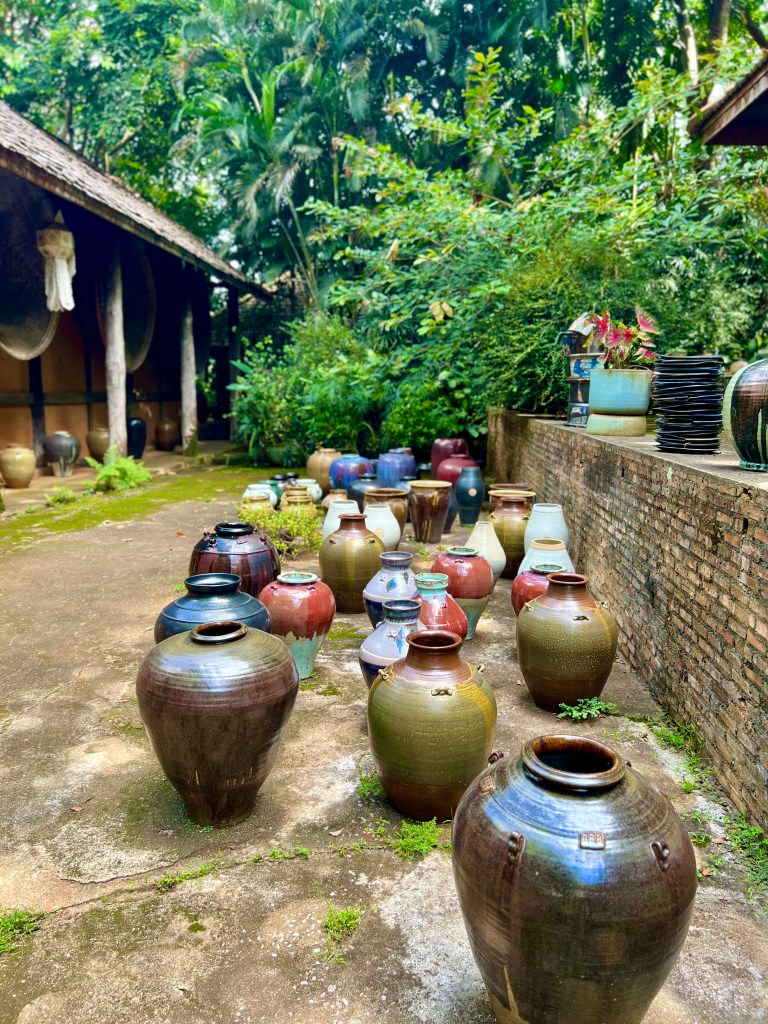
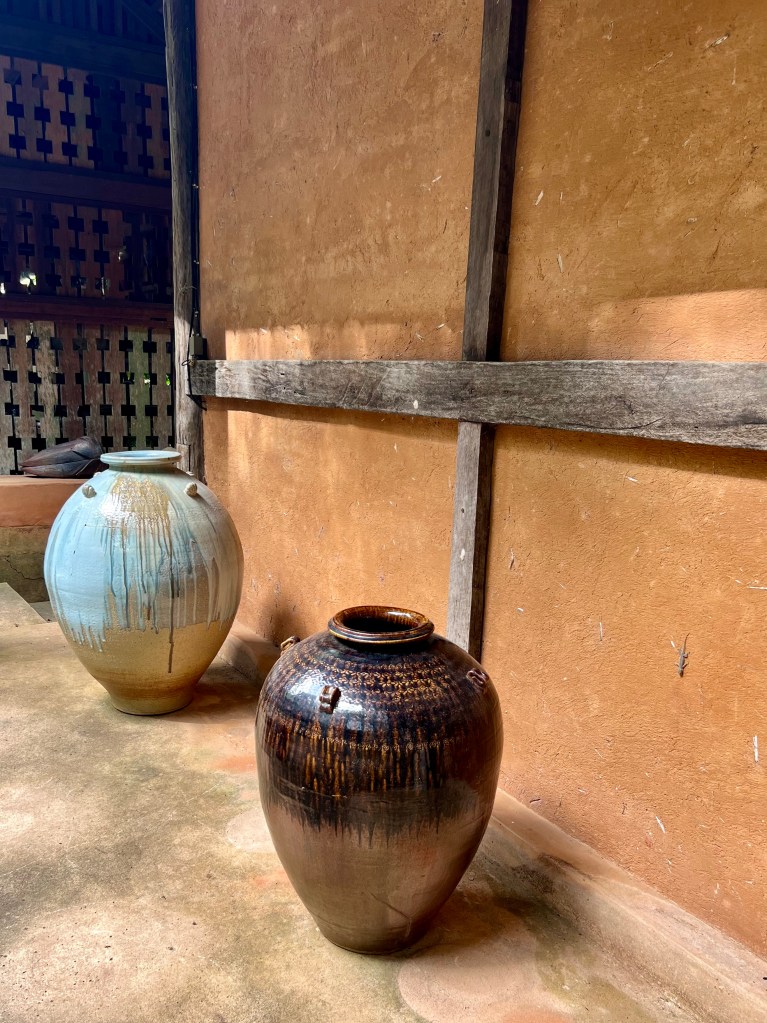
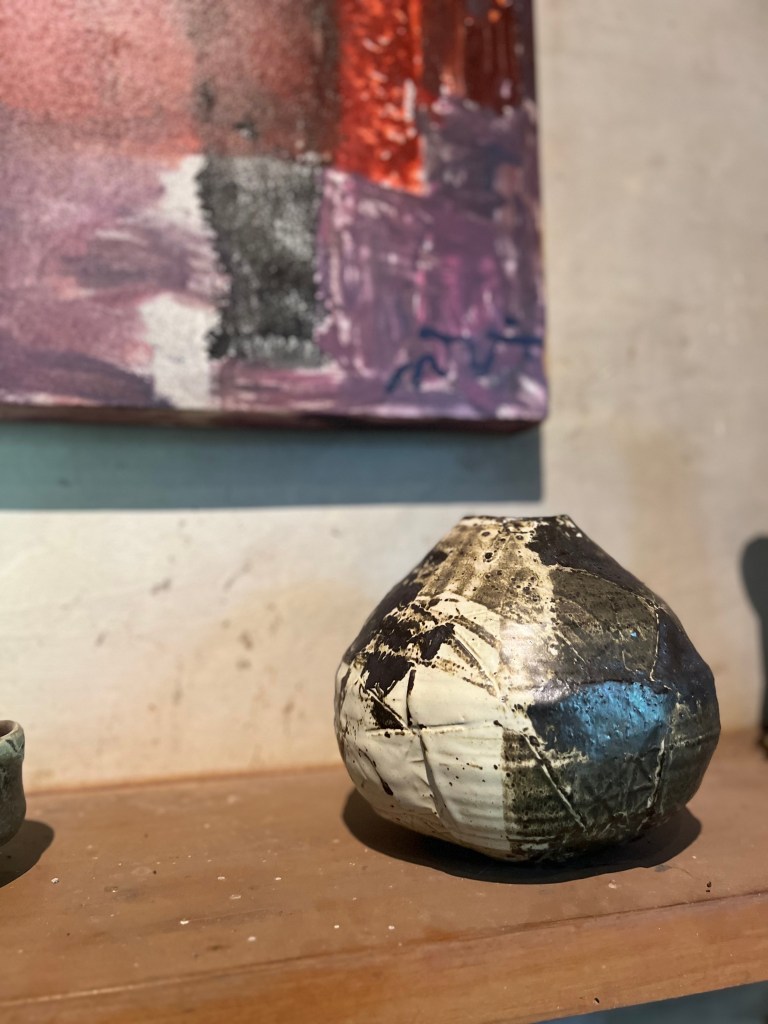
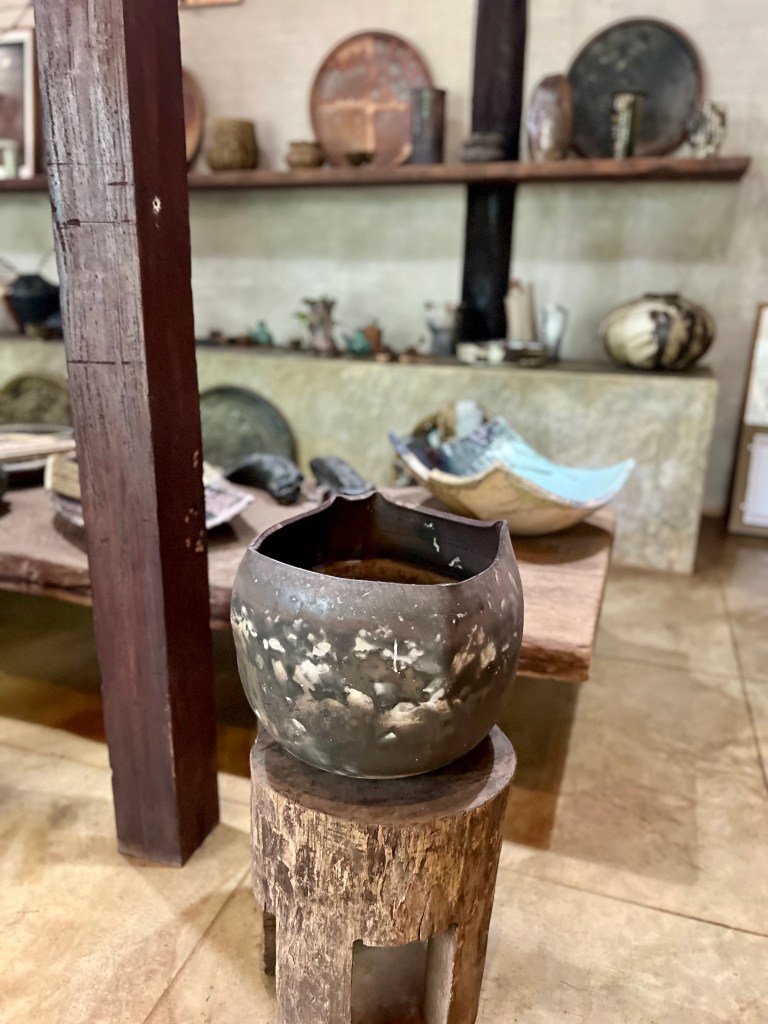
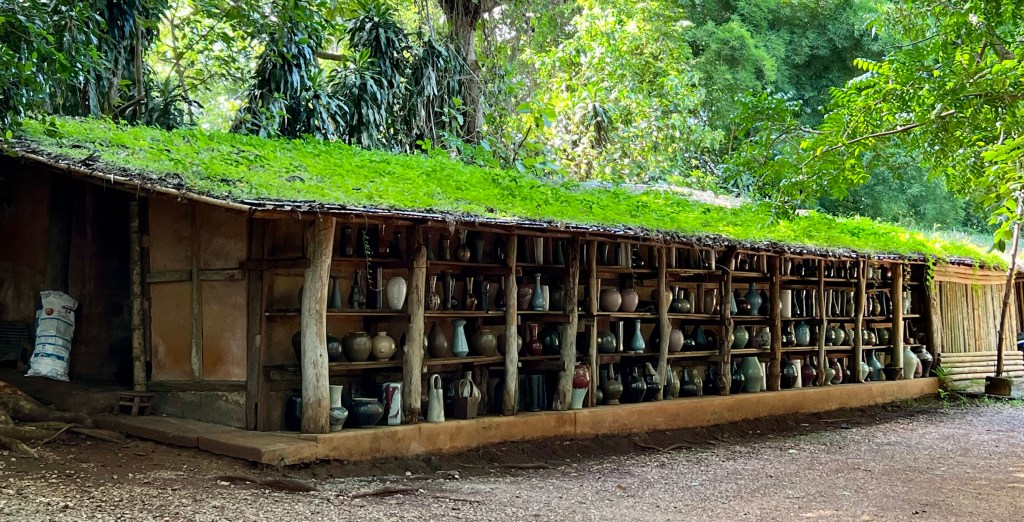
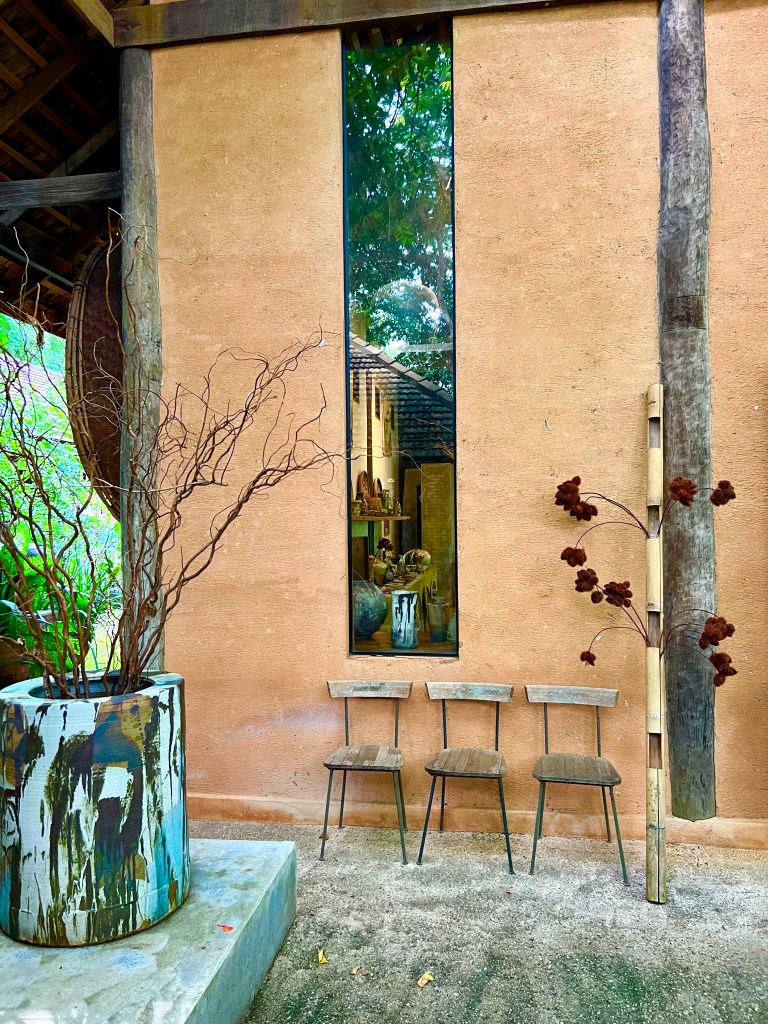
Chiang Rai has a great tradition of pottery. Doy Din Dang, close to Chiang Rai city, is one of the best ateliers and the display of work we saw did not disappoint us!


We are greatly indebted to Khun Tuy (+66897016467), who helped us organise our trip and without whose great insights, we would have not seen or experienced north Thailand as well as we did.
 Truliluli Travel Reports
amazing place and you amazing ❤️
LikeLiked by 1 person