
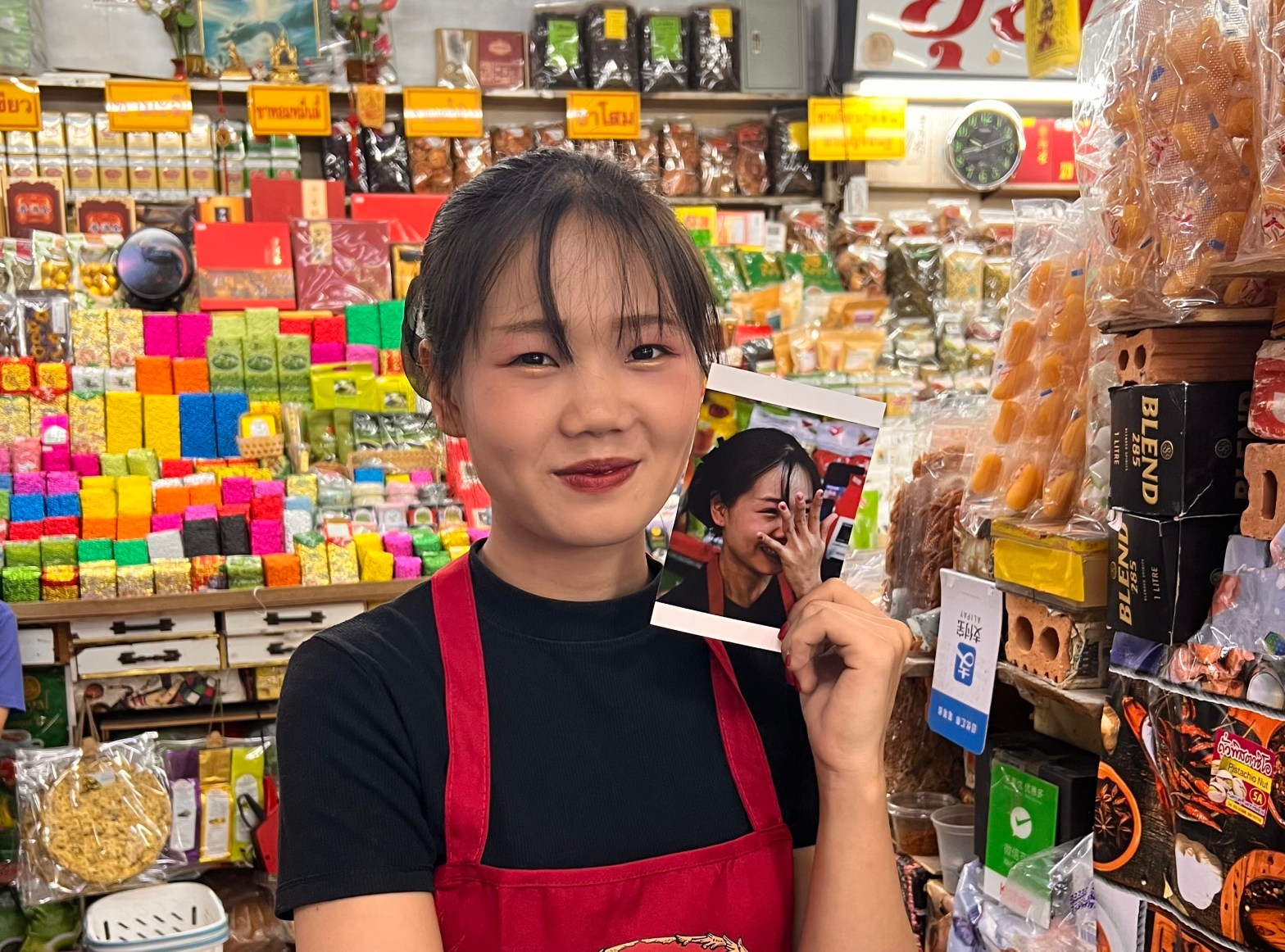
Thailand is famously celebrated as the “Land of Smiles,” a moniker that conjures images of effortless warmth, easygoing charm, and open-hearted hospitality. And in many ways it is!
Yet, beneath the serene surface of everyday interactions lies a deeply nuanced, highly structured cultural framework. Governed by centuries of social hierarchy, indirect communication, and collective social responsibility, “Thainess” is far more complex than standard travel brochures suggest.
To truly understand how core Thai values operate in real time, one must look beyond superficial tourist observations and unspool both the cultural mechanics of Thai society and the tangible realities of living within it.
Stratified collectivism: family, status and social distance.
While Western societies tend to celebrate individual assertiveness, personal space, and self-determination, Thai culture operates predominantly through a collectivist framework. However, Thai collectivism is not “flat” – people do not automatically view one another as functional equals. Instead, it’s a society that is deeply stratified and hierarchical.
Carpooling as an example of how Thai society works
The failure of carpooling to take root in Thailand provides one of the most revealing case studies into how Thai social structures operate in practice.
At first glance, a collectivist culture would seem like the ideal environment for ride-sharing: individuals travel together to save on resources, reduce traffic congestion, and lower costs for the common good. However, carpooling thrives primarily in flat collectivist societies, where citizens view one another as equals who can comfortably share tight, informal spaces.
But in Thailand, collectivism is deeply hierarchical. Every social interaction requires an implicit, immediate calculation of relative status, age, authority, and social standing. When examined through this lens, the reluctance to partake in carpool uncovers several core mechanics of Thai societal behaviour.

At the heart of Thai public behaviour is Kreng Jai – an intense desire to avoid causing discomfort, burden, or friction to others. However, carpooling by its very nature, forces strangers into an enclosed, intimate space where social boundary management almost inevitably becomes difficult:
- The burden on the passenger: A passenger of lower social status sitting in the car with a higher-status passenger might worry about overstepping, taking up physical space, or perhaps occupying space that does not correspond to his or her social status (like the front seat).
- The obligation of the driver: Conversely, a driver may feel a heavy burden to host, accommodate, or alter their personal routine for individual passengers, turning a simple commute into a taxing social performance.
- Verbal restraint: Because small talk between strangers across different social tiers can feel risky or forced, spending 40 minutes in traffic together creates an environment where maintaining appropriate silence (Gala-Pesa) can become exhausting (more on this below).
So, rather than navigate the delicate protocols of who sits where, who speaks first, or how much conversation is required, most Thais much prefer to commute independently to protect their own and the other passengers’ Kreng Jai.
The Thai group environment
The structural reality of Thai society shapes daily social dynamics in many and profound ways:
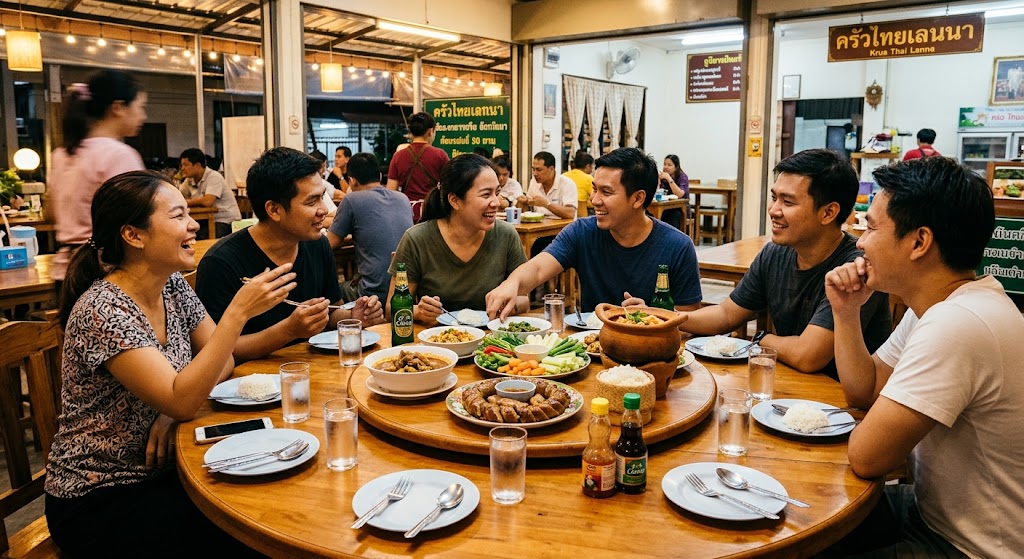
- Slow integration: Thais take their time before they become friends with other Thais. It’s a process that occurs far more slowly than in the West and, initially, happens almost exclusively within group settings. Individual, one-on-one invitations with relative strangers, can make Thais feel uncomfortably vulnerable. So Thais will typically prefer group dinners, where conversations are often intentionally maintained as a single, shared discussion for as long as possible, to avoid break-offs into smaller sub-chats, which might force one-to-one conversations with strangers. This system allows individuals who do not know each other well, to observe and gain time, before deciding if they want one-to-one encounters.
- Duty, family, and determinism: The individual is consistently viewed in relation to larger collective entities. So, for example, it’s very common to excuse oneself from social activities by citing parental wishes – the reality (or the excuse) of: “my Mom wants me to accompany her to the dentist, so I cannot join you today” is readily and immediately accepted in Thai society. In university settings, many young Thais choose fields like tourism or hospitality not out of personal passion, but out of a sense of duty to fulfill an expected role and also to ensure that they can support their parents who may live in the countryside.
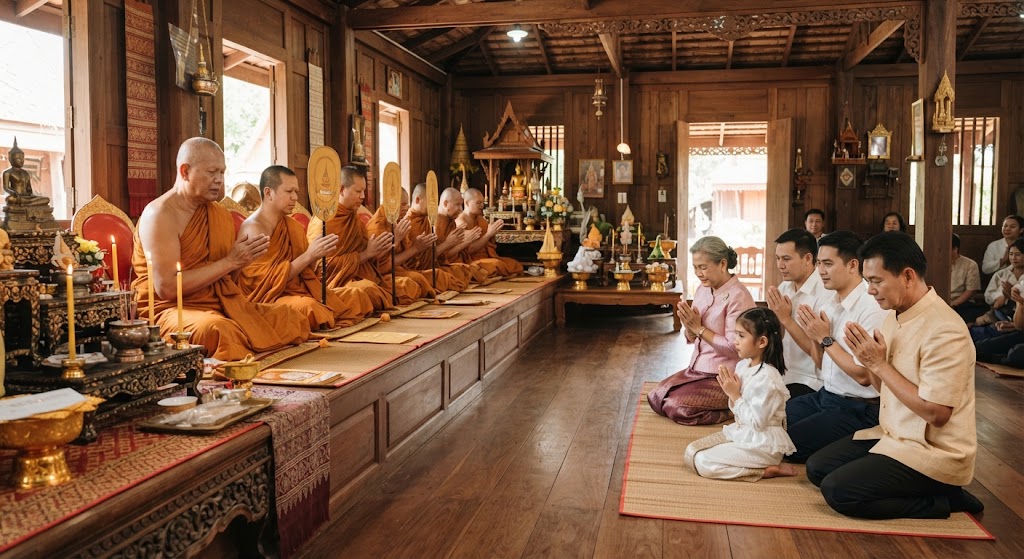
- House ceremonies vs. public parties: Unlike the Western custom of throwing housewarming or cocktail parties for friends and acquaintances, Thai home events are deeply familial, intergenerational, and structured. They frequently take the form of traditional housewarming ceremonies involving Buddhist monks. It’s uncommon for Thais to invite people who they don’t know very well to their homes. Casual peer-to-peer socialising is kept outside the home in restaurants, night markets, or cafés.
- The “wildcard” status of foreigners: Because non-Thais exist outside the traditional social hierarchy, locals often find them difficult to place. While this can create awkwardness, it can also be a liberating advantage: non-Thais can bypass rigid age and status decorum, allowing for genuine, cross-generational friendships that two Thais might struggle to form.
Spatial humility: Gala-Pesa, Kreng-Jai, and the art of “making oneself small”
A central pillar governing Thai public conduct is Gala-Pesa, which translates literally to “time and place”. It dictates that upon entering any environment, an individual must subconsciously evaluate where they belong and adjust their footprint accordingly.
Where Western cultures often encourage individuals to “take up space” or project outward confidence, traditional Thai etiquette prizes making oneself small, humble, and non-intrusive:
| Western Ideal | Thai Ideal (Gala-Pesa) |
| Assertiveness & Confidence | Spatial & Verbal Humility |
| Taking Up Space | Making Yourself Small |
| Direct Eye Contact | Mindful Non-Interference |
| Individual Autonomy | Harmony & Conflict Avoidance |
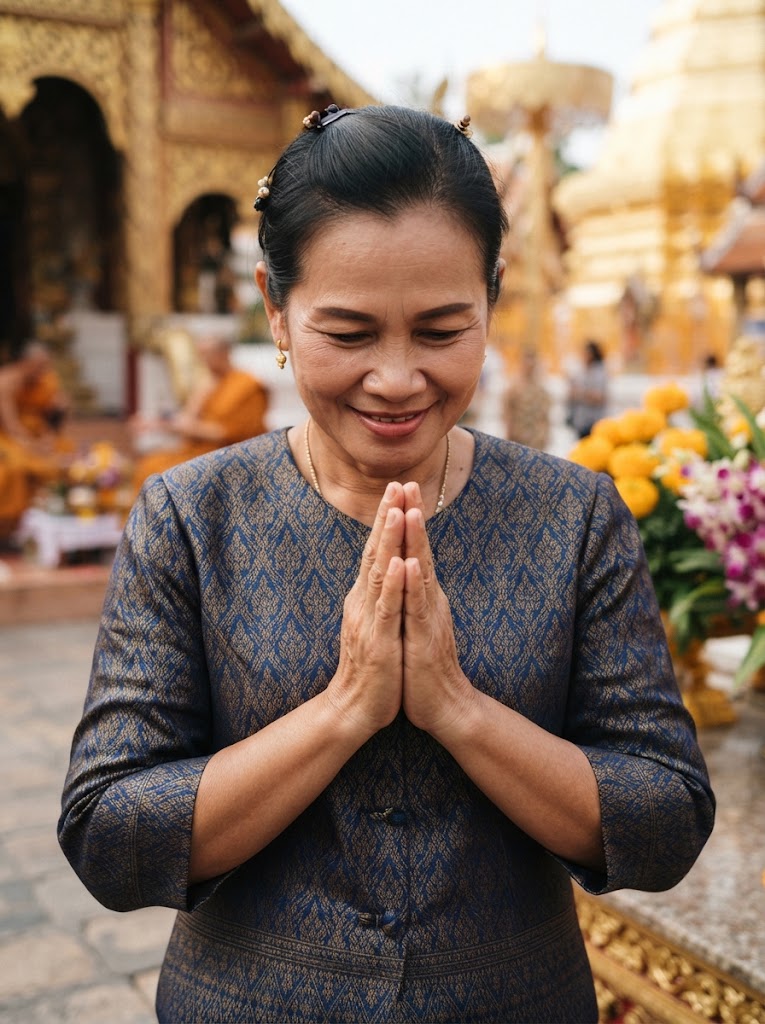
- Physical body language: Respect is physically demonstrated by lowering one’s head or slightly bending the body when passing elders or superiors. Even the traditional greeting, the wai, reflects this: elbows are kept tucked tightly against the torso to minimise physical presence, in stark contrast to the wide, expansive gestures often made by foreigners.
- Deference at ceremonies: In traditional settings, such as weddings or funerals, the honour of giving a toast or presenting offerings is routinely offered to the highest-ranking official or guest present – even if that person barely knows the hosts – out of respect for hierarchical standing and a fear of causing friction (Kreng Jai).
- Considerate avoidance in public: Whereas in the West, it’s common to greet people that one doesn’t know, such behaviour is more uncommon in a Thai setting. What foreigners might mistake for coldness or avoiding eye contact in elevators or on public transit, is actually a gesture of respect – leaving others alone in their personal space rather than forcing a perhaps unwanted encounter.
Linguistic nuance and the avoidance of friction
Language offers one of the clearest windows into how Thai society manages hierarchy and preserves interpersonal harmony.
In English, “I” and “you” are the same, whether the person speaking is a child, a friend, or a high-ranking official. However, in Thai, pronouns shift fluidly based on age, gender, social status, and intimacy.
In Thai, personal pronouns act as indicators of social status, age and gender. So choosing a pronoun requires the speaker to immediately assess their position relative to the listener (Gala-Pesa). For example, Thais will refer to someone younger as Nong (younger sibling). Or, when talking to a slightly older friend, colleague, or market vendor, Thais would address them as Pi (older sibling). So, instead of asking an older vendor “Do you have mangoes?”, a Thai speaker would ask:”Does Pi (older sibling) have mangoes?”
Words like Maw (doctor) or Kru (teacher) replace the second-person pronoun “you” even outside work settings. When speaking to a Buddhist monk, the speaker typically would use Phra Kun Chao for “you”, while the monk would refer to himself as Atama.
High-ranking individuals or officials often use their name or title as a third-person self-reference rather than a standard “I”, as we would do in the West. For example, former Prime Minister Yingluck Shinawatra frequently used her nickname (Yingluck) instead of “I” in public interviews to maintain an accessible yet respectful tone.
Because navigating this fluid matrix of age, status, and gender can cause anxiety about giving offence or causing friction (Kreng Jai), native Thai speakers very frequently drop pronouns altogether. So, instead of saying “Are you hungry?” to someone whose hierarchy is unclear, Thais might instead simply ask: “Hungry?”.
Managing refusal and conflicts in a Thai environment
Preserving smooth social interactions takes absolute priority over rigid directness:
- Avoiding “no”: Direct refusal is widely avoided because it risks causing another person to “lose face” or to create social friction. A long, circumstantial explanation – or a vague, hesitant “maybe” – almost invariably signals a polite “no”.
- “Yes” is not confirmation of action : The word “yes” often is meant to convey “I hear and acknowledge what you are saying” rather than a binding commitment to act. This distinction frequently trips up expatriates trying to schedule maintenance or confirm business deadlines.
- Practical care, not emotionally intrusive questions: Inquiries like “How are you today?”, are uncommon in everyday Thai exchanges, because they are considered too personal and too emotionally intrusive. Thais typically greet one another by asking practical questions, most notably “Kin khao yang?” (“Have you eaten yet?”) or “Tee nai ma?” (“Where have you been?”). While a Western newcomer might take these questions literally – interpreting them as an invitation to dinner or an intrusive inquiry into their schedule – in Thailand these questions function primarily as warm greetings that reflect deep-seated cultural values, whose roots stem from the time when most Thais lived in villages. Since food plays such a crucial role in Thai culture, the question “Have you eaten yet?” is a friendly way of saying “Are you well?”. “Where have you been?” is not really a specific question, it’s just another way to show care. It can easily be answered with “Oh, nowhere special” or “Just hanging around”, always of course accompanied by a happy smile.
Balancing the rules: Sanuk, Plong and Karma
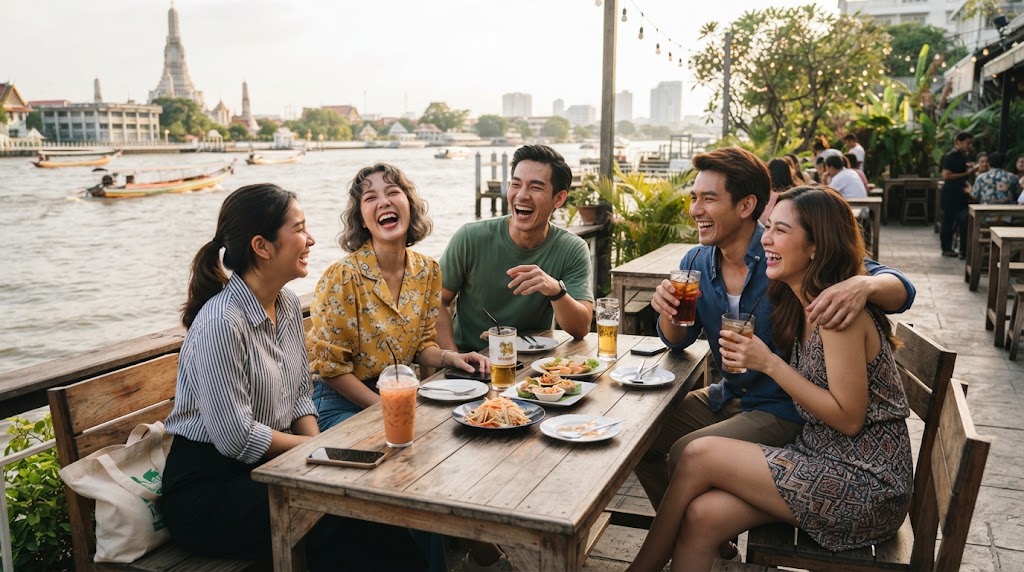
Living under continuous hierarchical rules could easily become oppressive without cultural mechanisms for relief. This is why Thai culture balances strict decorum with a vibrant commitment to Sanuk – the pursuit of joy, playfulness, and lightheartedness in everyday moments. Whether through playful banter, comedy-horror films, or humour in the face of unexpected disruptions, Sanuk acts as a vital social pressure release valve.
At a deeper level, daily resilience is underpinned by Theravada Buddhist concepts:
- Mai pen rai & impermanence (anicca): Accepting that all things are temporary helps cultivate emotional calm and helps reduce public displays of anger or aggressive confrontation.
- Plong (letting go): Accepting circumstances beyond one’s control allows individuals to move forward without harbouring debilitating frustration.
- Karma and honesty: A strong cultural belief in building positive Karma manifests itself in remarkable everyday honesty – such as locals running down the street to return forgotten wallets, phones, or even cash inadvertedly left behind.
Navigating life as an expatriate
Living within this cultural framework reveals both the immense charm and the subtle friction points of long-term life in Thailand:
What enriches the experience:
- Safety and public harmony: Public spaces in Thailand offer a rare sense of peacefulness. Traffic, though chaotic, moves with remarkably little road rage or honking, and instances of violent public conflict are exceptionally rare.
- Immediate warmth: Foreigners regularly experience feeling welcomed and accepted without having to “perform” or make a special effort to secure a “good” first impression.
- Everyday integrity: Stories of returned lost items and unprompted price discounts at local markets remain a comforting hallmark of daily life.
What can prove challenging
Living in Thailand is a true blessing and a joy, and getting to know the Thais offers a daily source of energy and positive vibes. But for expats, two areas can become tricky, if not managed appropriately:
- Conflict resolution: Westerners accustomed to clearing the air through direct dialogue often struggle when Thai counterparts retreat to avoid friction. The Thai approach is very often “self-adjustment” (or outright disappearance) in order to avoid confrontation. For example: if a customer in a restaurant has their phone propped up on a table and plays a video at high volume, the Western approach might be walking over to the table and asking the person to reduce the volume of the speaker, or asking the waiter to intervene. The Thai approach would be to quietly ask the server to move your meal to a table across the room or outside, or finishing quickly and leaving without saying anything. This is because in the Thai culture, intervening in someone else’s space or causing a scene in public, creates far more social discomfort than the noise itself. Stepping away removes the nuisance from your immediate environment without creating a public confrontation. Or, to take another example, imagine that a colleague, business associate, or contractor does not deliver work on time or acts unreliably. The Western approach would be to sit the person down for a performance review, and politely but explicitly indicate disappointment. The “Thai way” is usually to phase down interactions with the person in question, reducing their responsibilities in future projects, or quietly hiring someone else next time, without making a dramatic and explicit exit. This is because direct verbal confrontation makes both parties uncomfortable and disrupts interpersonal harmony. Adjusting exposure allows the relationship to cool down or end smoothly, avoiding public embarrassment or long-term resentment. This can easily lead to “ghosting”, with Thais who feel uncomfortable, frequently just disappearing from other people’s lives.
- Navigating intention: As we saw above, learning to decipher whether a “yes” in Thailand implies action or is merely polite acknowledgment, remains one of the most persistent day-to-day hurdles for foreigners. To navigate this effectively, the key is to shift from seeking a simple affirmative answer, to verifying practical details using indirect, non-confrontational follow-ups. As an example, imagine that you hire a local technician to repair a leaking pipe in your house, and that you would like the job finished by Thursday afternoon. You ask: “Will this be finished by Thursday at 3 PM?” The technician responds “Yes”. What you hear is: “The job will 100% be done by Thursday at 3 PM.” But what the technician might be saying is: “I understand your schedule request, I’m not sure if I can do this, but I don’t want to make you feel anxious or to say no to your face right now.” So Thursday comes and nothing has been done, leaving you totally frustrated. A better way to handle the technician would be to ask: “As you can see, this is quite urgent, but you look to me like a busy man, what time would work best for your schedule?” and then evaluate the situation, depending on his answer. You could also ask roundabout questions, like: “When do you think that the spare parts will arrive?” This will give you clues as to when the work can realistically be done. Or you could also offer the technician an easy way out, so he can express constraints without losing face (Kreng Jai) by saying: “If Thursday is too rushed, Friday is also completely fine for me. Which day works better for you?” The key is to avoid yes/no situations, as well as face-to-face confrontations.
Ultimately, understanding Thai values requires looking past the simple charm of the famous smile to appreciate a culture that deeply prizes social balance, spatial respect, and collective ease.
While adapting to these unspoken rules takes patience, observation, and genuine humility, learning to walk softly within them offers a profoundly rewarding window into the gentle rhythm of modern Thai life.

