
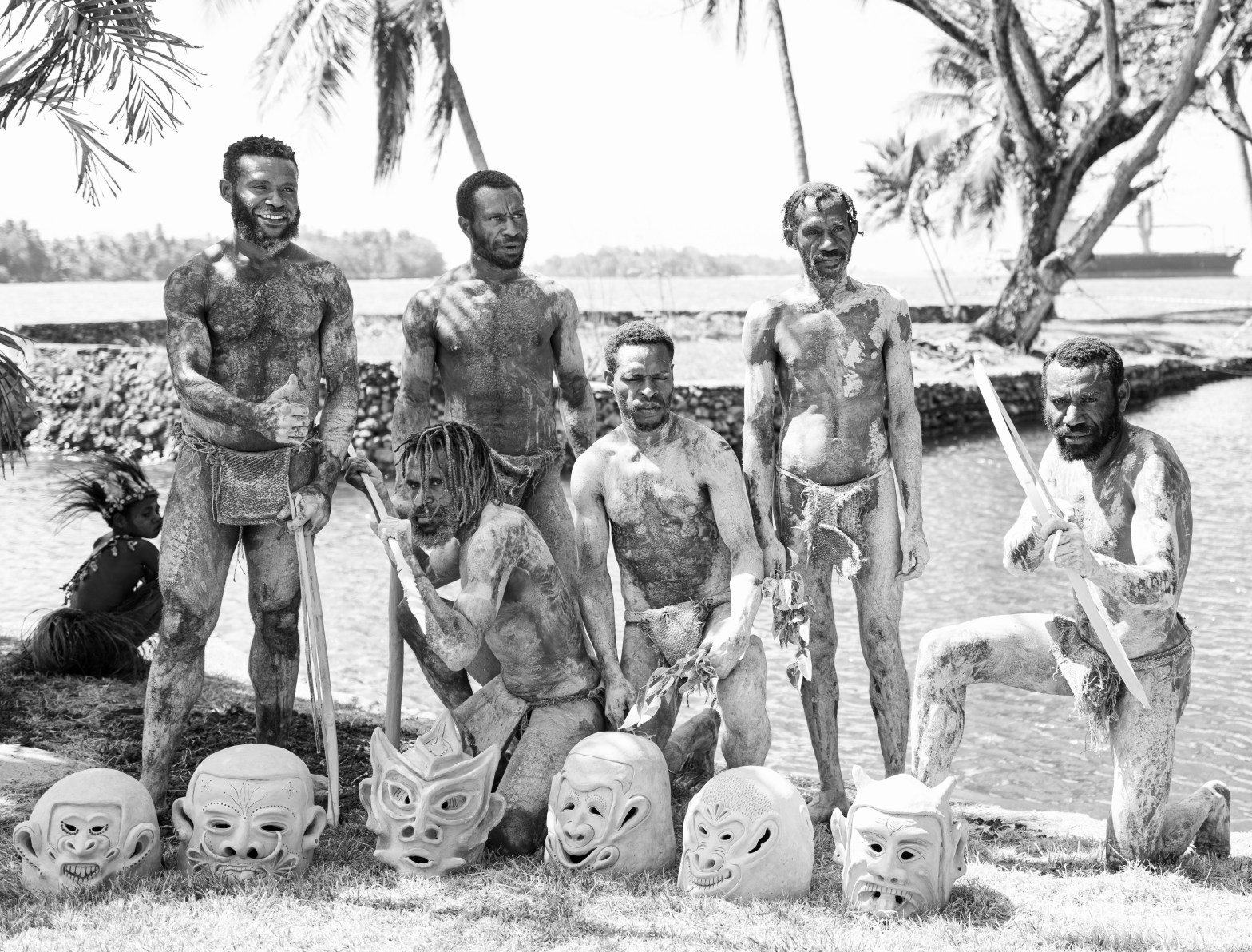
Few places on Earth retain an air of genuine mystery quite like New Guinea. As the second-largest island on the planet – surpassed in size only by Greenland – this massive landmass stretches across the southwestern Pacific, split down the middle into two political entities: the independent nation of Papua New Guinea to the east and Indonesian territories to the west. We had the pleasure of visiting both sides of this incredible island for over two weeks during September 2026.
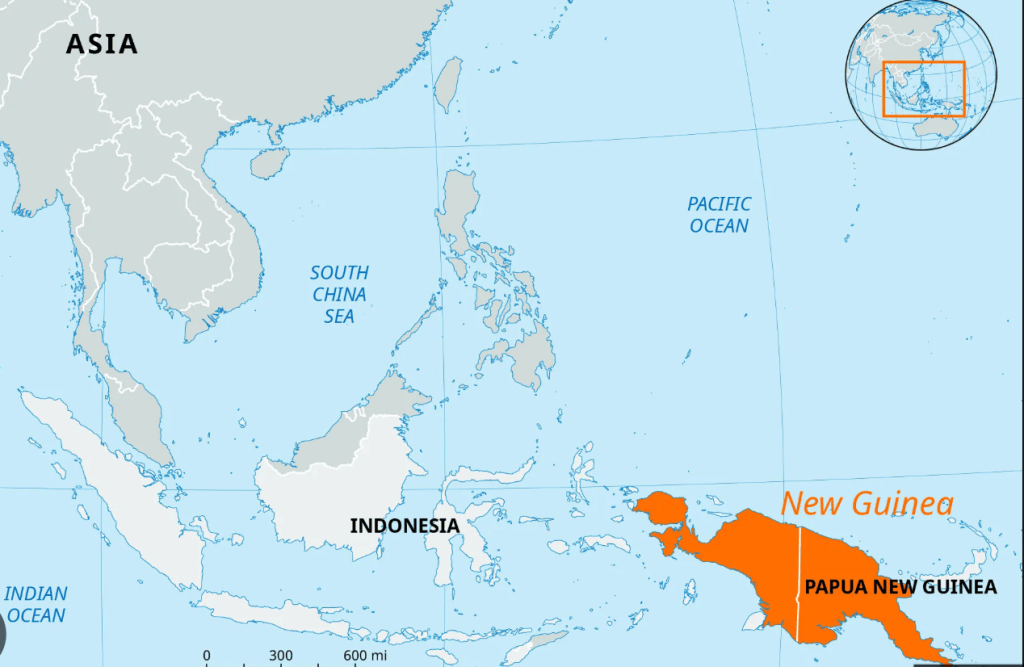
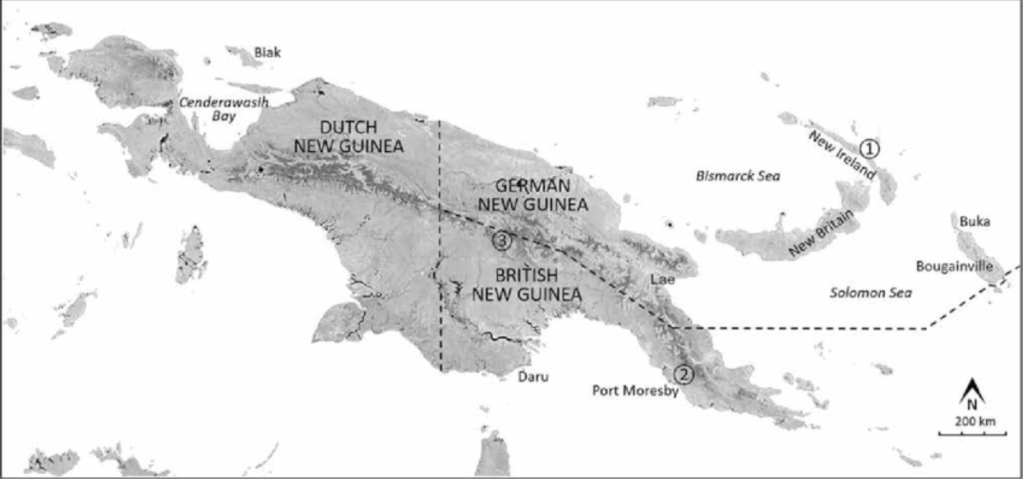
New Guinea’s geopolitical divide stems from European colonial history. Dutch powers originally claimed the western territory, while the eastern half was initially partitioned between Germany in the north and Great Britain in the south. Following World War I, Germany’s portion was transferred to British oversight, after which Australia administered the territory, including the British portion, until Papua New Guinea achieved full independence in 1975.
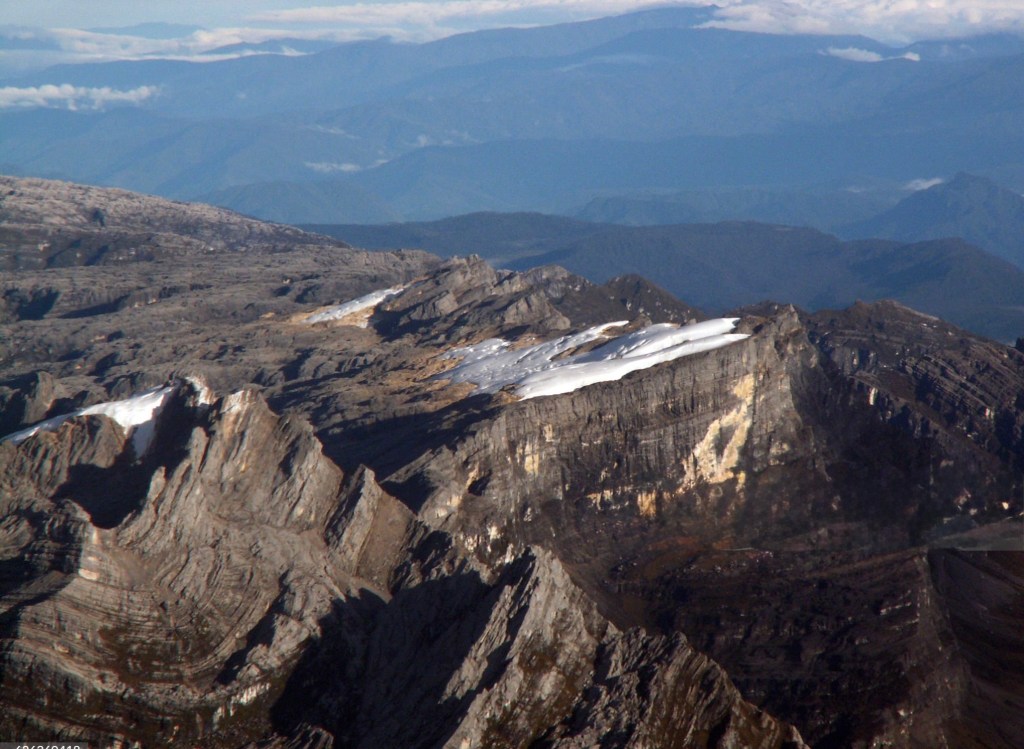
Yet long before modern borders were drawn, deep time and geography forged an area of the world where icy peaks overlook tropical jungle. From soaring equatorial glaciers to rainforests alive with vibrant courtship displays, New Guinea remains an extraordinary crossroads of geological collision, evolutionary wonder, and ancient human ingenuity.
A strange name
Where does denomination New Guinea come from? It was the Spanish explorer Yñigo Ortiz, one of the first Europeans to reach this island, who gave it this name in 1545 because he thought that the local people looked like the people of Guinea in Africa, which is totally wrong.
As for the word “Papua”, used on both sides of the island, it has an uncertain origin, but the most common explanation is that it comes from an older local word meaning “frizzy hair”.
Neither the Portuguese nor the Spanish were particularly impressed with what they found in New Guinea. They encountered a difficult terrain with no apparent spices or natural wealth to encourage much more exploration for them, so the island was left alone by Europeans until the XIXth century.
The geological story
To understand New Guinea’s extraordinary contrast of environments, one must look at its violent tectonic origins. Unlike neighbouring Australia – a continent famed for its flat, ancient terrain – New Guinea is defined by dramatic verticality and frequent change in geological terms. The island marks the active collision zone where the northward-drifting Indo-Australian Tectonic Plate grinds beneath the Pacific Plate.
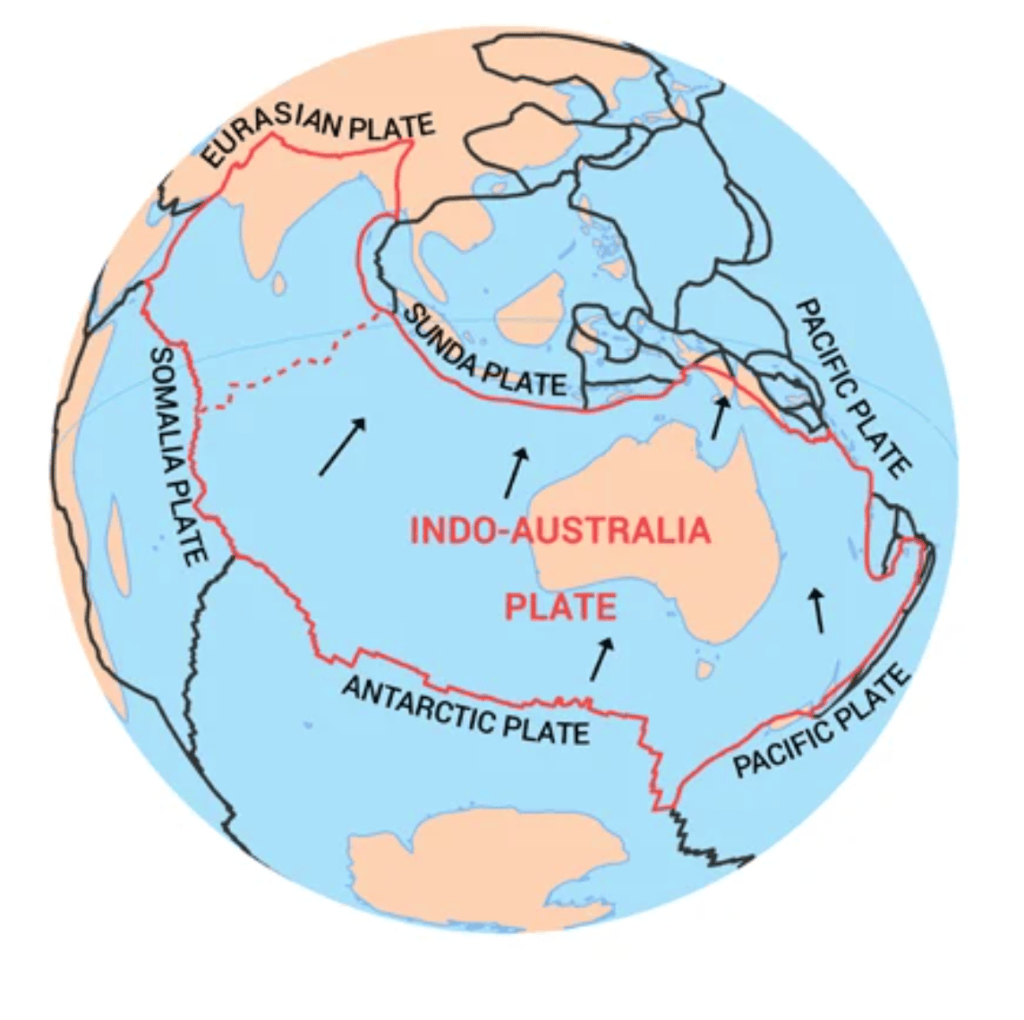
This ongoing subduction has crumpled the landscape upward into a colossal mountain spine running down the center of the island.
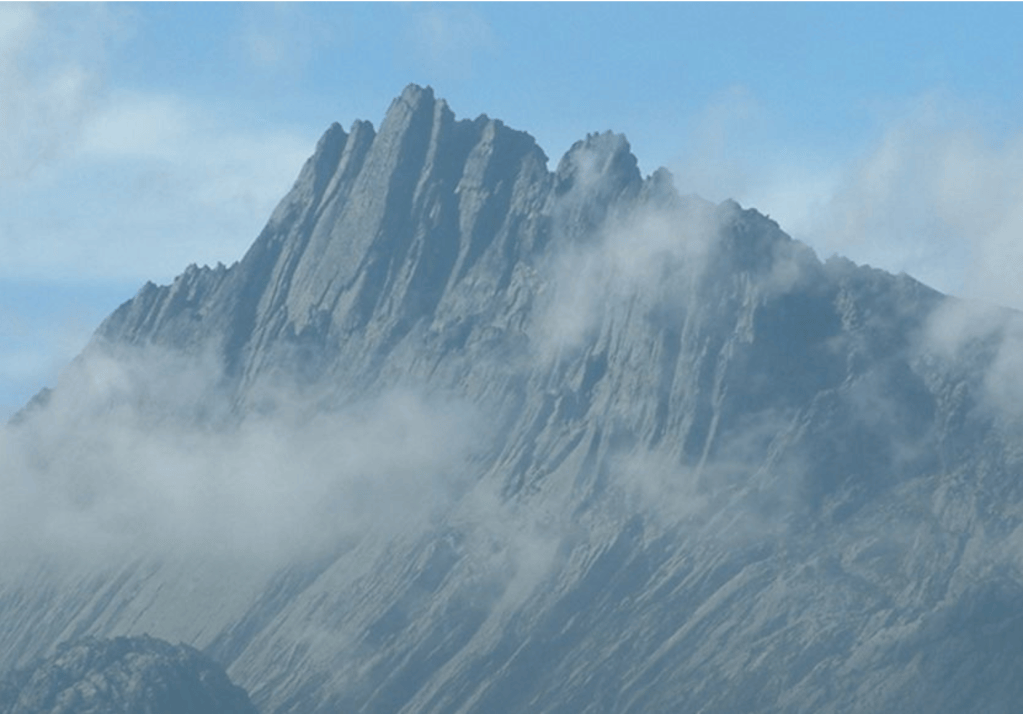
- Equatorial Glaciers: At the western end rises Puncak Jaya (Carstensz Pyramid), soaring to 4,884 meters (16,024 feet). Remarkably, despite sitting just degrees from the equator, its peak harbors permanent ice fields—a stark, gleaming contrast to the tropical jungles below.
- Microclimatic Elevation: Extreme topography creates isolated biomes within remarkably short physical distances. Within a single valley, conditions shift rapidly from humid coastal mangroves and sago palm lowlands to temperate cloud forests, before yielding to alpine tundra. These impassable mountain ridges and deep river basins have acted as natural barriers throughout history, dictating both ecological evolution and human settlement patterns.
Natural wonders: isolation leads to amazing wildlife
Because New Guinea broke away from the ancient supercontinent of Gondwana while remaining separated from Asia by deep oceanic trenches, placental mammals never established dominance here. Instead, marsupials and monotremes filled the ecological niches—from tree-kangaroos navigating the rainforest to short-beaked echidnas foraging along the forest floor.
New Guinea as an island has more plant species than any other island in the world, and 68% of its vascular plants are endemic. If you look at discoveries made every year in New Guinea, on average, a new species of animal or plant is discovered in the country every day. The consequence is biodiversity found nowhere else on Earth. Representing less than 1% of the world’s landmass, New Guinea harbours roughly 5% to 8% of all global terrestrial species, with a massive percentage of them being strictly endemic (native only to the island).
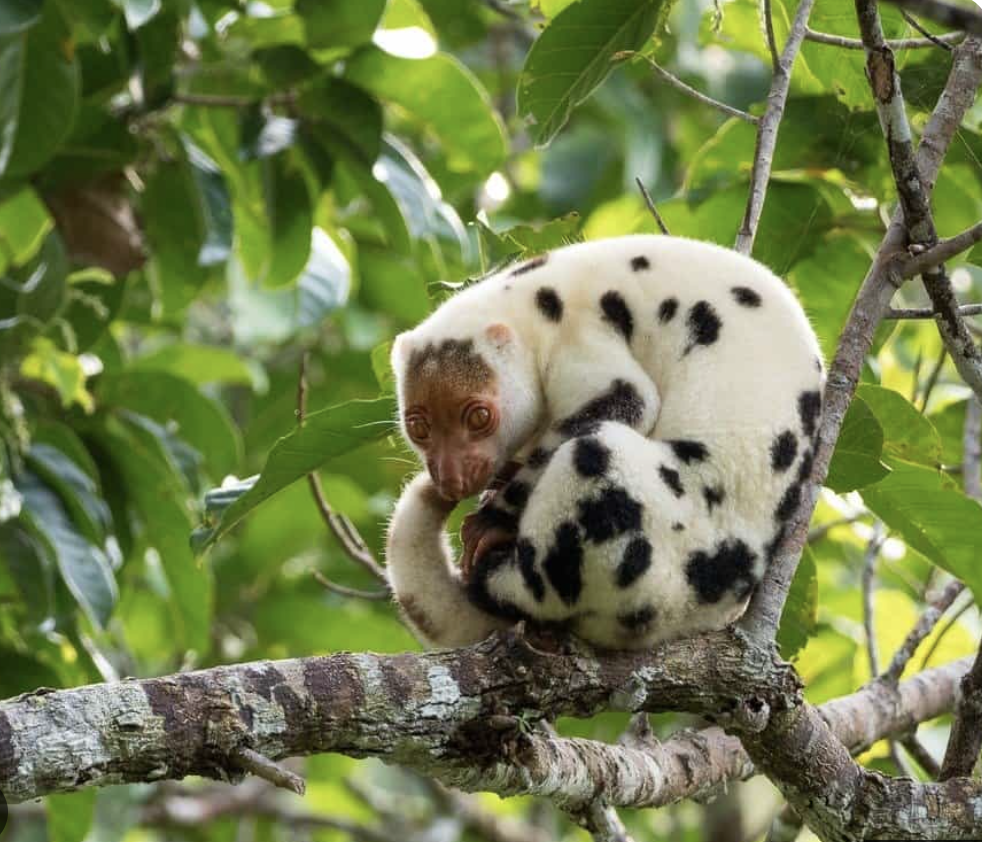
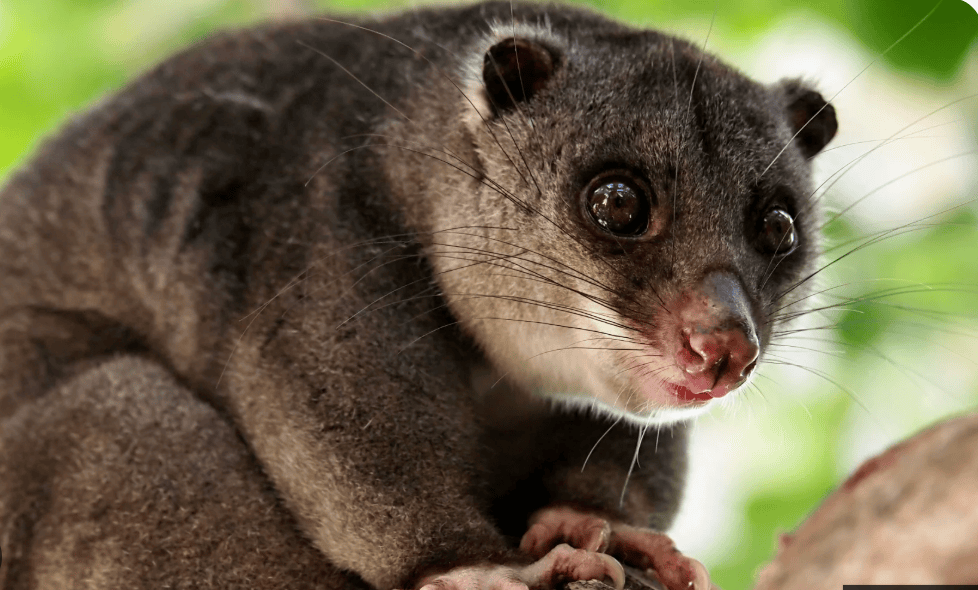
Because placental land mammals (like big cats, bears, or deer) never crossed deep ocean channels to reach New Guinea, marsupials evolved to claim the forest canopy. These include:
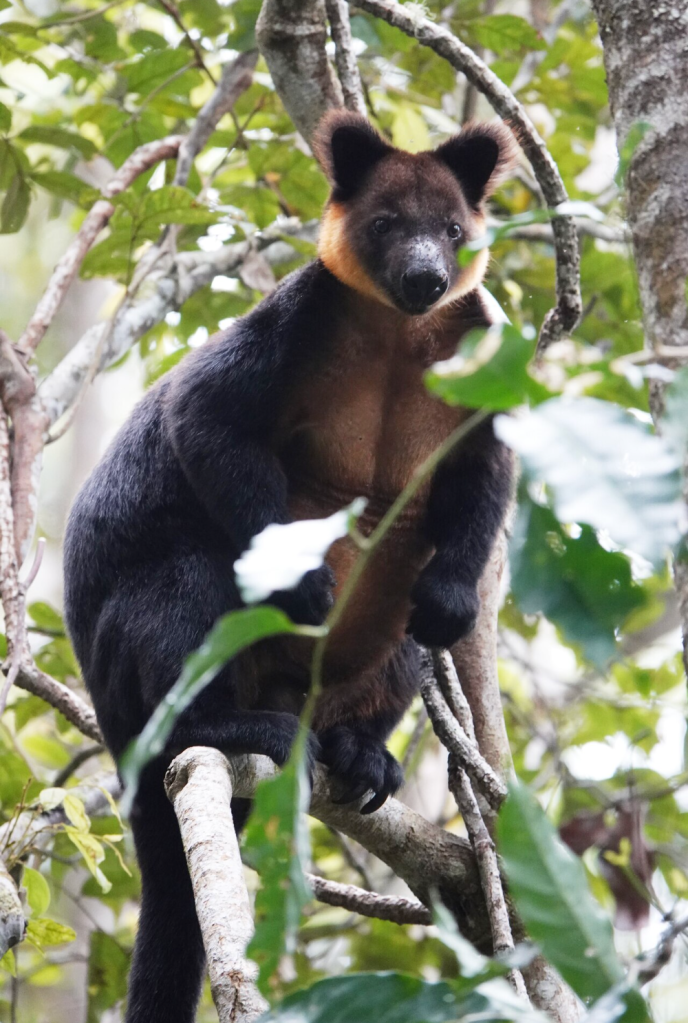
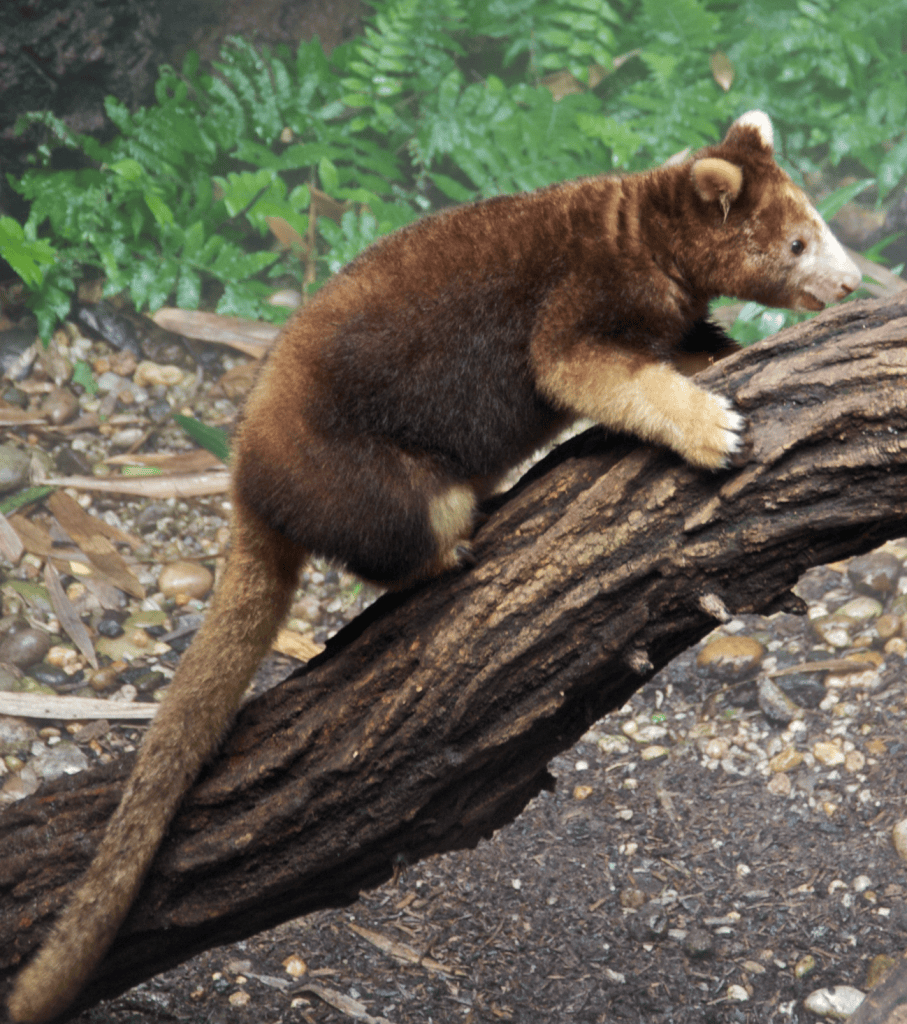
- Tree-Kangaroos: Unlike their ground-dwelling Australian cousins, species like Goodfellow’s and the Huon tree-kangaroo adapted to climb trees. They have broad feet, long curved claws, and heavy tails for balance as they leap between branches.
- Cuscuses: Soft-furred, slow-moving arboreal marsupials with prehensile tails and large, nocturnal eyes.
New Guinea is also a crucial global stronghold for monotremes – mammals that lay eggs instead of giving birth to live young.
The island’s extreme topography – stretching from warm lowlands to freezing high-altitude mountain valleys – has led to extreme evolutionary sizes:
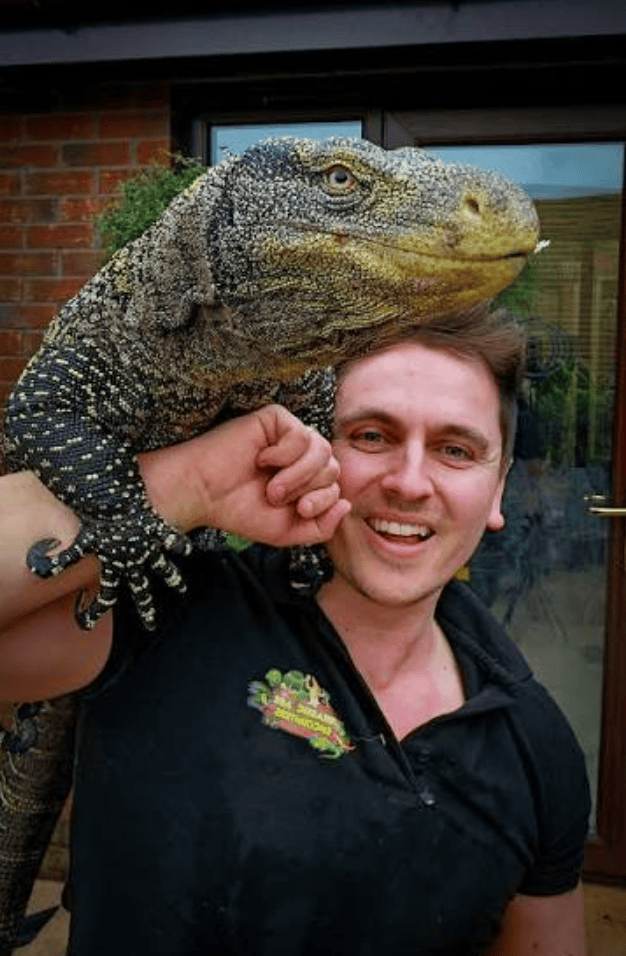
- Crocodile Monitor (Varanus salvadorii): One of the longest lizards in the world, capable of reaching up to 8 to 9 feet in length. It climbs trees to hunt prey in the canopy.
- Microhylid Frogs: At the opposite end of the spectrum, researchers discovered Paedophryne amauensis in New Guinea’s leaf litter—measuring just 7.7 millimeters (0.3 inches), which is the world’s smallest known vertebrate.
Birds of Paradise
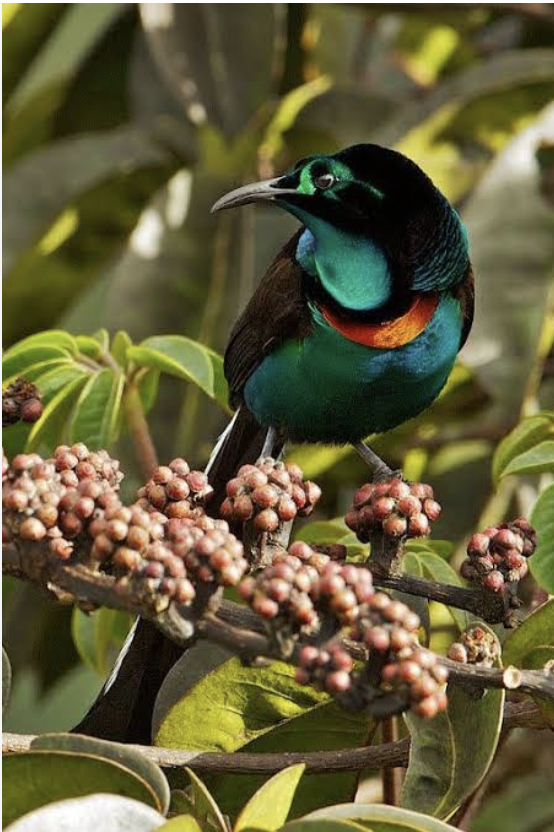
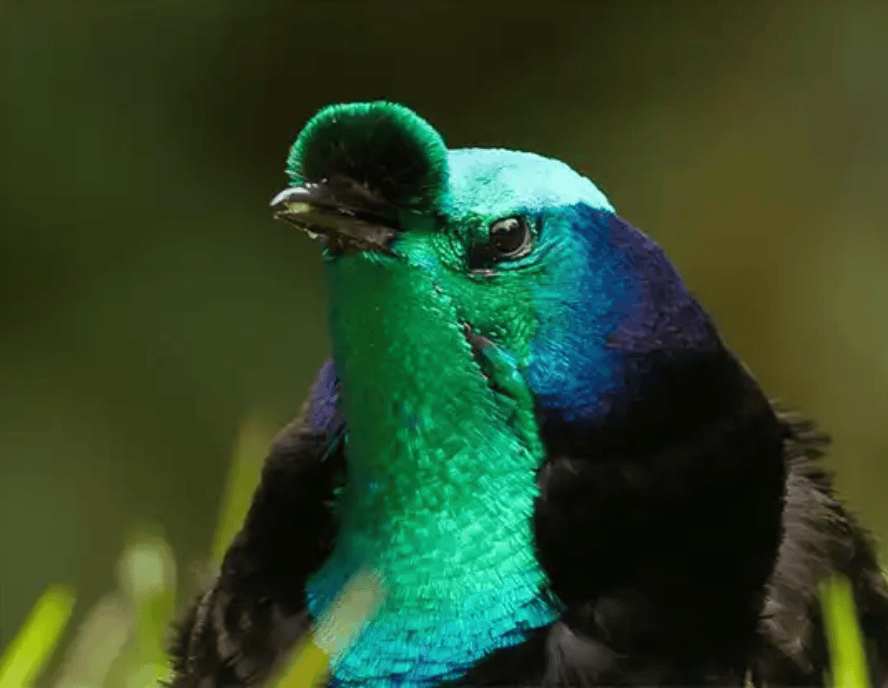
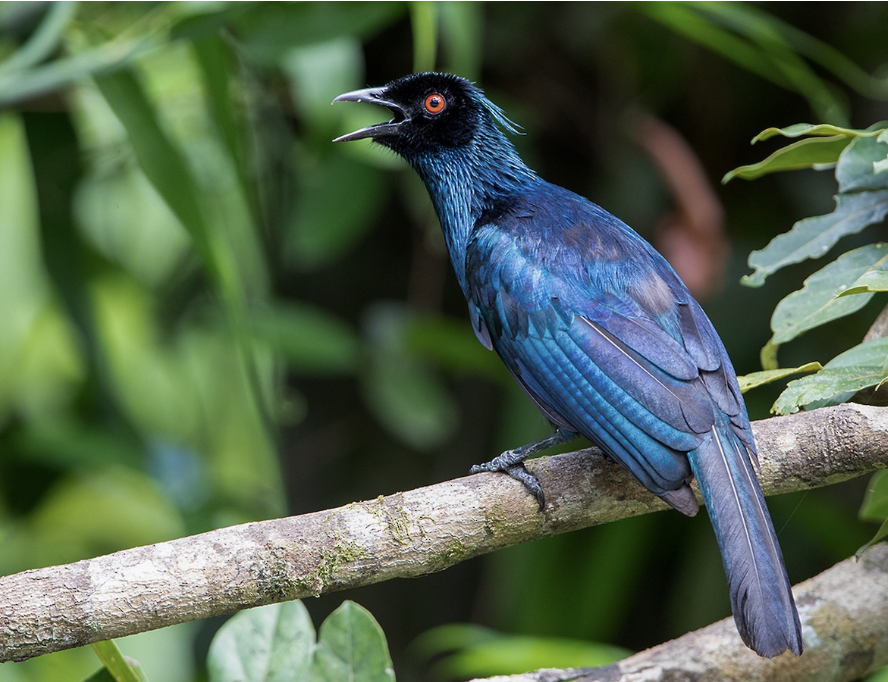
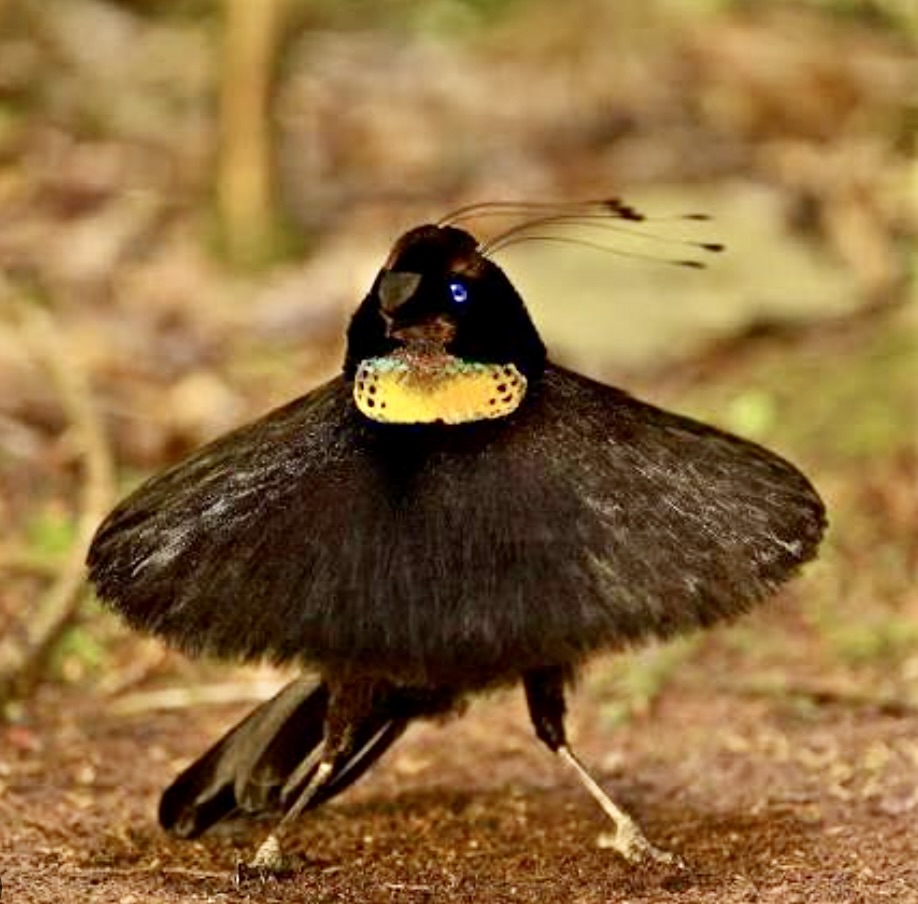
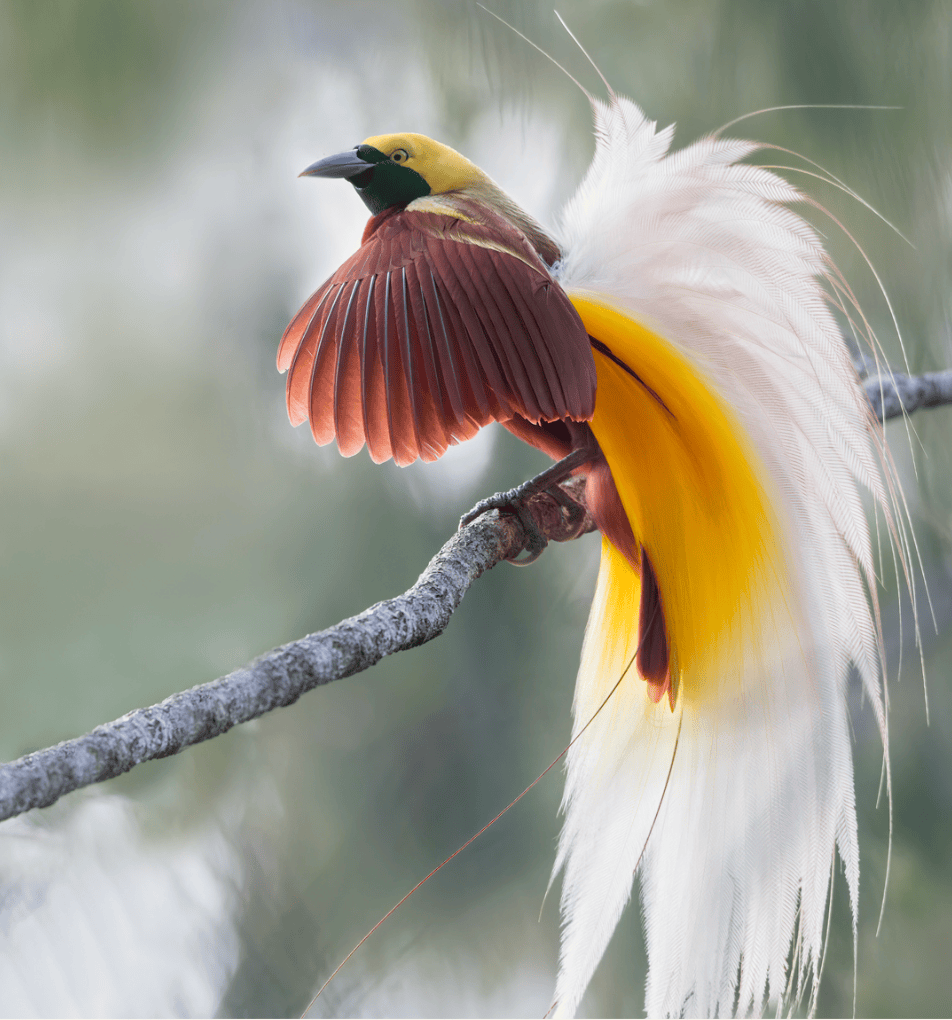
The undisputed stars among the island’s natural wonders are its avian inhabitants, most notably the Birds of Paradise (Paradisaeidae).
Inhabiting fruit-abundant rainforests, male birds of paradise evolved colorful, extravagant plumage and complex dances to win the favor of choosy females. The family of Birds of Paradise ranges from glossy black Manucodes and Parotias with shield-like chest plumes to the Ribbon-tailed Astrapia, the Wilson and the King of Saxony Bird of Paradise, renowned for its long head plumes. Males spend years practicing their courtship routines, using instinctive displays that are honed through observation and practice.
The legend of the footless bird
For early European explorers, New Guinea was remote and intimidating. Nearby Spice Islands attracted heavy commercial trade, but the island lay outside established Asian trading networks and had few, if any commercially viable treasures for the earliest visitors. However, New Guinea offered exotic bird skins, which had been traded across Asia and into China for thousands of years.
The first Western record of a Bird of Paradise arrived via a Portuguese traveler in 1513, followed by Magellan’s assistant, Antonio Pigafetta, who brought specimens of these strange and beautiful birds back to Europe. Because indigenous hunters prepared skins by removing the legs and wings to preserve the tail plumes, early naturalists and traders believed that the birds had no extremities.
Myths persisted for over a century claiming these “birds of God” lived entirely on air and dew, mated while suspended in mid-air, and never touched the earth.
In European art, the bird of paradise became a symbol of spiritual ascension and unending flight. In the XVIIth century, the rare and strange skins of these birds fetched astronomical prices, the equivalent of a year’s salary of a university scholar.
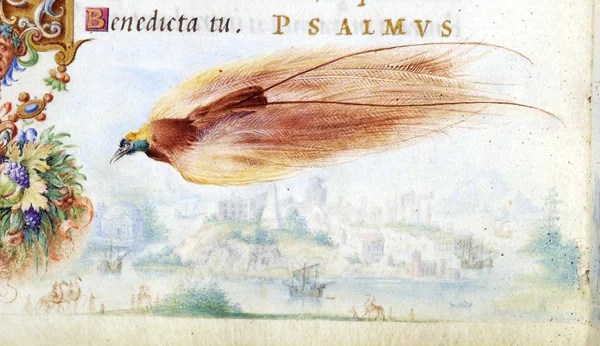
It took later explorers, including naturalists like Alfred Russel Wallace who in the XIXth century spent eight years studying species like the King Bird of Paradise and Wilson’s Bird of Paradise, who eventually documented intact specimens, and dispelled the footless myth while cementing the island’s reputation as a biological wonder.
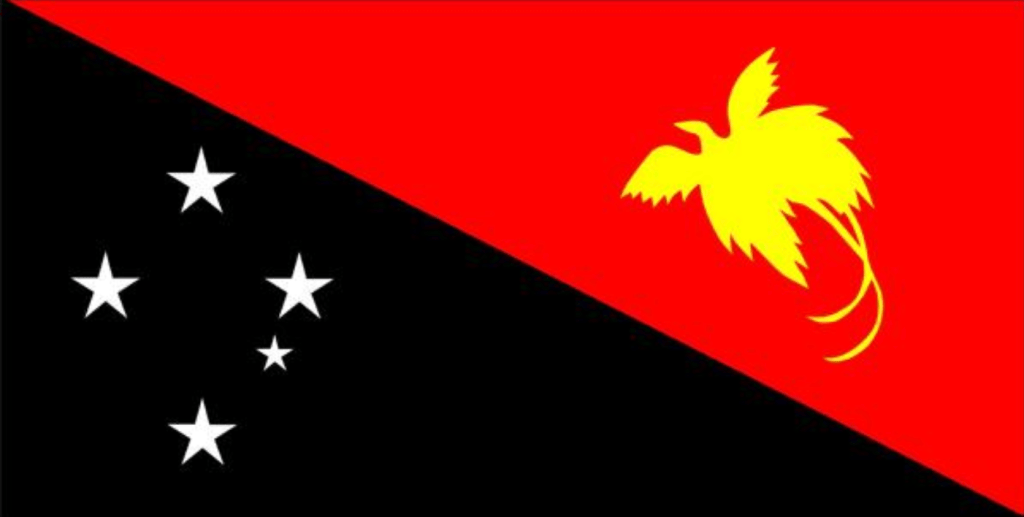
Today, the bird of paradise serves as the national symbol of Papua New Guinea—appearing on its flag, currency, ceremonial spears, and traditional drums.
Human wonders
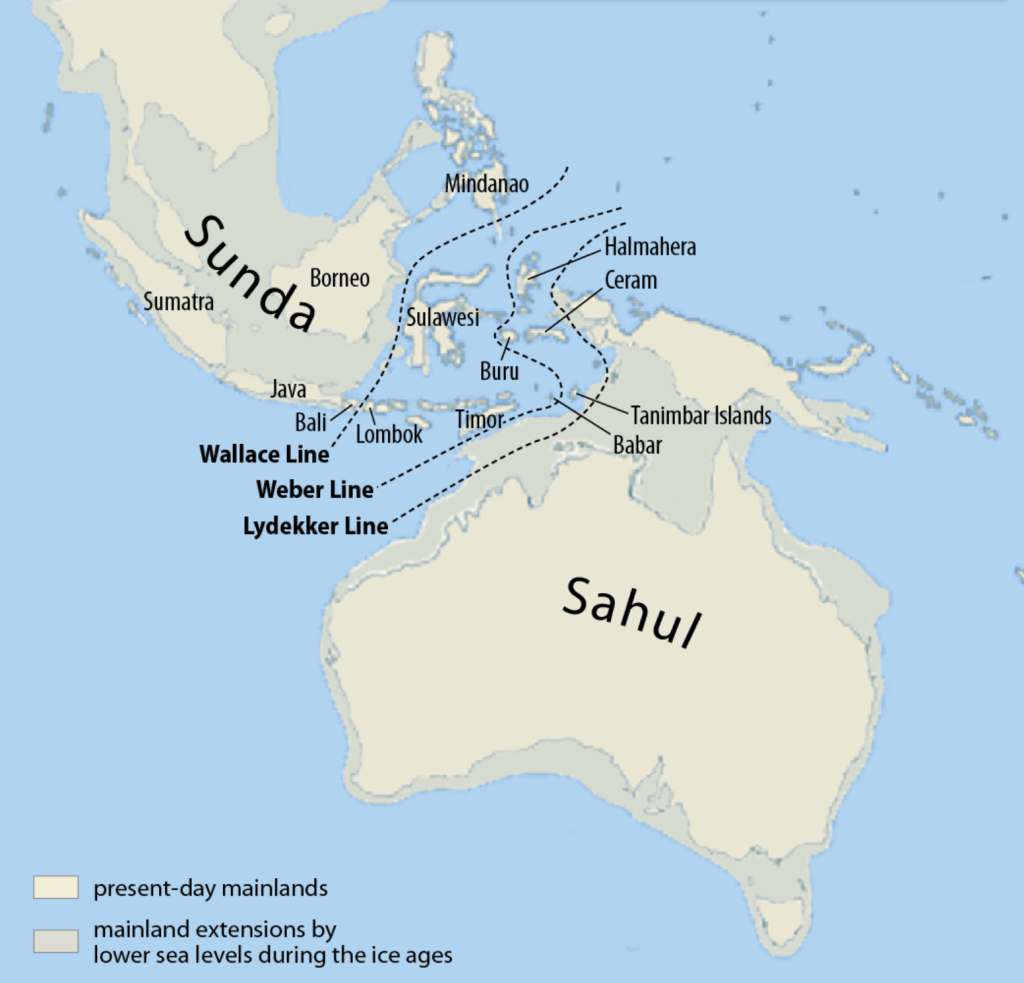
Human settlement on New Guinea dates back roughly 50,000 years, when early Papuan populations crossed ancient maritime channels during the Pleistocene epoch to reach the landmass of Sahul. From there, many crossed on foot to populate Australia, since at the time the sea levels were much lower.
New Guinea stands alongside the Fertile Crescent in what is now Iraq, as one of the independent birthplaces of global agriculture. Around 10,000 years ago, highland inhabitants began manipulating swampy landscapes to cultivate native crops such as taro and yams, predating agricultural revolutions across much of the globe.
Around 3,500 years ago, a second major migration transformed the island’s coastal dynamics. Austronesian-speaking seafarers arrived with advanced maritime technology, introducing new crops like bananas and sugarcane. The interaction between incoming Austronesians and indigenous Papuans created an exchange of art, language, and agricultural practices that defines coastal cultures to this day. However, it was also a source of conflict, with Papuan populations often displaced and pushed inside the land. This explains why, to this day, many of the New Guinea tribes are quite bellicose.
Despite frequent conflictual interactions, coastal and inland groups nevertheless established trade routes spanning hundreds of miles. They exchanged obsidian, pottery, and shell ornaments across sea channels and mountain passes. These networks were as much about cultural exchange—sharing artistic styles and spiritual beliefs—as they were about trade.
A living mosaic of languages and cultures
If New Guinea’s natural environment is impressive, its human mosaic is unmatched anywhere on Earth.
Papua New Guinea alone accounts for approximately 12% of the world’s spoken languages, housing over 840 distinct tongues. If you add to this the hundreds of languages spoken across Western New Guinea, it means that more than 1’000 languages are spoken here, making this island the most linguistically diverse place on Earth. One-seventh of all spoken languages on our planet are spoken here.
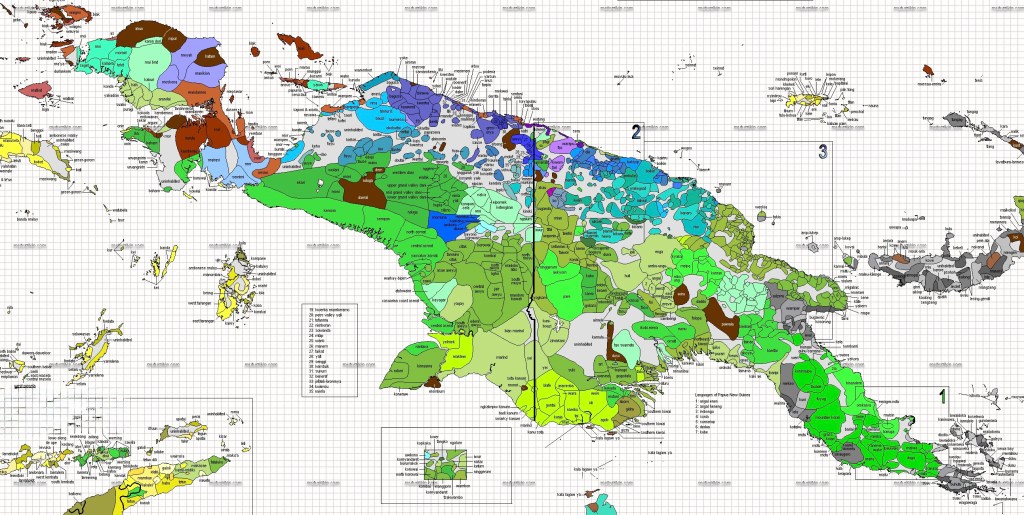
This incredible density of language and custom was preserved by the island’s varied geography and the successive migrations, dating back, as we have seen, to over 50’000 years.
In parallel to so many languages, deep valleys and rugged mountain ranges led communities to develop isolated worldviews, oral traditions, and artistic practices.
This incredibly diversity does not mean separation. To this day, the peoples of New Guinea get together frequently in gatherings called “sing sing”. These are large cultural gatherings where clans and tribes meet to showcase their distinct heritage through dance, music, and elaborate adornments. Attire includes magnificent, tall headdresses crafted from feathers of indigenous birds, such as the Bird of Paradise and intricate face painting using natural clay and organic pigments.
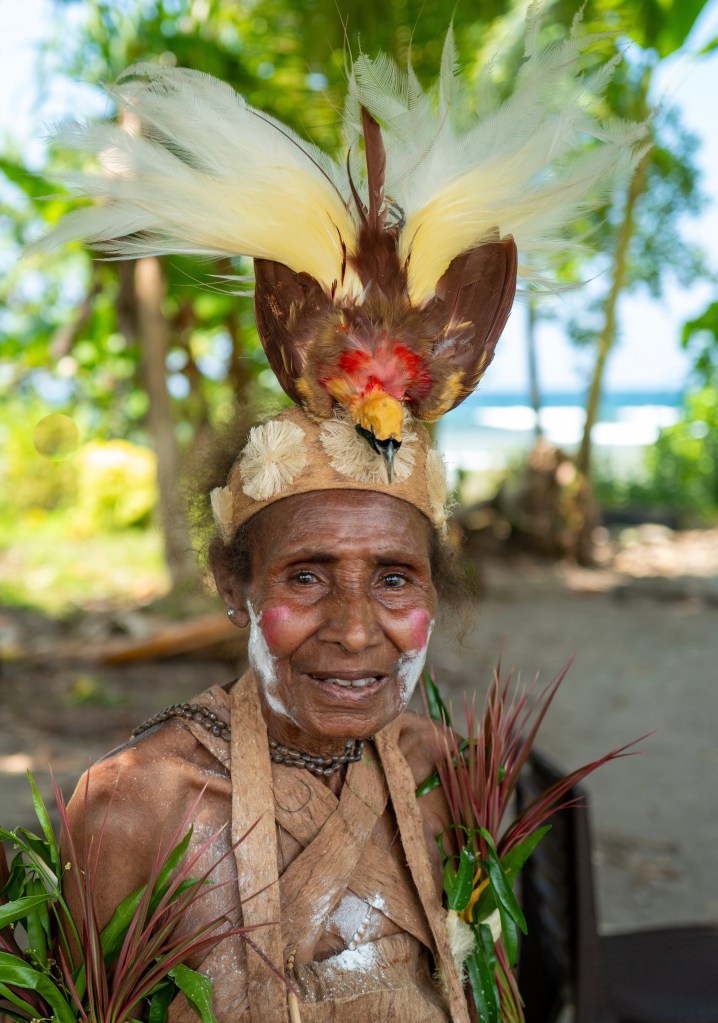
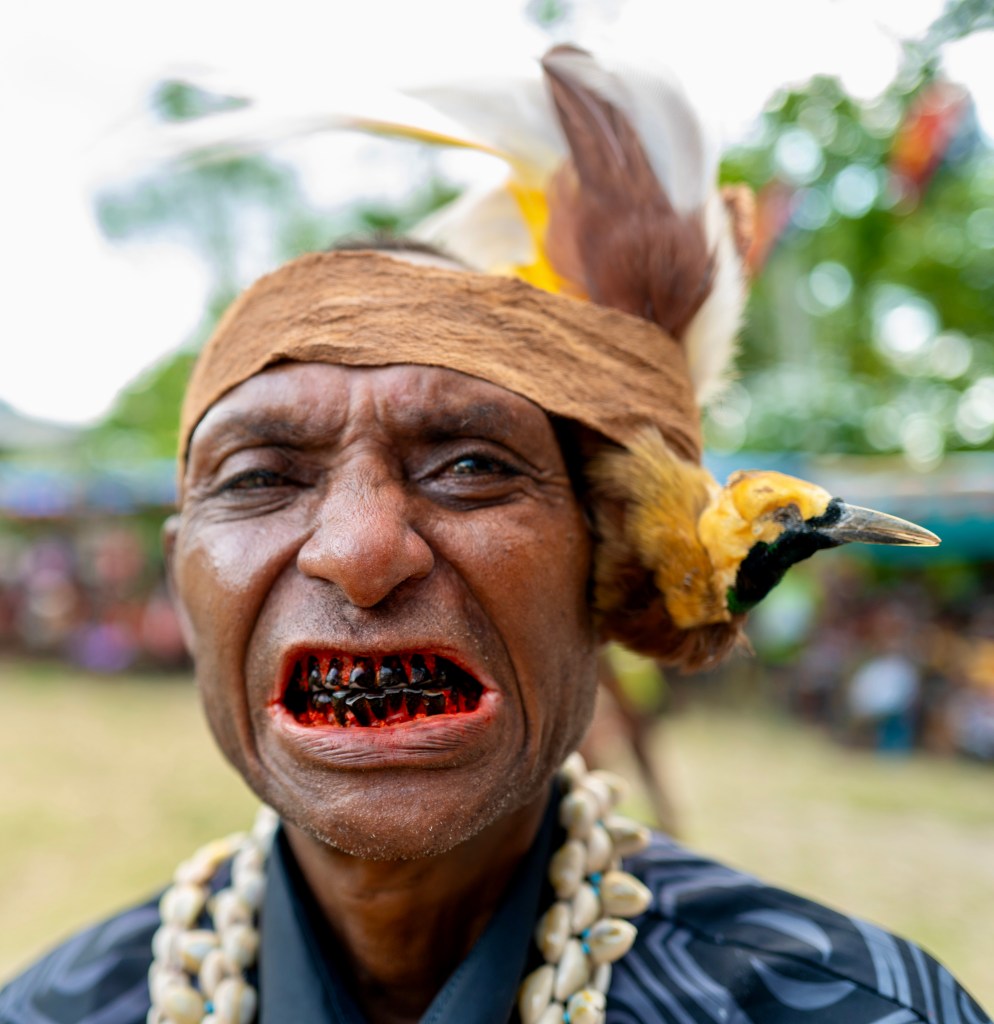
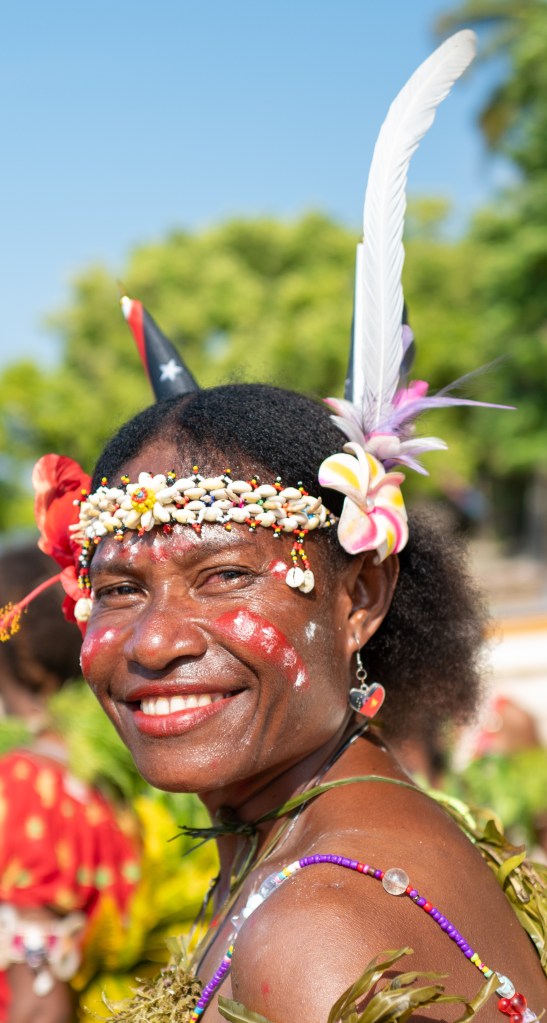
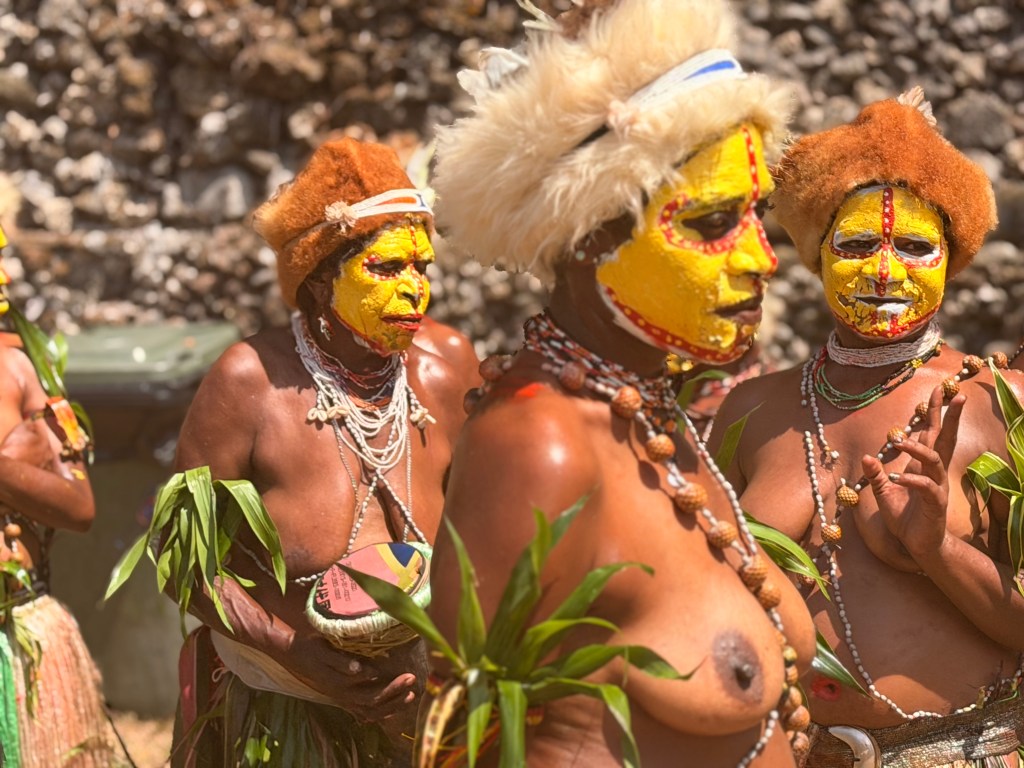
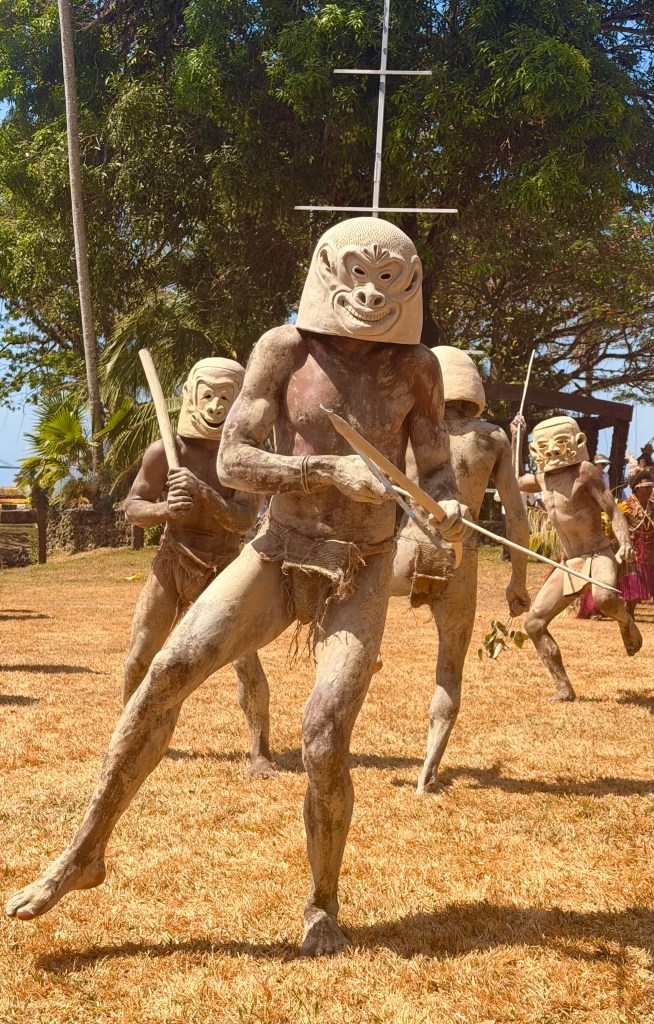
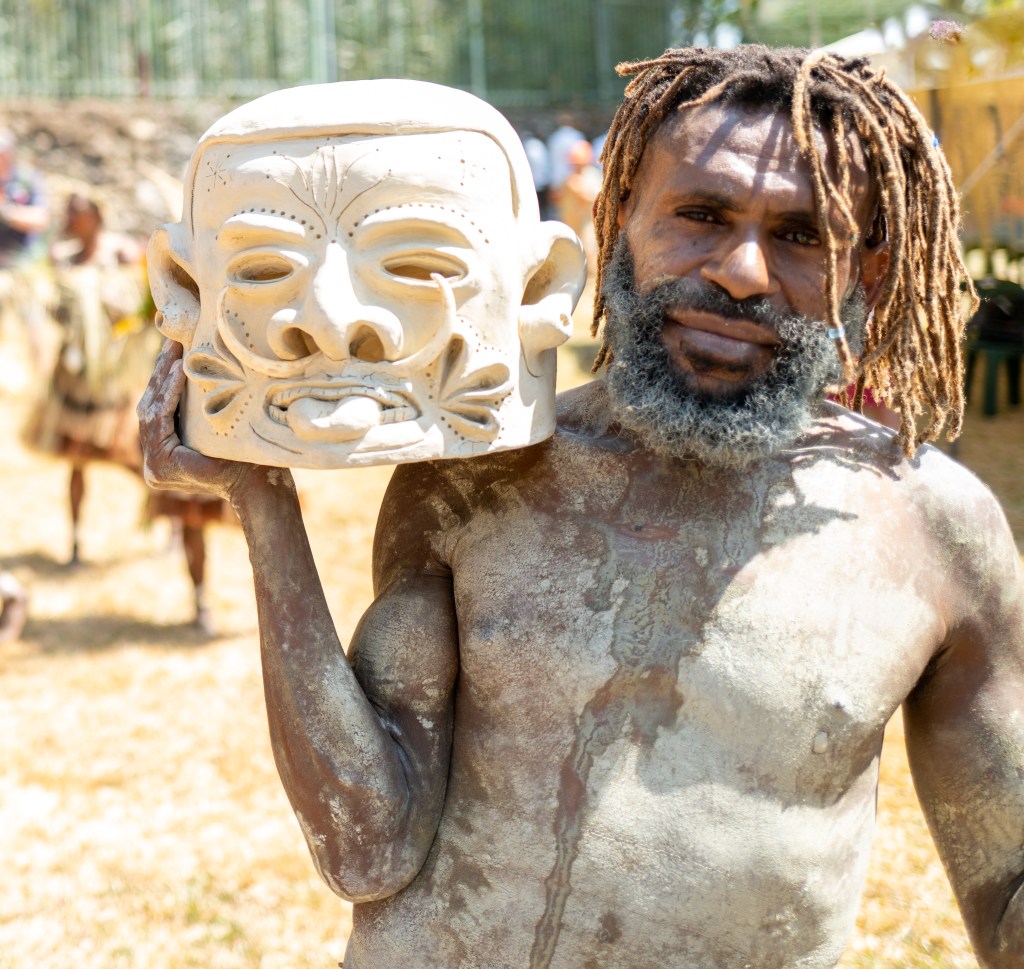
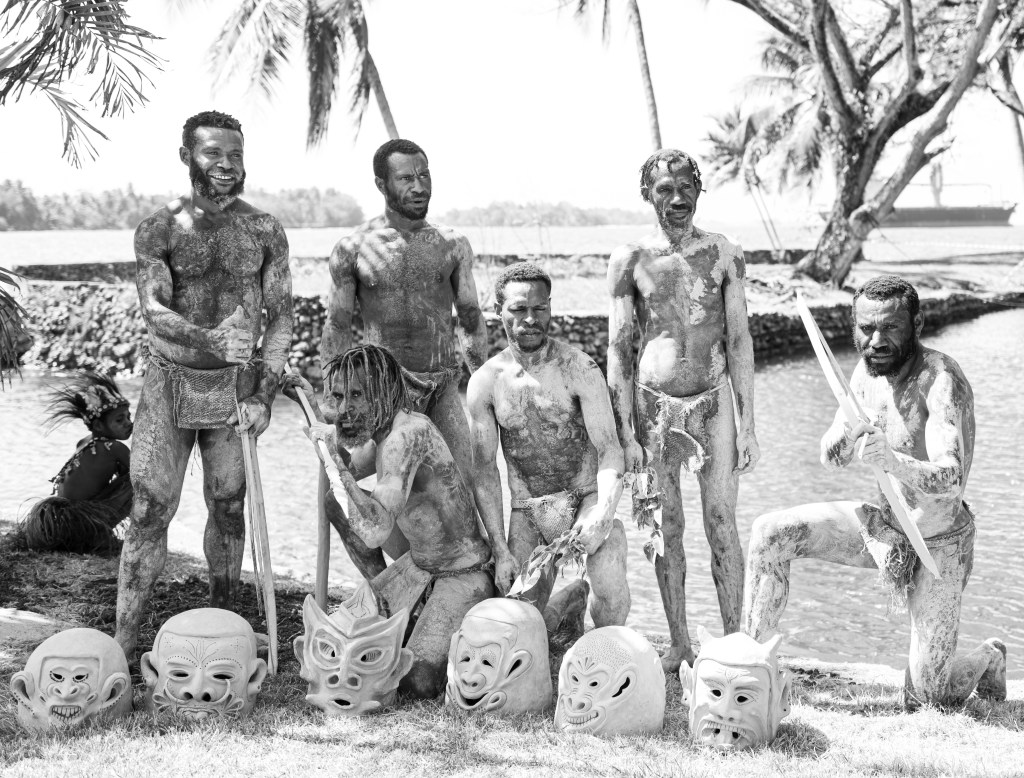
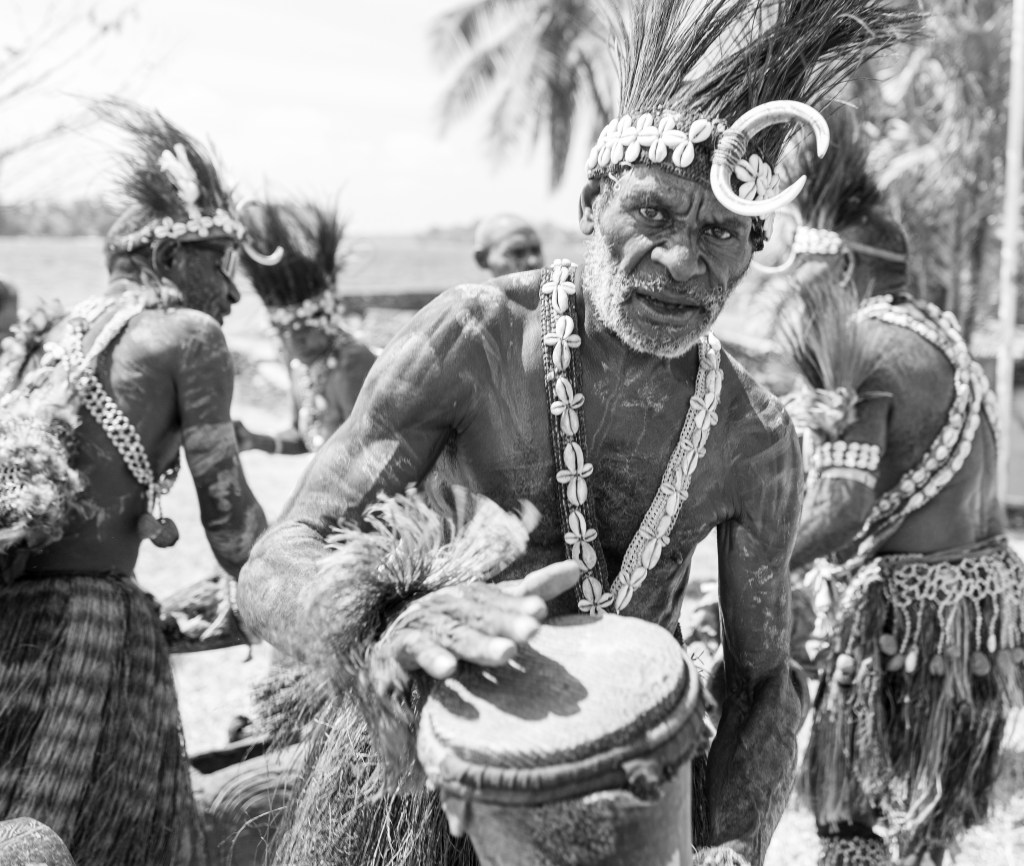
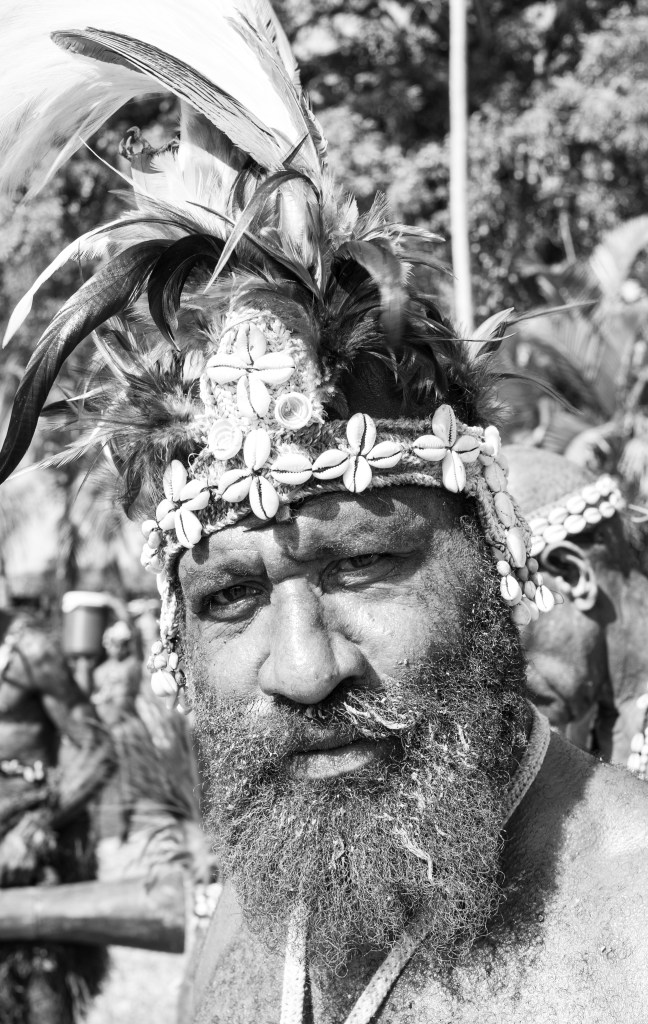
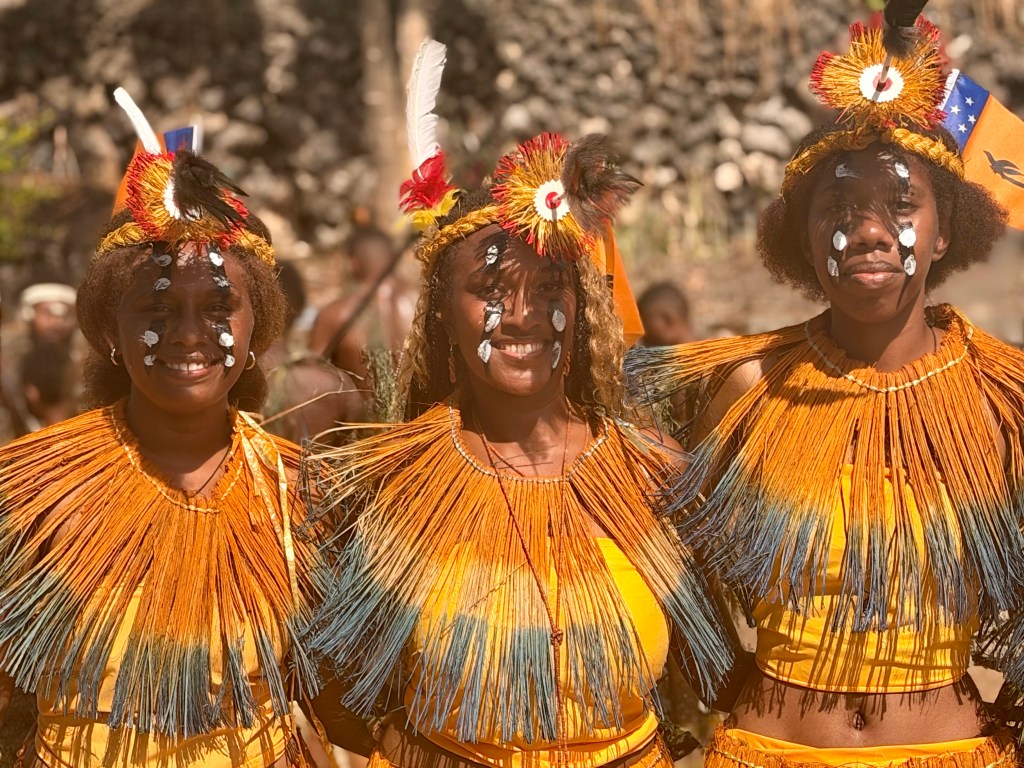
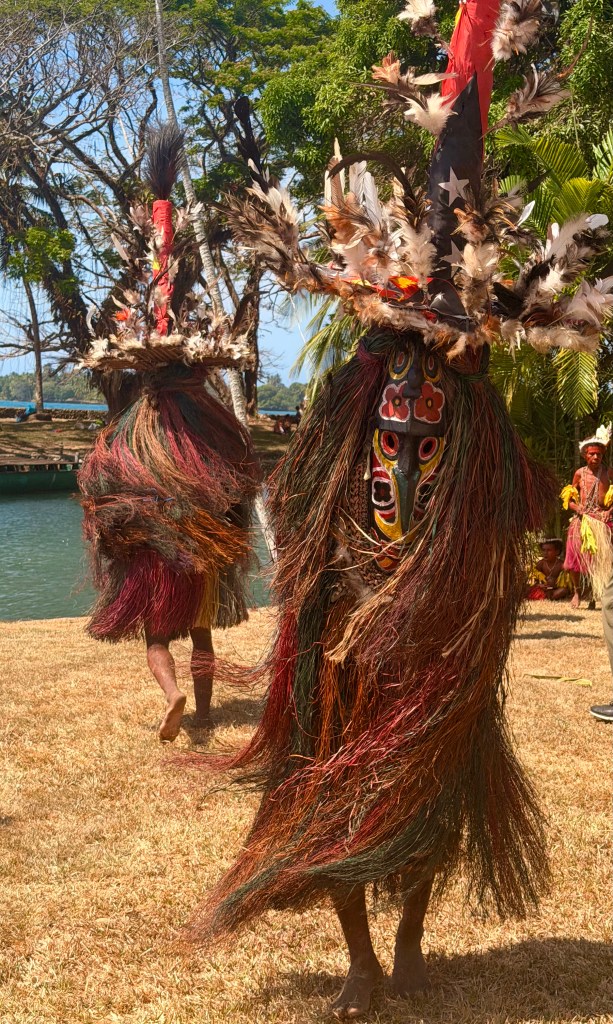
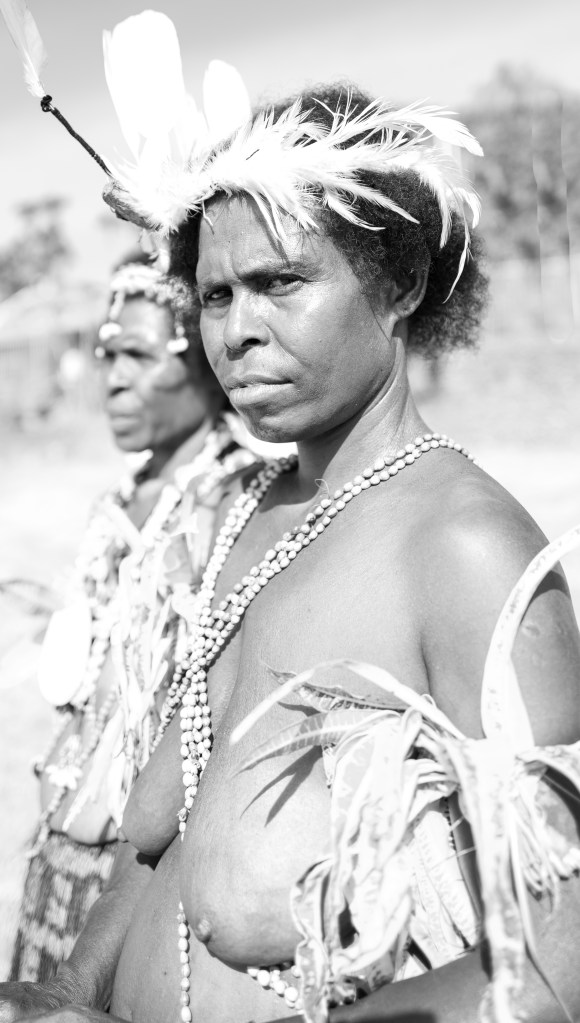
Land in New Guinea is predominantly communally held through clan structures. The natural environment is closely tied to spiritual worldviews, creation myths, and ancestral reverence, with wildlife – such as birds and crocodiles – frequently serving as clan totems and central motifs in art.
In most of New Guinea’s societies, leadership is not strictly hereditary. Instead, status is achieved through the “Big Man” (or Moknk) system, where individuals gain authority through personal charisma, skill in diplomacy, and, crucially, generosity in distributing wealth (such as pigs, yams, and shell money) rather than accumulating it.
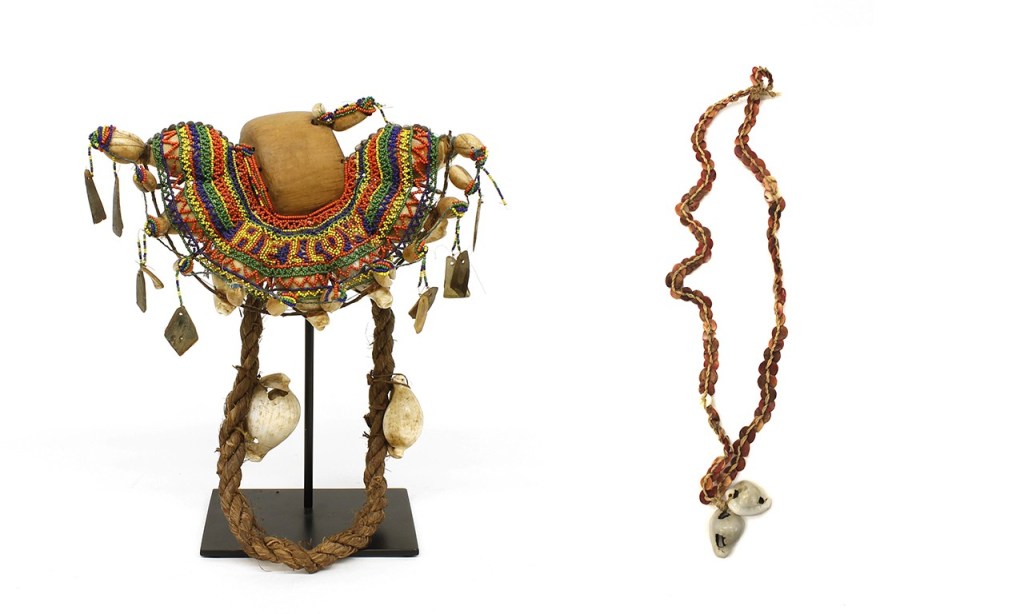
Customs around reciprocity and gift-giving form the backbone of social cohesion. To this day, ceremonial shell items are exchanged across vast sea distances purely to forge alliances and build prestige rather than for financial gain.
Ancestor veneration
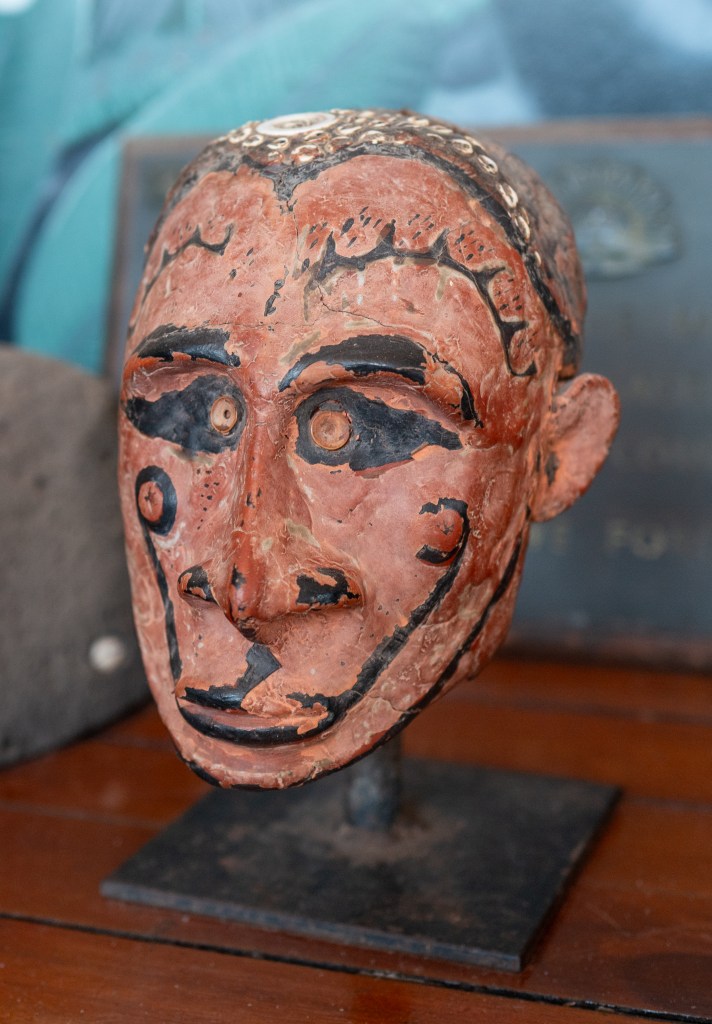
Ancestor veneration is one of the foundational spiritual pillars of traditional life across New Guinea. Rather than viewing the dead as departed or unreachable, New Guinean traditional religions view ancestors as active, powerful members of the community who continue to inhabit the physical environment and influence the lives of the living.
As in many other societies living in the Pacific, death is not considered an ending but a transition into a spirit state. Ancestral spirits are believed to reside nearby and the relationship with ancestors is deeply reciprocal. Living relatives maintain favor with ancestral spirits through rituals, prayers, and offerings of food, pigs, and shell money. In return, ancestors are called upon to ensure hunting success, bountiful yam harvests, fertility, health, and victory in warfare.
The Baining Fire Dance
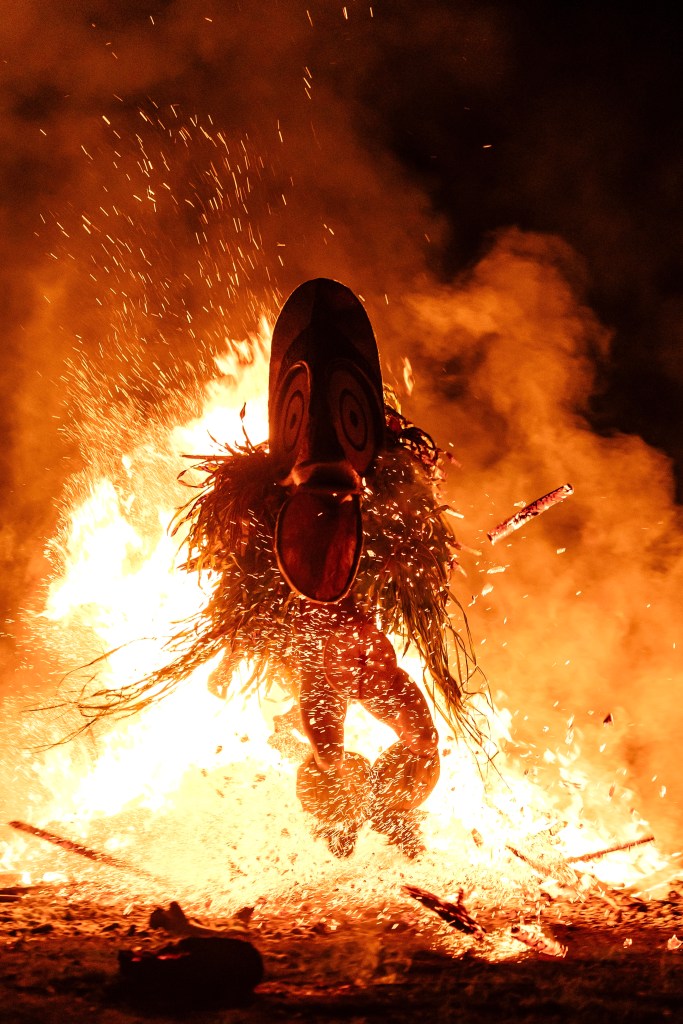
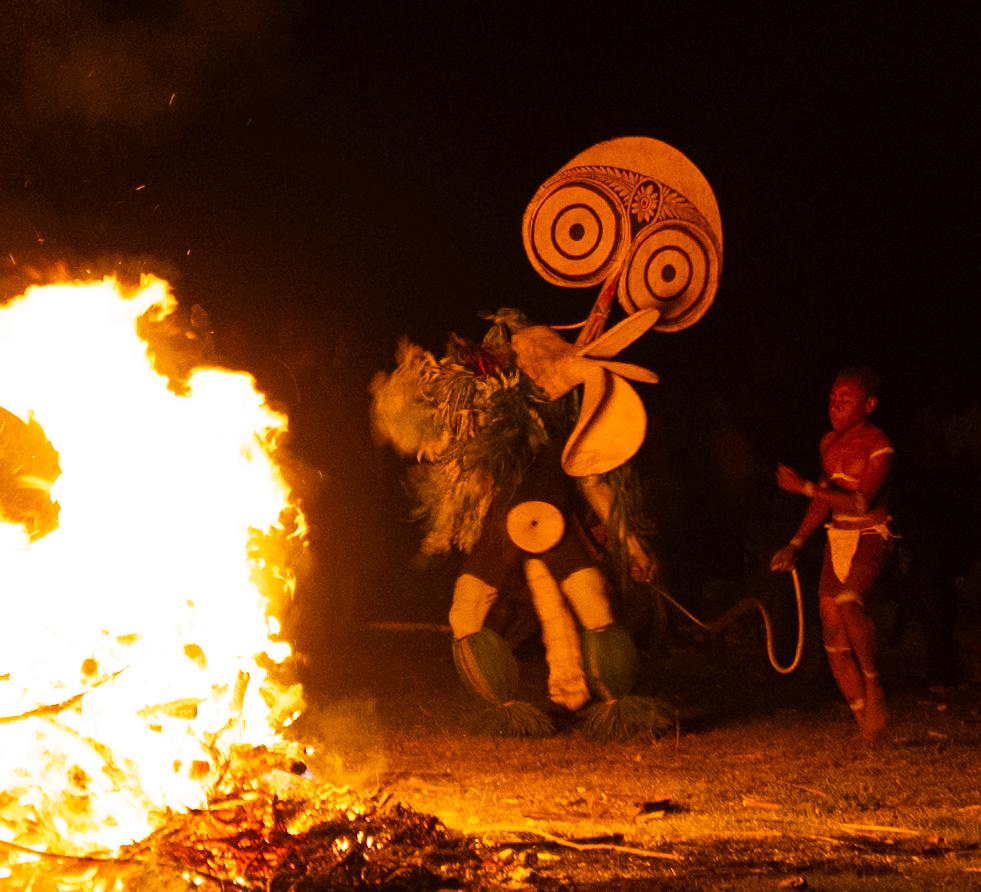
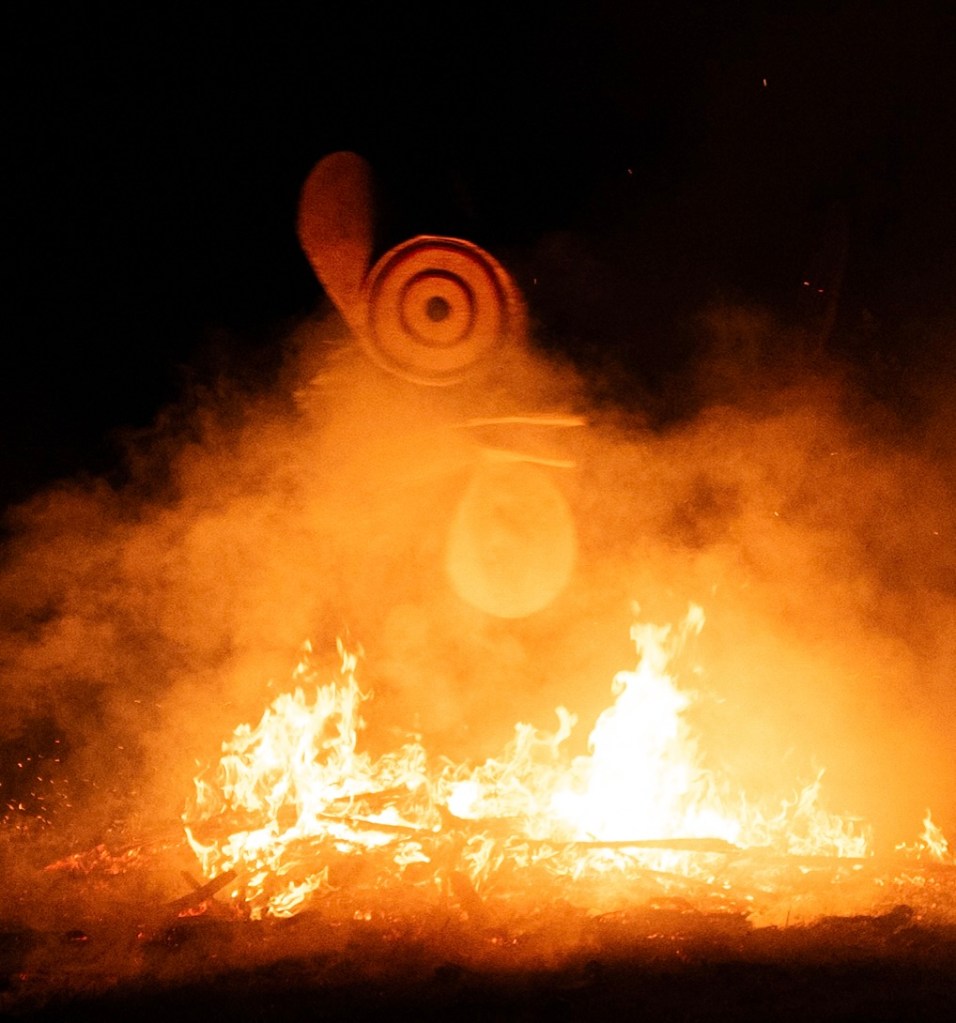
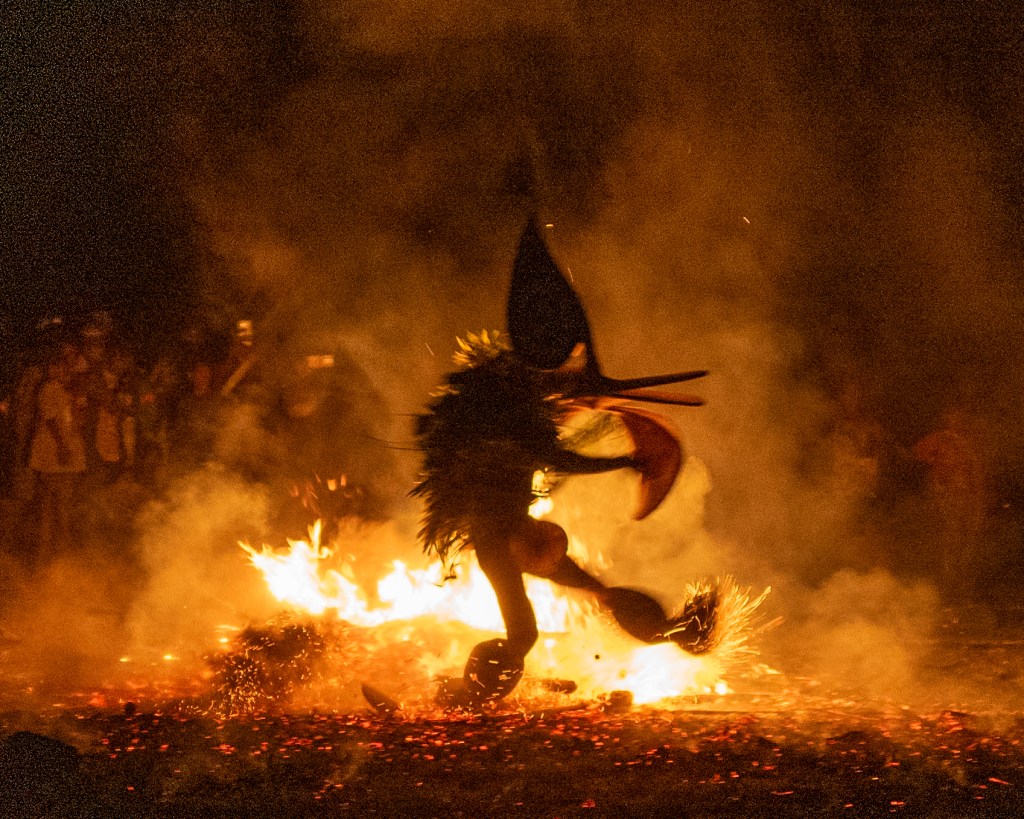
The Baining Fire Dance is one of Papua New Guinea’s most dramatic ritual performances, performed by the Baining people of the Gazelle Peninsula in East New Britain Province.
Unlike many tribal performances that are daytime events, the Fire Dance takes place strictly at night around a roaring bonfire.
The dancers wear massive, otherworldly mask headpieces crafted from beaten bark cloth stretched over cane frames. These large, bulbous masks feature exaggerated, owl-like round eyes, wide beaks or snouts, and intricate painted geometric patterns. The masks represent various spirits of the rainforest, including animals, plants, and natural forces.
Accompanied by a chorus of village men chanting and rhythmically pounding heavy bamboo tubes onto the ground, masked dancers enter a trance-like state. Dancers physically leap into and run through the blazing bonfire, kicking red-hot embers into the air with their bare feet. According to Baining custom, the spirits protect the dancers from being burned. Performers (who are always male) are initiated into adulthood by successfully participating in this ceremony.
It was an amazing experience to witness one of these ceremonies during our time in Rabaul, eastern New Guinea.
Headhunting
Headhunting in New Guinea was real, not a myth – though sensationalised accounts in Western media often exaggerated or misunderstood the practice.
Historically, headhunting was practiced by several indigenous groups in New Guinea, most notably the Asmat of southwestern New Guinea (in present-day Papua, Indonesia) and the Marind-anim. However, it was not random violence or a lifestyle; it was a deeply sacred, highly structured ritual tied to spiritual balance, ancestral worship, and rite of passage.
To understand why headhunting existed, it helps to look at how these cultures viewed life, death, and spirit. The Asmat believed that death was rarely natural; it was usually caused by magic or violence from an enemy village. When an elder or relative died, their spirit remained restless. Taking a head from an enemy village was seen as a necessary act to restore spiritual balance and avenge the deceased. Also, in other New Guinea societies, a young man could not fully transition into adulthood or marry until he had participated in a successful raid. Taking a head was considered proof of courage and essential for adult identity. Skulls were not treated merely as trophies. Once stripped and decorated, skulls were used as sacred physical objects—sometimes serving as pillows during sleep so men could communicate with ancestors in their dreams.
There is no headhunting nowadays. The practice effectively ended during the mid-to-late 20th century (mostly between the 1950s and 1970s). A combination of factors led to its complete decline:
- Colonial and government Interventions: Dutch and later Indonesian and Papua New Guinean authorities enforced laws strictly prohibiting inter-tribal warfare and headhunting raids.
- Christian missionary efforts: Missionaries established a presence in remote river regions, introducing alternative belief systems and social structures.
- Cultural shifts: Former headhunting rituals and ancestral reverence evolved into artistic expressions. Today, groups like the Asmat are world-renowned for their intricate wood carvings, spirit poles, and ceremonial masks rather than warfare.
Modern realities
Today, New Guinea faces the complex task of balancing modern economic development with the preservation of its natural and human heritage. Infrastructure projects and resource extraction present environmental risks, yet growing initiatives in ecotourism and indigenous language revitalization offer promising paths forward.
New Guinea remains one of the world’s extraordinary places—a land where glaciers meet rainforests, and where natural history, deep antiquity, and living cultural traditions are bound together. To visit this island is to experience a world where nature and human culture remain deeply intertwined. It’s truly a place like no other.

